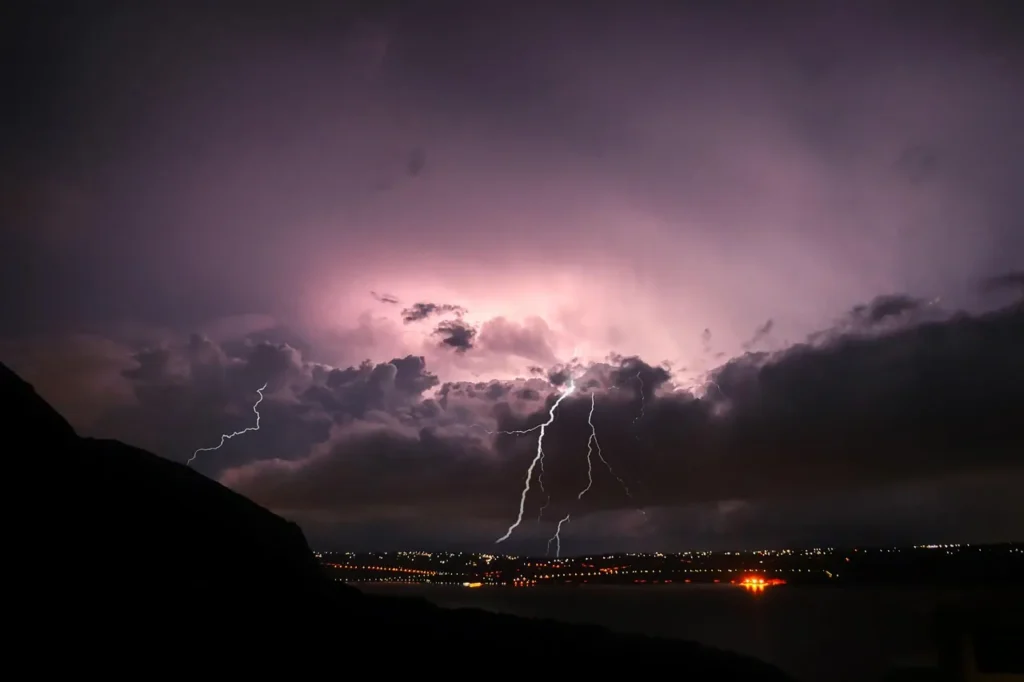
After days of extreme heat, sudden thunderstorms hit Croatia on Tuesday evening, bringing torrential rain, frequent lightning, hail and strong winds to parts of the country. The storms also sparked multiple wildfires along the Adriatic coast after several lightning strikes.
The severe weather arrived earlier than many expected. While meteorologists had forecast a change in conditions for Wednesday, the atmosphere became unstable already on Tuesday, producing fast-developing storm clouds and intense thunderstorms across parts of Dalmatia.
Several wildfires broke out on the islands of Čiovo, Mljet, Vis and Šolta, as well as near Ston, Orebić, Vinišće and Kaštela. In Dalmatian inland areas, hailstones reportedly reached the size of walnuts.
Croatian public broadcaster HRT also reported that the unstable weather was accompanied by heavy rainfall, frequent lightning and local flooding.
Storms also caused maritime incidents
The storms created dangerous conditions at sea, particularly in the Split archipelago.
As reported by Index.hr, rescue services coordinated several emergency operations during the night. One charter boat carrying nine people lost both anchors and suffered engine problems during the storm, while another charter yacht with eleven people ran aground on rocks near the Pakleni Islands after distress flares were spotted. All passengers were safely evacuated and no injuries were reported.
Croatia’s Ministry of the Sea also said that harbour authorities carried out several interventions despite the severe weather, including an emergency medical transport from the island of Šolta.
More severe weather possible today
The Croatian Meteorological and Hydrological Service (DHMZ) has issued a red weather warning for the entire Adriatic coast on Wednesday due to extreme heat and the risk of severe thunderstorms. Orange warnings remain in effect across much of inland Croatia.
According to DHMZ, temperatures are expected to reach 32–37°C before conditions deteriorate later in the day. Heavy showers, thunderstorms, strong winds, hail and flash flooding are all possible, particularly during the afternoon and evening. Along the northern Adriatic, northwesterly winds are expected to strengthen before turning into strong bora winds overnight.
Meteorologists warn that, after several days of intense heat, a large amount of energy has built up in the atmosphere, increasing the likelihood of severe thunderstorms capable of producing large hail, damaging wind gusts and torrential rainfall.
The weather will gradually stabilise
Conditions are expected to improve gradually from Thursday onwards.
Thursday may still bring showers and thunderstorms, especially in Dalmatia, while Friday is forecast to be mostly sunny along the Adriatic, with only isolated afternoon showers possible inland. By Saturday, stable and predominantly sunny weather is expected across most of Croatia.
Temperatures will also become more comfortable, generally ranging between 25°C and 30°C, while coastal areas are expected to see highs of 27–32°C.
DHMZ advises residents and visitors to monitor the latest forecasts and weather warnings, as alert levels may change throughout the day depending on how the weather develops.
What should tourists do when sudden thunderstorms hit Croatia?
Severe summer storms are relatively uncommon, but when they occur they can develop very quickly and become dangerous. If you’re travelling in Croatia during a weather warning, a few simple precautions can make a big difference.
- Avoid unnecessary driving. Intense downpours can quickly flood roads and significantly reduce visibility. If you don’t need to travel, it’s usually safest to wait until the storm passes.
- Give way to emergency vehicles. Severe storms often lead to increased activity from firefighters, ambulances and police. If you’re driving, always make room for emergency services.
- Secure your accommodation. Close windows, shutters and awnings before the storm arrives, especially in coastal areas where strong wind gusts can develop suddenly.
- Stay away from beaches, open water and hilltops. Lightning can strike beaches, cliffs, mountain trails and open sea. If you hear thunder, seek shelter inside a solid building or a vehicle.
- Do not shelter under isolated trees. During thunderstorms, individual trees are among the most dangerous places because they are more likely to be struck by lightning.
- Stay indoors during large hail. Hailstones can sometimes reach the size of walnuts and may cause injuries as well as damage to vehicles and property.
- Avoid parking beneath trees. Strong winds can break branches or even uproot trees, particularly after prolonged heat and dry conditions.
- If you’re boating, head for shelter early. Adriatic storms can develop rapidly. If a thunderstorm is forecast or dark storm clouds begin to build, return to port or seek a safe harbour before conditions deteriorate.
- If you see a wildfire, leave the area immediately. Never try to get closer to take photos or videos. Move to a safe location and call 112, Croatia’s national emergency number, if the fire has not already been reported.
- Follow official warnings. Weather alerts can change throughout the day. Check the latest forecasts and warnings issued by the Croatian Meteorological and Hydrological Service (DHMZ), particularly if you have outdoor activities or ferry journeys planned.
- Don’t assume blue skies mean the danger has passed. Summer thunderstorms can be highly localised. Conditions may remain calm where you are while severe weather is already affecting another part of the coast, so continue monitoring official forecasts before travelling.
After sudden thunderstorms hit Croatia on Tuesday, the unsettled weather is expected to ease gradually towards the weekend. If you’re travelling to Croatia over the next few days, keep an eye on the latest weather warnings and read our related guide: Croatia Heatwave Ends Wednesday as Cooler Weather Arrives.