Featured image: Korčula wildfire / HVZ
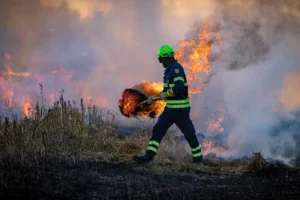
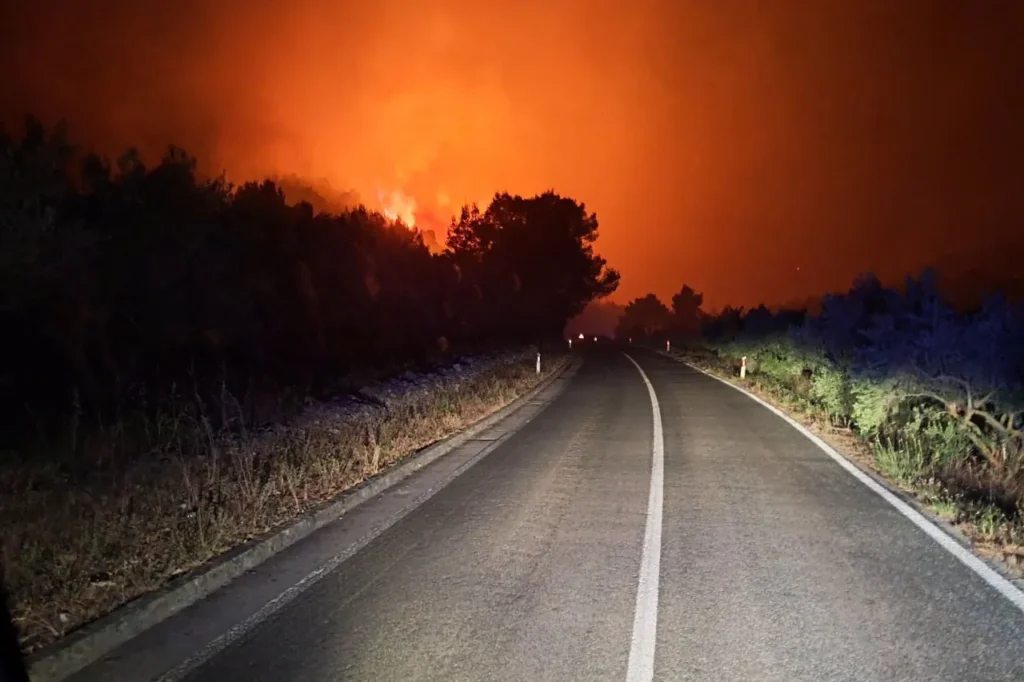
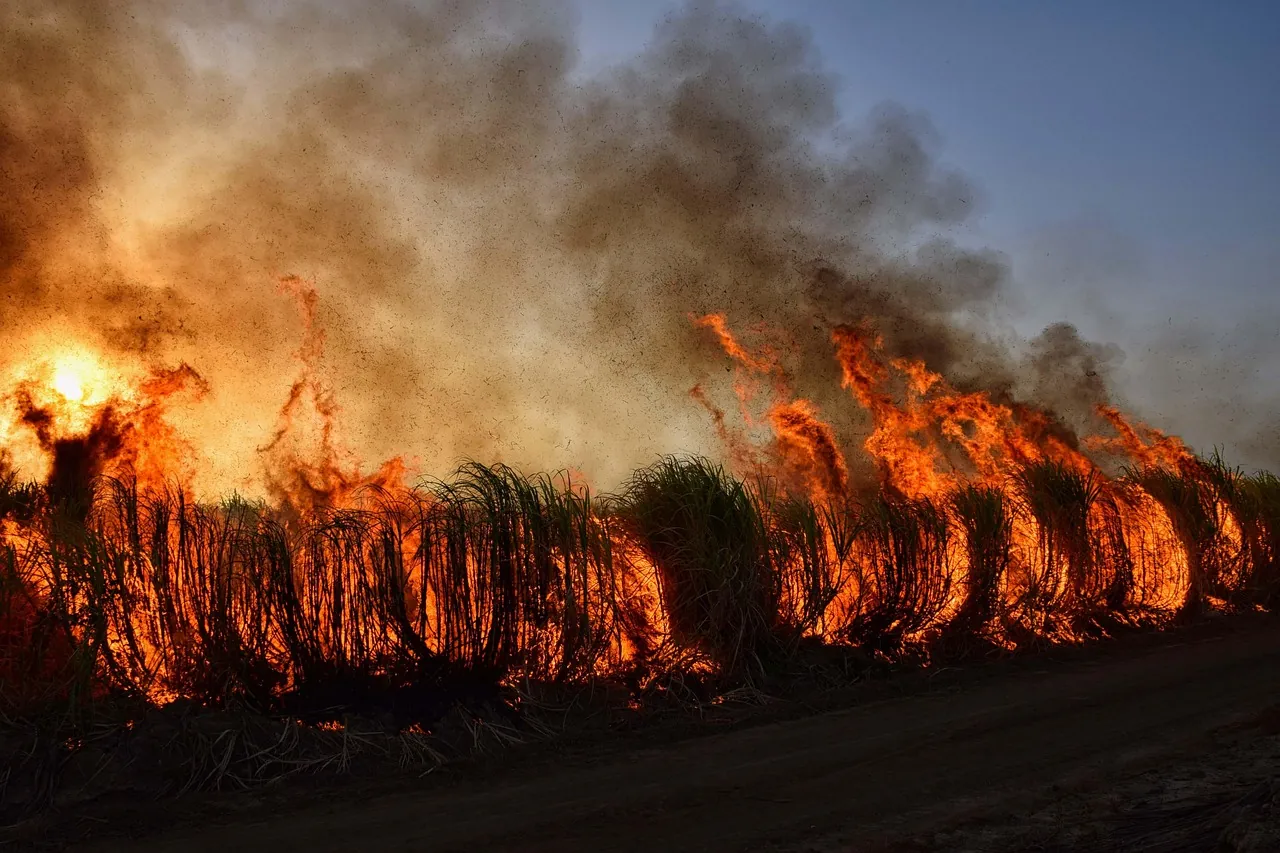
The Korčula wildfire that broke out on Saturday has been brought under control after firefighters battled the flames throughout the night and managed to stop the fire from spreading further. A total of 270 firefighters and 72 fire engines are currently on the ground, with firefighting aircraft also involved in the operation.
According to the Croatian Firefighting Association, the fire has burned around 550 hectares of grassland, low vegetation, Mediterranean scrub and pine forest in the Blato and Smokvica areas. No buildings were threatened, while one firefighter suffered minor injuries and was treated by emergency medical services.
Although the situation is now stable and the fire is under control, firefighters are continuing to extinguish remaining hotspots and secure the affected area.
Korčula wildfire stopped from spreading overnight
Chief Fire Commander Slavko Tucaković said firefighters managed to contain the blaze overnight, helped by more favourable weather conditions.
“The situation at the Korčula wildfire site is stable. Firefighters battled the flames throughout the night and stopped the fire from spreading. More favourable weather conditions also helped. No buildings were threatened,” Tucaković said.
The initial response involved local crews and firefighters from Dubrovnik-Neretva County, with 186 firefighters and 48 vehicles deployed. Additional crews from inland Croatia were sent to Korčula wildfire overnight to relieve some of the firefighters who had been battling the blaze for hours.
A further 84 firefighters with 24 vehicles from Krapina-Zagorje County, Zagreb County and the City of Zagreb were deployed to the fire.
Another 50 firefighters with 16 vehicles from Koprivnica-Križevci County remained on standby in Vučevica.
Two fires merged into one
Tucaković told HRT that the fires started at two separate locations, in the Blato and Smokvica areas, before merging into a single fire front stretching for around four kilometres.
Firefighting efforts have been complicated by the rugged and inaccessible terrain, with few roads available for fire engines to reach the affected areas.
“The terrain is very difficult and rugged, with no roads, which makes firefighting more difficult,” Tucaković told HRT.
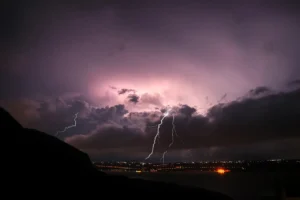
Initial information suggests the Korčula wildfire may have been caused by lightning strikes at two different locations, although the exact cause will be determined by a police investigation.
The fire has burned through grassland, low vegetation, Mediterranean scrub, vineyards and areas of dense pine forest. The pine-covered areas remain particularly challenging because the limited rainfall did not reach the ground beneath the dense tree canopy.
Tucaković warned that the danger has not completely passed, as the bora wind is expected and could quickly dry out the terrain again.
Firefighting aircraft deployed
Two Canadair CL-415 firefighting aircraft were involved in tackling the Korčula wildfire on Sunday, while another Canadair and an Air Tractor AT-802 were also dispatched to the area.
The firefighting aircraft were initially unable to take off on Sunday morning because of unfavourable weather conditions but joined the operation once conditions improved.
Firefighters will continue to patrol the area and extinguish remaining hotspots to prevent the fire from flaring up again, particularly in parts of the fireground that are difficult to access.
Grebaštica wildfire contained
The Korčula wildfire was not the only fire Croatian firefighters battled over the past 24 hours. The wildfire that broke out on Jelinjak hill near Grebaštica on Saturday afternoon was contained at 5:06 am on Sunday.
The fire burned around 100 hectares of grassland, low vegetation, Mediterranean scrub and pine forest. A total of 71 firefighters with 26 vehicles took part in the operation, supported by two Canadairs and five Air Tractors.
No homes were threatened and nine firefighters with three vehicles are now monitoring the area to prevent the fire from spreading again.
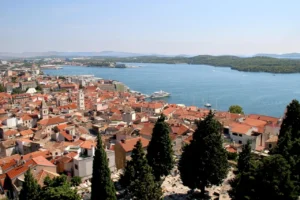
Šibenik-Knin County Fire Commander Darko Dukić said on Saturday evening that the situation had significantly improved, although firefighters would remain at the site overnight to continue securing the affected area.
Vodice wildfire extinguished
Another wildfire broke out near Vodice in Šibenik-Knin County on Saturday, burning around 900 square metres of grass and low vegetation.
Seventeen firefighters with six vehicles took part in the operation, supported by a Canadair. The fire was extinguished just over two hours after it was reported.
One firefighter suffered minor injuries and received medical treatment.
Fires on Dugi Otok and Brač
A wildfire in Telašćica Nature Park on Dugi Otok burned around half a hectare of pine forest. Twelve firefighters from the Sali Volunteer Fire Department tackled the blaze with three vehicles, supported by two Air Tractors.
The fire was contained, with crews remaining at the site overnight to monitor and secure the area.
Another fire near the village of Sali on Dugi Otok, which broke out on July 10, had previously been extinguished.
On the island of Brač, a fire in Lovrečina Bay burned through grass, low vegetation and pine forest. Firefighters from the Supetar Volunteer Fire Department extinguished the blaze, while an Air Tractor was deployed on an aerial reconnaissance mission.
Hundreds of hectares burned
The latest wildfires follow a series of major firefighting operations along the Croatian coast in recent days.
On Hvar, a wildfire near Ivan Dolac that burned around 200 hectares was extinguished, while ten hectares of grassland, Mediterranean scrub and pine forest burned near Vinišće.
The Čiovo wildfire, which broke out on June 30 and burned 116 hectares, was extinguished on July 10 after several days of monitoring and securing the fireground.
Near Metković, a wildfire in a protected ornithological reserve near Vid burned around 160 hectares of reeds on the Croatian side of the border and also spread into Bosnia and Herzegovina.
According to the Croatian Firefighting Association, 145 firefighting interventions were recorded during the latest 24-hour reporting period. A cumulative total of 1,024 firefighters and 353 fire engines were involved, while the total area of vegetation burned was 652 hectares.