This page is regularly updated with the latest information on current Croatia wildfires, with links to detailed reports on individual incidents.
Brač wildfires ease after difficult night as firefighters tackle new blazes
Fires in Croatia Today: Updated September 14, 2026
Firefighters remain at the wildfire near Ložišća and Milna on Brač after a difficult night in which strong winds pushed the flames towards homes and accommodation in the bays of Duboka and Osibova. People staying in the affected area were moved to safety by boat, although a formal evacuation was not declared.
The fire, which broke out on 10 September, threatened the Gava resort and nearby properties. Firefighters defended most of the buildings, but some auxiliary buildings at the resort were affected. Two people were taken to KBC Split for further medical checks. No firefighters were injured.
Conditions improved during the day as crews worked to contain remaining hotspots. A total of 236 firefighters with 68 vehicles were deployed, supported from the air by four Canadair aircraft and three Air Tractors. The situation is now satisfactory, though firefighters will remain on site overnight, the Croatian Firefighting Association (HVZ) reports.
A separate wildfire broke out above Bol on Brač during the afternoon, in difficult-to-access terrain. Firefighters were transferred from the Milna operation and two Canadairs helped tackle the blaze. Conditions there are favourable and crews continue to monitor the area.
Firefighters tackle wildfire near Sevid
A wildfire also broke out near Sevid, burning grass, low vegetation and maquis. Firefighters from Split-Dalmatia and Šibenik-Knin counties responded, with a combined 95 firefighters and 29 vehicles. Two Canadairs and one Air Tractor supported them until nightfall.
Firefighters are now working to contain remaining hotspots at Sevid, where conditions are also reported to be satisfactory.
Fires remain active on Dinara and Plješevica
Fires in Croatia Today: Updated September 10, 2026
Wildfires remain active near Polača on Dinara and on Plješevica near the border with Bosnia and Herzegovina, HVZ reports. Six firefighters continued working on Dinara, while ten firefighters and two Canadairs were deployed to Plješevica.
A smaller vegetation fire near Vrana was extinguished within an hour on September 9 with help from an Air Tractor. The fire near Plano outside Trogir remains localised after burning 52 hectares.
Several coastal fires brought under control, fires in Bosnia still causing smoke across Dalmatia
Fires in Croatia Today: Updated September 8, 2026
Most of the recent wildfires in Dalmatia are now under control or localised, according to the latest report from the Croatian Firefighting Association. The fire near Plano outside Trogir burned 52 hectares and required 80 firefighters, 27 vehicles and four firefighting aircraft. Crews remained at the site overnight, while the smaller fire near Dicmo was brought under control and the Biokovsko Selo fire was extinguished.
The Perković fire was localised after burning 145 hectares, while the fire at Gornji Bitelić and Mali Maglaj also remains localised and under observation. Fires near Polača on Dinara and Otišić on Svilaja remain active. Firefighters added that smoke and the smell of burning reported across parts of Dalmatia are linked to large fires in Bosnia and Herzegovina, advising residents to close their windows and follow instructions from local authorities.
Read more: Bosnia Wildfires Affect Air Quality Along the Dalmatian Coast
Smoke across Dalmatia comes from wildfire in Bosnia and Herzegovina
Fires in Croatia Today: Updated September 6, 2026
Firefighters have received an increased number of calls from concerned residents after smoke and the smell of burning spread across parts of Dalmatia.
The Split-Dalmatia County Fire Operations Centre said the smoke, which can be seen and smelled from Imotski to the coast and islands, is coming from a large wildfire in neighbouring Bosnia and Herzegovina. Firefighters confirmed that there is no active fire nearby.
According to reports from local emergency services in Bosnia and Herzegovina, the smoke is believed to be coming from a large wildfire spreading across the Ljubuša mountain area between Kupres, Tomislavgrad and Prozor-Rama. The fire, which began near Zvirnjača on Friday afternoon, had not been brought under control by Sunday morning.
New fires reported across Dalmatia and Istria
Fires in Croatia Today: Updated September 5, 2026
Several fires broke out in Dalmatia and Istria on September 3 and 4. The fire near Perković remained active on September 5 after burning around 70 hectares, while smoke and ash were carried as far as Kaštela near Split. Firefighters also responded to fires on Dinara, near Solin and at Šumber in Istria. The Solin fire was extinguished, while the fire near Šumber was localised.
Read more: Wildfires in Dalmatia Send Smoke Towards Split as Firefighters Battle Several Blazes
Fires extinguished near Nin, Omiš and Sinj, Karlovac industrial fire remains under control
Fires in Croatia Today: Updated September 3, 2026
Firefighters have extinguished three vegetation fires in Zadar and Split-Dalmatia counties, while work continues at the site of an earlier industrial fire in Karlovac, according to the Croatian Firefighting Association.
The largest fire affected approximately 75 hectares of grass, scrub and maquis near Grbe, close to Nin. Ground crews and firefighting aircraft took part in the operation. One firefighter suffered minor injuries, and the fire was extinguished during the night.
A separate fire near Srijane in the Omiš area burned six hectares of grass and low vegetation. It was brought under control by 39 firefighters from several local brigades, supported by an Air Tractor firefighting aircraft.
Near Otok in the Sinj area, another fire affected around one hectare of grass and low vegetation. One house was damaged before firefighters extinguished the blaze later in the evening.
In Karlovac, firefighters continue to monitor and clear the site of an industrial fire that began on 31 August. The fire remains under control.
Wildfire near Dubrovnik remains active, Dinara fire contained
Fires in Croatia Today: Updated August 30, 2026
The wildfire on the island of Molat, which broke out on August 27, has been extinguished with the help of 32 firefighters and one Air Tractor aircraft. The fire burned approximately 2,500 square metres of pine forest.
The wildfire on Mount Dinara, which crossed into Croatia from Bosnia and Herzegovina on August 14, has been contained. The fire affected around 6,000 hectares of grassland, low vegetation and forest. Firefighters from the Knin area continue to monitor the site.
The wildfire near Dubrovnik remains active after crossing from Bosnia and Herzegovina into the Duba Konavoska area on August 21. Firefighters remain on duty on the Croatian side of the border and continue to secure the burned area.
Dinara and several major wildfires extinguished, fire near Dubrovnik remains active
Fires in Croatia Today: Updated August 27, 2026
The Dinara wildfire, which crossed into Croatia from Bosnia and Herzegovina and burned around 6,000 hectares of grass, low vegetation and forest, was brought under control on August 26 at 8:04 pm, the Croatian Firefighting Association reported.
The Omiš and Lokva Rogoznica wildfire, which began on August 13 and burned around 1,000 hectares, was extinguished on August 26 at 8 pm. One person died, 43 people were injured, including three firefighters, and around 2,500 people were evacuated during the fire.
Near Dubrovnik, one wildfire remains active on the Bosnian side of the border, while the Ivanica fire that crossed into Župa Dubrovačka has been extinguished.
Read more: Another Wildfire Near Dubrovnik Crosses Border From Bosnia and Herzegovina
Wildfires remain active in Dinara and near Dubrovnik, Pakleni Islands fire extinguished
Fires in Croatia Today: Updated August 26, 2026
The wildfire on Dinara, which crossed into Croatia from Bosnia and Herzegovina, remains active after first being detected through the Šibenik-Knin County video surveillance system on August 14.
The fire has affected grass, low vegetation and forest, while the total burned area has not yet been assessed. On August 25, firefighters from IVP Šibenik, the Knin Public Fire Brigade and DVD Knin took part in firefighting operations.
Pakleni Islands fire extinguished
The wildfire on Sveti Klement, part of the Pakleni Islands near Hvar, was extinguished on August 25 at 6:30 pm.
The Split-Dalmatia County fire operations centre had received the initial report on August 24 at 11:38 am.
Two fires monitored near the Dubrovnik border
Firefighters in the Dubrovnik area are keeping two wildfires along the border with Bosnia and Herzegovina under control. The fires are burning immediately along the border and have occasionally crossed into Croatian territory, the Croatian Firefighting Association (HVZ) reports
Read more: Another Wildfire Near Dubrovnik Crosses Border From Bosnia and Herzegovina
Wildfires remain active across Croatia as firefighters continue monitoring affected areas
Fires in Croatia Today: Updated August 24, 2026
Wildfire breaks out on Pakleni Islands near Hvar
A wildfire broke out on the Pakleni Islands near Hvar on Monday, with firefighters on the ground and Canadair aircraft fighting the blaze from the air.
Read more: Wildfire Breaks Out on Pakleni Islands Near Hvar, Canadairs Join Firefighting Effort
Dinara wildfire still active
Firefighters from the Šibenik and Knin areas are continuing to battle the wildfire on Dinara, which broke out on August 14. Grass, low vegetation and forest are burning across difficult-to-access terrain.
Firefighting aircraft have also been deployed, with Air Tractor planes assisting ground crews. Aerial firefighting operations are continuing on Monday.
Omiš and Lokva Rogoznica fire contained
The wildfire near Omiš and Lokva Rogoznica was contained over the weekend. Firefighters from the Omiš area remain on standby and continue to monitor the affected area.
Around 500 hectares burned on Pelješac
The wildfire on the Pelješac peninsula remains under the control of firefighters, who are continuing to secure and monitor the fireground.
An estimated 500 hectares of grass, low vegetation and pine forest have burned.
Ivanica fire crosses into Croatia
The wildfire near Ivanica, which has been burning for several days on the Bosnian side of the border, crossed into Croatia on Sunday. Grass, low vegetation and maquis were affected.
A rapid response by Dubrovnik firefighting units brought the fire under control on the Croatian side of the border. Firefighters continue to monitor the area.
Read more: Another Wildfire Near Dubrovnik Crosses Border From Bosnia and Herzegovina
Trebinje wildfire crosses into Croatia near Konavle
Fires in Croatia Today: Updated August 22, 2026
A wildfire burning near Zubci in Bosnia and Herzegovina crossed into Croatia overnight, reaching the Konavle area south of Dubrovnik. The fire remains far from homes, but difficult terrain is complicating firefighting efforts, while smoke has spread across parts of Konavle and Župa Dubrovačka. An Air Tractor has surveyed the area, with further aerial support possible depending on conditions.
Read more: Wildfire Crosses Into Croatia Near Konavle, Smoke Spreads Across Dubrovnik Area
Dinara wildfire remains active, firefighters monitor blaze near Dubrovnik on Croatian border
Fires in Croatia Today: Updated August 20, 2026
The wildfire on Dinara, which spread into Croatia from Bosnia and Herzegovina and was first detected by a video surveillance system on August 14, remains active.
The fire has affected grassland, low vegetation and forest across an area that has not yet been assessed.
A total of 23 firefighters with 12 vehicles from several professional and volunteer fire brigades have been involved in the operation. Four firefighting aircraft and 26 members of the Croatian Armed Forces with three vehicles have also assisted.
Firefighters monitoring wildfire near Ivanica
Firefighters in Dubrovnik-Neretva County are closely monitoring a wildfire near Ivanica in Bosnia and Herzegovina, close to the Croatian border.
The county fire commander has travelled to the Ivanica area to assess the situation, while Croatian firefighters are ready to respond depending on how the fire develops.
Pelješac wildfire under control
The wildfire on the Pelješac peninsula, which broke out on August 14, remains under the control of firefighters.
Brač fire extinguished, operations continue near Omiš
The wildfire in Pučišća on the island of Brač has officially been declared extinguished.
Firefighters are still carrying out mop-up operations in the area of Lokva Rogoznica and Omiš.
Wildfires around Zadar extinguished, work continues on Pelješac and near Omiš
Fires in Croatia Today: Updated August 18, 2026
The wildfires that broke out in recent days around Savar on Dugi Otok, Ninski Stanovi, Galovac and Jovići near Ražanac in Zadar County have now been extinguished, the Croatian Firefighting Association (HVZ) has confirmed.
The wildfire on Dinara, which started on August 14, remains active. Grass, low vegetation and forest are still burning, with dozens of firefighters involved in the response and six firefighting aircraft deployed.
On Pelješac, part of the fireground flared up again, but the situation was quickly brought under control with the help of a Canadair CL-415. Firefighters are continuing to secure and monitor the burned area.
The wildfire near Pučišća on the island of Brač also remains under control, with firefighters continuing to monitor the site.
Wildfire near Zadar brought under control
Fires in Croatia Today: Updated August 17, 2026
A wildfire broke out on Sunday in the Jovići-Slivnica near Zadar. A total of 50 firefighters with 17 vehicles were deployed, while two Air Tractor Fire Boss aircraft and one CL-415 Canadair assisted from the air. The fire is currently under the control of firefighters but has not yet been officially declared localised.
Chief Fire Commander Slavko Tucaković said firefighters had successfully defended homes threatened by the fire near Jovići. Crews are continuing to secure the fireground with the assistance of two Air Tractors, while firefighting teams will remain on duty overnight.
Tucaković added that the situation on Dinara is also expected to improve by the end of the day, with both ground crews and firefighting aircraft involved. Firefighters also continued securing previously affected areas near Lokva Rogoznica, Kuna Pelješka, on Dugi Otok and near Galovac during Sunday. Conditions at all of these locations are currently stable, allowing all extraordinary firefighting deployments from continental Croatia to be released.
Wildfire on Dugi Otok remains active, major operations continue near Omiš and on Pelješac
Fires in Croatia Today: Updated August 15, 2026
A wildfire near Savar on Dugi Otok remains active, with 50 firefighters and 19 vehicles deployed and two Canadair CL-415 aircraft supporting crews from the air. Firefighters successfully protected all buildings in the area.
Operations are also continuing at the much larger fire near Lokva Rogoznica and Omiš, where around 1,000 hectares have burned, as well as on Pelješac, where crews are securing a fire site covering approximately 500 hectares of pine forest. The situation at all three fire sites was reported as more favourable on August 15, although firefighting and site-restoration work is continuing.
Read more: Wildfire on Dugi Otok Remains Active, Firefighting Efforts Continue Near Omiš and on Pelješac
Wildfire spreads towards Omiš, more than 1,000 people evacuated
Fires in Croatia Today: Updated August 14, 2026
The wildfire that broke out in Lokva Rogoznica spread towards Omiš overnight, damaging homes, vehicles and other property. More than 1,000 residents and tourists were evacuated, while several people were injured.
Read more: Wildfire Spreads Towards Omiš, Homes and Vehicles Burned, Residents Evacuated
Wildfire threatens homes on Pelješac
A large forest fire is burning in the Kuna Pelješka area on the Pelješac peninsula, affecting grass, low vegetation and pine forest. The flames have threatened nearby homes, while strong winds are making firefighting efforts more difficult.
Firefighters from Dubrovnik-Neretva County and the Dubrovnik Intervention Firefighting Unit have been deployed, along with four Canadair CL-415 aircraft.
Read more: Wildfire on Pelješac Threatens Homes, Four Canadairs Deployed and Ferry Service Increased
Large wildfire in Lokva Rogoznica
Fires in Croatia Today: Updated August 13, 2026
A large wildfire broke out in Lokva Rogoznica on August 13, closing the D8 coastal road and prompting a larger emergency response.
Read more: Large Wildfire in Lokva Rogoznica Forces Road Closure, Police on Standby for Evacuation
Wildfire on Brač spreads rapidly in strong winds
Fires in Croatia Today: Updated August 13, 2026
A wildfire on Brač broke out overnight near Pučišća and spread rapidly in strong winds. Dozens of firefighters and four Canadair aircraft were deployed, while crews managed to protect nearby homes.
Read more: Wildfire on Brač Spreads in Strong Winds, Four Canadairs Deployed
Wildfire on Vrgada burns more than 17.5 hectares of pine forest
Fires in Croatia Today: Updated August 10, 2026
A wildfire that broke out shortly after midnight on the island of Vrgada burned more than 17.5 hectares of pine forest at two locations. A total of 56 firefighters were transported to the island by boat, while two Canadairs and four Air Tractors supported the operation from the air.
The fire is now under control, with crews remaining on site overnight for monitoring and further work on the burned area.
Fires near Rijeka and Split extinguished
A wildfire near Marinići, in the Rijeka area, burned around four hectares of grass and low vegetation before being extinguished on August 9. The operation involved 49 firefighters and 14 vehicles.
In Split-Dalmatia County, the long-running fire at a bulky waste disposal site in Prapratnica, first reported on July 31, was also extinguished, along with a separate wildfire near Lećevica.
Wildfire near Radučić localised after Canadair intervention
Fires in Croatia Today: Updated August 7, 2026
A wildfire near Radučić in Šibenik-Knin County burned around 35 hectares of grass, low vegetation and scrub on August 7. A total of 28 firefighters with 11 vehicles were deployed, supported by two Canadair CL-415 aircraft. The fire was localised at 20:35.
Fires near Vrgorac and Labin remain among the larger incidents
In Split-Dalmatia County, a wildfire near Bokšić in Zavojane burned around 10 hectares and was fought by firefighters from Vrgorac with support from two Canadairs and one Air Tractor. The site remains under firefighter control, with overnight patrols and remediation continuing. Another fire near Labin burned around 6,000 m² of grass, low vegetation and scrub before being localised at 15:35; 24 firefighters and three firefighting aircraft were involved.
Across Croatia, 143 firefighting interventions were recorded between 07:00 on August 7 and 07:00 on August 8, involving 766 firefighters, 265 vehicles and 12 firefighting aircraft. The total area burned during the period was 56.6 hectares.
Zadar wildfire localised after three days
Fires in Croatia Today: Updated August 6, 2026
The wildfire near Bokanjac in Zadar, first reported on 3 August, remains localised. The fire affected grass, low vegetation and pine forest across an estimated 14 hectares.
A total of 44 firefighters with 17 vehicles initially responded, supported by six firefighting aircraft. On 4 August, 48 firefighters, 19 vehicles and two Canadair CL-415 aircraft were deployed. Firefighters from the Zadar Public Fire Brigade continued securing and remediating the site throughout 5 August and overnight.
Ten-hectare wildfire extinguished near Barban
A wildfire near Rojnići in the Barban area of Istria was extinguished shortly after midnight on 6 August. The fire burned approximately 10 hectares of grass, low vegetation and woodland.
The operation involved 29 firefighters with 13 vehicles, supported by four Canadair CL-415 aircraft. A smaller fire near Marčana, which affected 2,000 square metres, was also extinguished on Tuesday afternoon after an operation involving 27 firefighters and an Air Tractor aircraft.
The earlier wildfire near Mandalenčići in the Gračišće area remains localised. It burned 15.5 hectares, with crews continuing to monitor and remediate the site.
Fires near Klis and Labinske Drage extinguished
The wildfire near Korušce in the Klis area was extinguished on 5 August after burning 15 hectares of grass, low vegetation and scrubland. Twenty firefighters with eight vehicles took part in the operation, supported by five Canadair aircraft.
The fire in Labinske Drage was also extinguished after affecting approximately nine hectares. Firefighters from several units were assisted by five Canadair aircraft and the Robel firefighting train.
The 90-hectare wildfire at Debelo Brdo and Ravno Vrdovo was extinguished on 4 August. Meanwhile, the bulky waste fire near Prapatnica remains under control, with crews continuing to secure and remediate the site.
Fire near Debelo Brdo remains active, six aircraft deployed
Fires in Croatia Today: Updated August 4, 2026
Croatian firefighters recorded 147 interventions over the latest reporting period, involving 796 firefighters, 299 vehicles and 16 firefighting aircraft. The total burned area was estimated at 59.1 hectares.
In Split-Dalmatia County, the wildfire near Prapatnica remains under control, with crews continuing to secure and remediate the site. The fire in the Debelo Brdo–Ravno Vrdovo area is still active, with six firefighting aircraft deployed during August 3.
In Zadar County, the wildfire near Vrsi was declared extinguished on August 3. A separate fire near Bokanjac burned around 12 hectares before being localised, while another wildfire near Pakoštane was also brought under control.
Several fires in Istria were extinguished or localised, including those near Markovići, Orihi, Barbariga and Mandalenčići.
143 firefighting interventions recorded across Croatia
Fires in Croatia Today: Updated August 2, 2026
Croatian firefighters recorded 143 interventions over the previous 24 hours, involving 774 firefighters, 259 vehicles and seven firefighting aircraft. The total area affected by fire was 60.4 hectares.
Fire near Barban flares up again in strong winds
The most significant active fire was near Orihi in Barban, Istria, where strong bura winds caused flames to flare up again in difficult terrain and dense vegetation. Twenty-five firefighters with ten vehicles were deployed, supported by two Air Tractor aircraft.
Fire officials said the situation was favourable, with no threat to residents or nearby homes. Fires near Orihi and Markovići had previously been localised after burning around 15 and 30 hectares respectively.
Fire near Split remains under supervision
In Split-Dalmatia County, the Prapatnica landfill fire near Prgomet remained under firefighter supervision after spreading to grass and low vegetation over an estimated two hectares.
Fires near Labin, Novi Sela near Omiš and Drage near Pakoštane were extinguished after burning a combined area of around 13.5 hectares.
Wildfire near Split localised, fire in Split centre contained
Fires in Croatia Today: Updated August 1, 2026
Firefighters have brought the wildfire near Split under control, while the fire on Dinara has been extinguished and crews continue monitoring the Košer landfill fire on Brač.
During the past 24 hours, Croatian firefighters responded to 145 interventions involving 632 firefighters and four Canadair aircraft.
Read more: Wildfire Near Split Sends Smoke Across the Coast, Another Fire Breaks Out in Split Centre.
Wildfire near Split sends large smoke plume across the coast
Fires in Croatia Today: Updated July 31, 2026
Firefighters are battling a major fire at the Adriatic–Blizna waste disposal site near Trogir, west of Split, with two Canadair aircraft supporting ground crews.
Read more: Wildfire Near Split Sends Large Smoke Plume Across the Coast
Fire on Brač remains active
A fire at the Košer municipal waste disposal site near Pučišća on Brač remained active on Friday morning after firefighters worked through the night. Seventeen firefighters with seven vehicles were deployed, while Croatia recorded 118 firefighting interventions nationwide in the previous 24 hours.
Read more: Fire on Brač Still Active After Overnight Firefighting Efforts
What visitors should know about wildfires in Croatia
Updated July 28, 2026
Wildfire reports can look alarming, especially when dramatic images are shared without much context. Our detailed guide explains how common wildfires are, when the risk is highest, how Croatia responds and whether fires are likely to affect your holiday.
Smaller fires contained, no major disruption reported
Fires in Croatia Today: Updated July 27, 2026
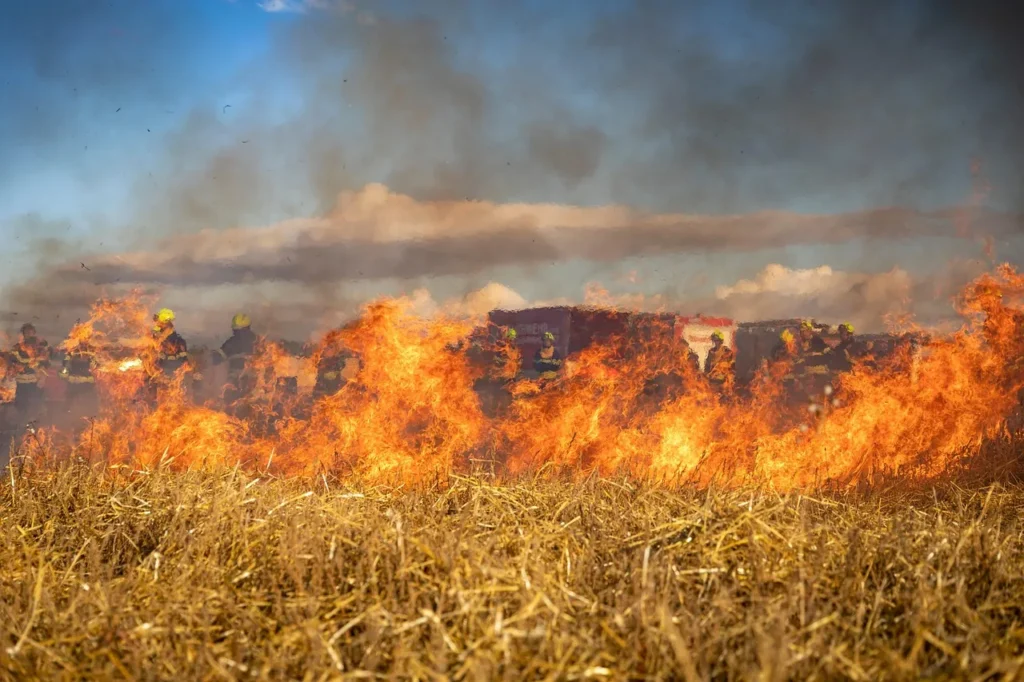
No major wildfires were reported in Croatia during the 24-hour period from 26 to 27 July.
Firefighters responded to 117 incidents nationwide, involving 508 firefighters and 137 vehicles, while the total burned area amounted to 7.1 hectares.
A one-hectare vegetation fire near Krušvara, close to Dicmo in Split-Dalmatia County, was extinguished with the assistance of two Canadair aircraft, while an earlier fire near Vrgorac remained under control.
Croatian firefighters also dealt with several building fires and other smaller incidents, but authorities reported no other major or significant interventions.
Wildfires on Brač and near Primošten brought under control
Fires in Croatia Today: Updated July 24, 2026
The latest current Croatia wildfires report covers firefighting operations on Brač and in several other coastal areas, where ground crews received support from firefighting aircraft. Read the full report on the fires on Brač, near Primošten, in Grabrovo and on Lopud.
Korčula wildfire brought under control
Fires in Croatia Today: Updated July 12, 2026
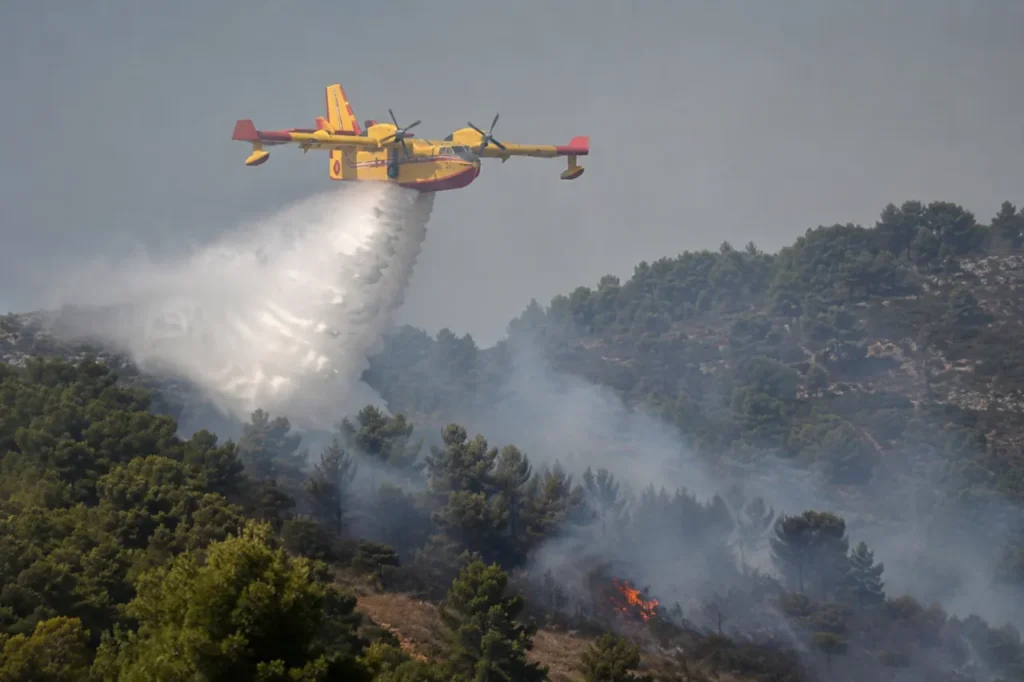
The latest current Croatia wildfires update followed a demanding night for firefighters, as several fires across the Croatian coast were brought under control. Read the full Croatia wildfires update for more details.
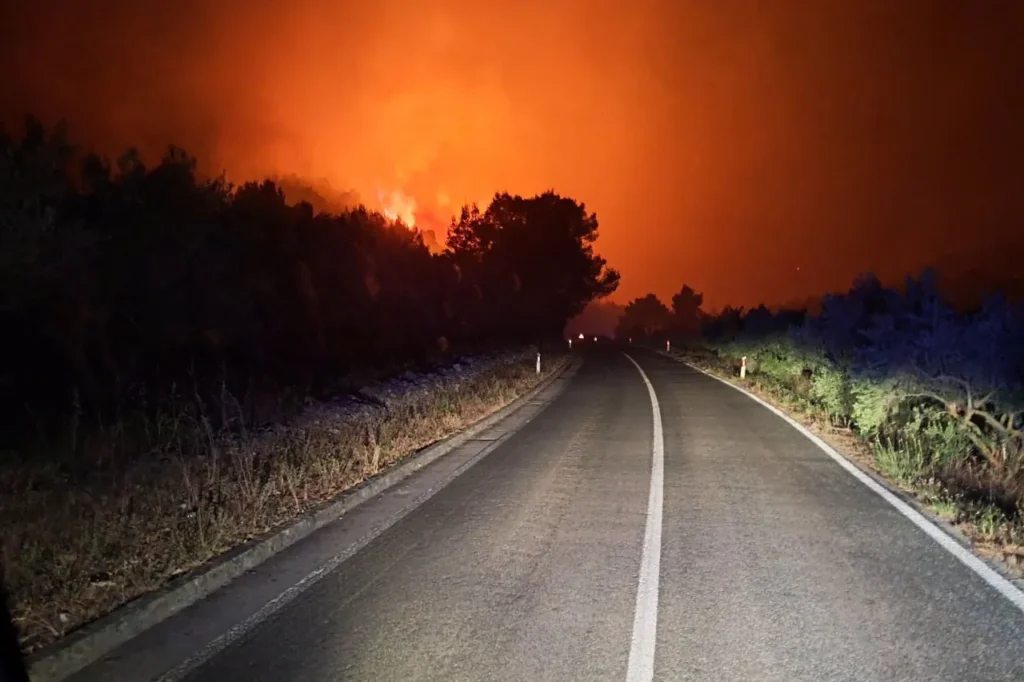
Current Croatia wildfires
Fires in Croatia Today: Updated July 9, 2026
Several of the largest current Croatia wildfires that have affected the Adriatic coast over the past ten days have now been extinguished, offering some relief after a period marked by extreme heat, dry vegetation and multiple large-scale firefighting operations.
According to the Croatian Firefighting Association (HVZ), fires near Metković, Ivan Dolac on the island of Hvar and Vinišće have all been declared extinguished, while the large wildfire on Čiovo remains under control and is being monitored to prevent any flare-ups.
The latest wildfire broke out on Thursday morning between Stanići and Čelina near Omiš. Around 60 firefighters from four local fire brigades responded with 13 vehicles after flames spread through low vegetation and Mediterranean scrub over an area of approximately 100 by 150 metres. The fire was brought under control within an hour and fully extinguished shortly afterwards.
Although several major fires have now been extinguished, firefighters continue to monitor former fire sites, particularly on Čiovo, where the wildfire that started on 30 June burned around 116 hectares of grassland, low vegetation and forest. The fire remains localised, meaning it is under control but still requires regular patrols and rehabilitation work.
On Hvar, the wildfire near Ivan Dolac, which broke out on 4 July, destroyed around 200 hectares of grassland, pine forest and Mediterranean vegetation before being officially declared extinguished on 8 July.
The fire near Vinišće, west of Split, also ended on 8 July after burning approximately 10 hectares of vegetation close to residential areas.
Further south, firefighters successfully extinguished the wildfire near Metković after several challenging days in a protected bird reserve near the border with Bosnia and Herzegovina. The blaze eventually affected around 160 hectares of reed beds on the Croatian side before spreading across the border. The difficult marshland terrain severely limited access for ground crews, with Canadair CL-415 aircraft and an Air Tractor playing a key role in bringing the fire under control.
A demanding week for Croatian firefighters
The first week of July has been among the busiest periods of this year’s fire season.
Between the mornings of 8 and 9 July alone, Croatia recorded 93 firefighting interventions, involving 109 fire departments, 404 firefighters and 128 fire engines across the country.
During the previous 24-hour reporting period, another 93 interventions required more than 400 firefighters, 160 fire engines and three firefighting aircraft.
In addition to the larger wildfires, firefighters also responded to several smaller incidents on Brač, near Prgomet and around Omiš. Most of these were extinguished quickly thanks to rapid intervention by local fire brigades before they could spread further.
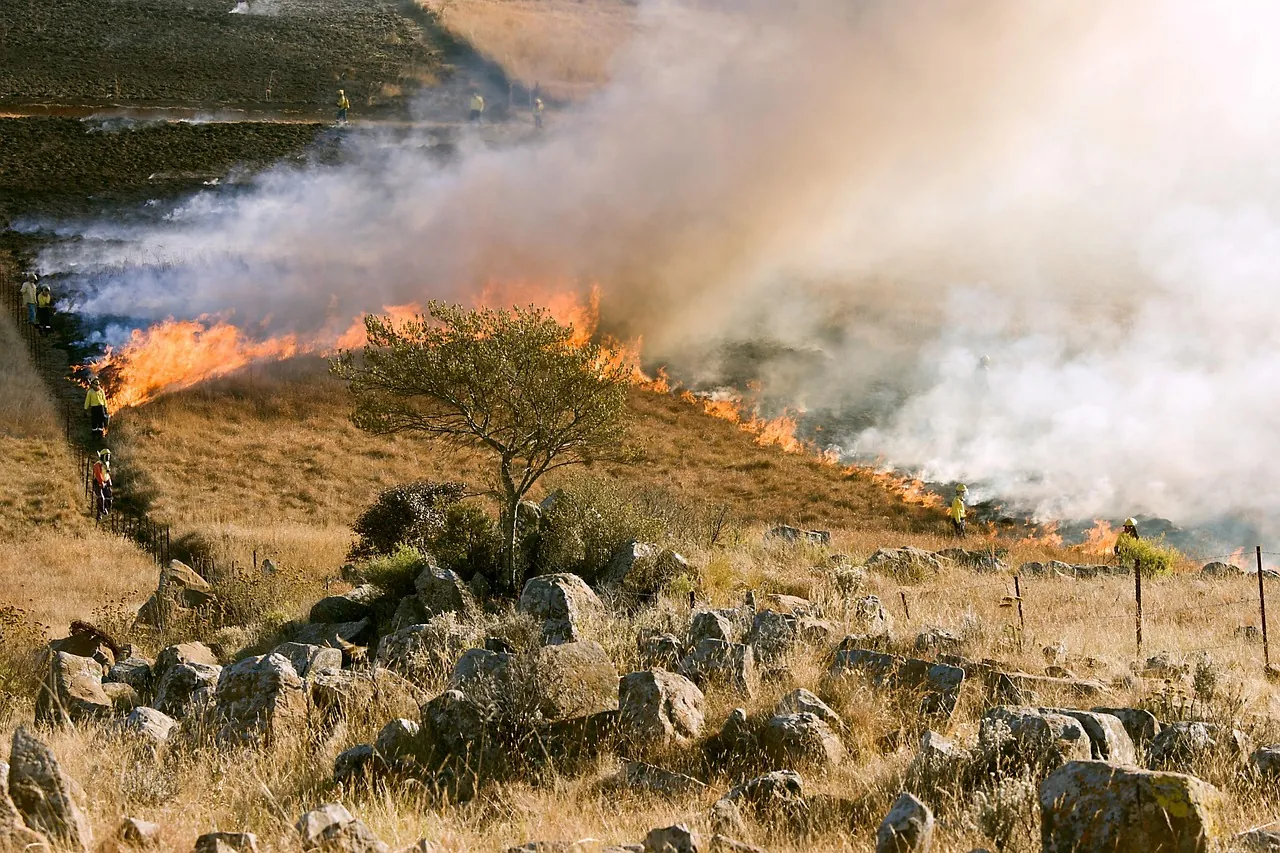
Fire danger remains despite improving situation
While the current Croatia wildfires are largely under control, authorities stress that the fire season is far from over.
Croatia experienced one of its strongest heatwaves in recent years during the second half of June and the beginning of July, with exceptionally high temperatures, prolonged drought and strong winds creating ideal conditions for wildfires. The same weather pattern also contributed to severe thunderstorms and destructive fires across parts of the country.
Meteorologists are now forecasting another period of very hot weather across southern Europe in the coming days. Although the Croatian Meteorological and Hydrological Service (DHMZ) has not yet issued new heat warnings for Croatia, fire officials continue to urge residents and visitors to remain cautious.
The Croatian Firefighting Association reminds the public that even a small ignition source can quickly develop into a serious wildfire during hot and dry conditions. Anyone who notices smoke or fire should immediately call the emergency services on 193 or 112.
As the current Croatia wildfires gradually move from active firefighting to monitoring and rehabilitation, emergency services remain on standby, knowing that the summer fire season is only entering its busiest months.