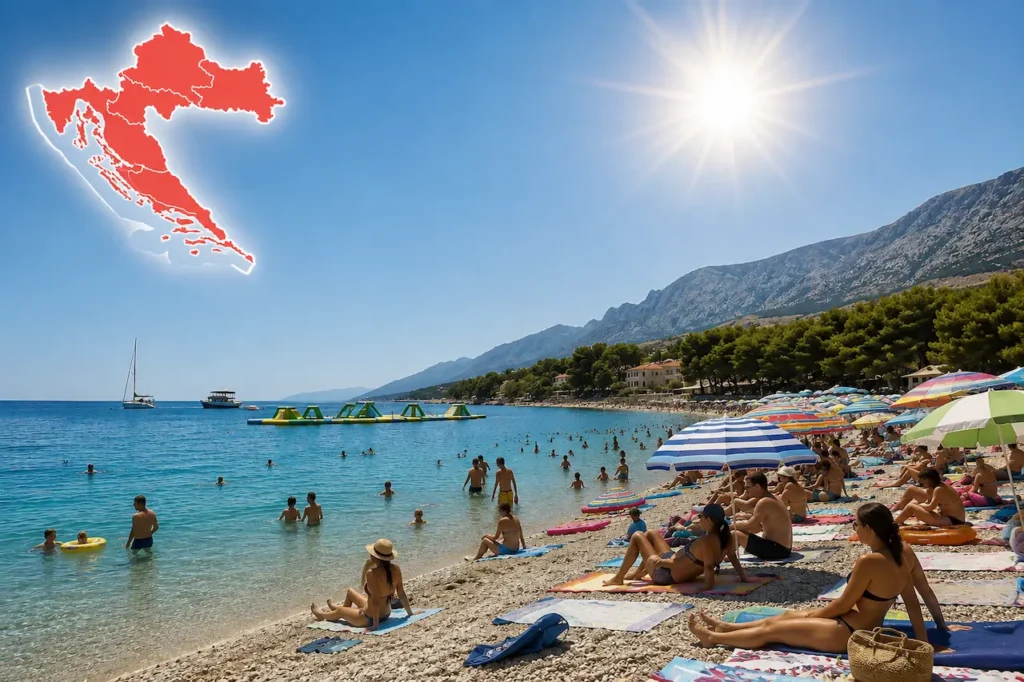
Image: Red heatwave warning in Croatia/CU,DHMZ
All parts of Croatia are under the highest heat alert on Thursday, 6 August, with temperatures expected to reach 39°C in some regions.
The red heatwave warning in Croatia covers all eight forecast regions monitored by the Croatian Meteorological and Hydrological Service, including Osijek, Zagreb, Karlovac, Gospić, Knin, Rijeka, Split and Dubrovnik. DHMZ warns that extremely high temperatures may affect health and cause disruption to infrastructure.
The highest temperatures are expected in the Osijek and Knin regions, where they could exceed 39°C. Temperatures of up to 38°C are forecast for Zagreb and Karlovac, while Rijeka and Split could reach 37°C. Gospić is expected to reach 36°C and Dubrovnik 35°C.
The red heatwave warning in Croatia follows another day of extreme temperatures. According to DHMZ measurements reported on Wednesday, 39.5°C was recorded in Valpovo, while temperatures reached 39°C in Gradište near Županja, Slunj and at the Zagreb-Grič station.
Thursday will remain sunny and extremely hot, with maximum temperatures generally ranging from 34°C to 39°C. Stronger cloud development could bring isolated showers and thunderstorms to inland Istria and Dalmatia during the afternoon, with storms also possible in mountainous parts of the country.
Red Heatwave Warning in Croatia Continues Along the Adriatic
Conditions will begin to ease in some inland regions on Friday, but the highest-level alert will remain in force for Rijeka, Split and Dubrovnik. Knin will be under an orange heat warning, while yellow warnings will apply to the remaining regions.
The red heatwave warning in Croatia will continue in the Rijeka, Split and Dubrovnik regions on Saturday. The Knin region will remain under an orange warning, while the remaining inland regions are expected to return to green alert levels.
The coastal regions are expected to remain under the highest heat alert on Sunday and Monday as well, according to the current DHMZ heatwave outlook.
Friday will be partly sunny and more unstable, particularly away from the southern coast. Some rain will be possible overnight and during the morning in inland Croatia, while the likelihood of thunderstorms will increase from midday. Locally stronger storms may develop.
Maximum temperatures will range from 28°C to 33°C across much of inland Croatia, while eastern Croatia and the Adriatic coast could still reach between 34°C and 37°C.
Strong Bora Winds Expected Below Velebit
A yellow wind warning has also been issued for the Rijeka region on Friday.
Locally severe bora gusts are expected, particularly below the Velebit mountain range, with the strongest gusts exceeding 65 kilometres per hour.
Moderate to strong bora will affect parts of the Adriatic. Storm-force gusts are possible below Velebit during the first part of the day and again in the evening, while north-westerly and south-westerly winds are expected in Dalmatia during the afternoon.

Drought Pushes Croatian Rivers Towards Record Lows
The extreme heat is intensifying the effects of a prolonged dry period, with water levels falling sharply along several Croatian rivers.
The Danube and Drava have reached exceptionally low levels in eastern Croatia, making navigation difficult in some areas. Near Vukovar, conditions have become serious enough that some vessels can no longer continue their journeys, affecting traffic through Croatia’s largest river port.
The Sava is also running low near Slavonski Brod. Its water level stood at minus 34 centimetres on Wednesday, compared with the recorded historical minimum of minus 63 centimetres.
The situation is particularly serious on smaller rivers. The Orljava near Požega has fallen to a depth of only four centimetres. Croatian Waters has warned that the Orljava and the Plitvica near Varaždin could completely dry up if substantial rainfall does not arrive.
Experts have said the Orljava could run dry within approximately ten days. Drinking water supplies are not currently considered to be at risk, but residents have been urged to reduce unnecessary water consumption.
Low river levels are also causing problems for fish farms and parts of the water supply system in Slavonia and Dalmatia.
Croatia is not facing these conditions in isolation. Prolonged periods of high temperatures and insufficient rainfall can reduce river flows across Europe, affecting inland navigation, agriculture, energy production and water supplies. Smaller and shallower rivers are generally among the first to experience severe consequences.
High River Temperatures Affect Krško Nuclear Plant
The temperature of the Sava is also being closely monitored because the river is used to cool the Krško Nuclear Power Plant in neighbouring Slovenia.
To prevent the temperature of the river in Slovenia from rising above 28°C, the plant was due to begin gradually reducing reactor output, initially to 80 per cent.
Croatian Economy Minister Ante Šušnjar said the country’s electricity supply remained secure and that the operation of the Krško plant was not endangered.
High temperatures have also increased the risk of railway tracks becoming deformed. Croatian Railways has therefore increased inspections and monitoring across the railway network.
DHMZ advises residents and visitors to avoid prolonged exposure to direct sunlight, particularly during the hottest part of the day, drink sufficient water and pay particular attention to children, older people and those with existing health conditions while the red heatwave warning in Croatia remains in force.