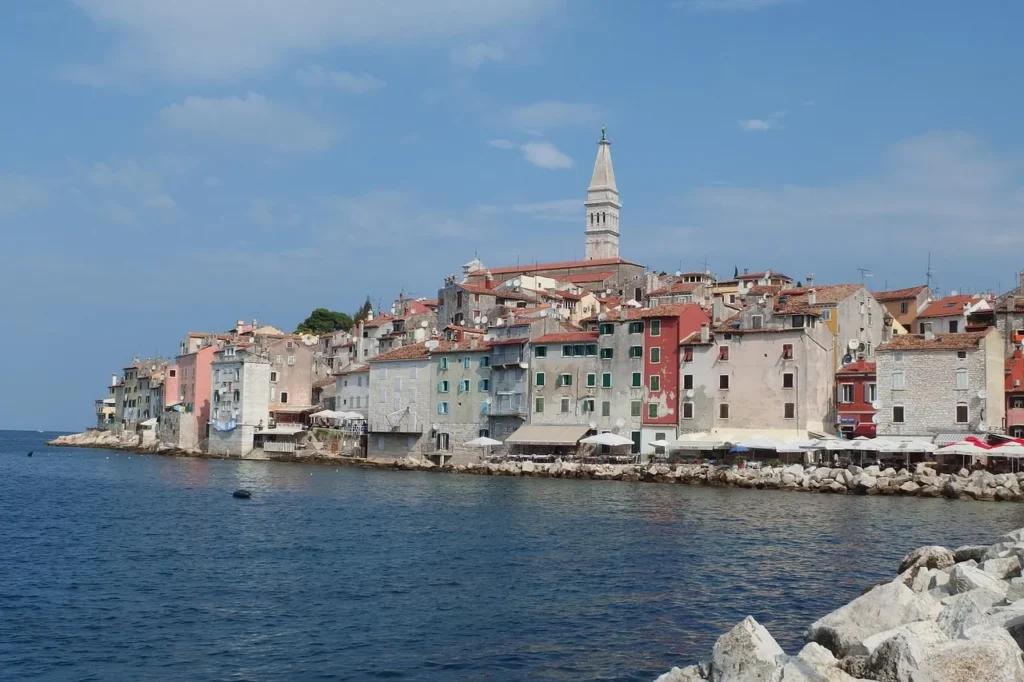
Rovinj’s City Council has unanimously adopted a declaration calling for the return of Italian language teaching in Croatia schools, starting with Croatian-language schools in Rovinj.
The initiative aims to reintroduce Italian as the “language of the social environment” from the first year of primary school, reflecting Rovinj’s long-standing bilingual character and the city’s Italian cultural heritage.
The proposal was presented by City Council President Tea Batel and originated from the Commission for the Protection of the Rights of the Italian National Community. It was supported by representatives of Rovinj’s autochthonous Italian community and Deputy Mayor Gianfranca Šuran.
Supporters of the initiative argue that stronger Italian language teaching in Croatia schools, particularly in bilingual communities such as Rovinj, is essential for preserving local identity and cultural heritage.
The declaration describes Rovinj-Rovigno as a historically bilingual and multicultural community shaped by centuries of coexistence between Croatian and Italian speakers. City officials argue that bilingualism should not exist only as a formal right but as a living part of everyday life that should be nurtured from an early age.
The document also points to the city’s statute, which guarantees the equal use of Croatian and Italian in public life, and calls on Croatian authorities to enable Italian language teaching throughout primary and secondary education in schools that currently teach in Croatian.
The initiative extends beyond schools. The declaration also encourages the introduction of Italian language learning in Croatian-language kindergartens, allowing children to become familiar with the language before starting formal education.
“Italian is part of our daily life and our shared heritage,” Batel said, adding that preserving the language means preserving the identity and cultural richness of the city.
Officials behind the proposal say that restoring Italian language teaching in Croatia schools would help future generations better understand the history, culture and linguistic traditions of the communities in which they live.
The declaration also calls for cooperation between local authorities, the Istria County administration, members of parliament from the region, representatives of the Italian minority and cultural organisations to support the initiative.
Mayor Emil Nimčević backed the proposal, describing Italian as an inseparable part of Rovinj’s identity and a language that should continue to be passed on to future generations.
By adopting the declaration, Rovinj’s City Council has sent a strong message about the importance of protecting bilingualism as one of the defining features of the city. Local officials hope the move will eventually lead to the return of Italian language teaching in Croatia schools in bilingual areas, helping preserve a tradition that has shaped Rovinj for centuries.