Getting around Croatia with pets can be challenging if you do not have your own transport. Bus companies, ferries, taxis and accommodation providers all follow slightly different rules. However, once you know what to expect, most trips run smoothly and without major issues.
This guide focuses primarily on transport and moving around the country. For most travellers, this is the best way to get around Croatia with pets without a car.
If you are looking for detailed information about entry requirements, documentation and the 21-day rabies rule, see our guide Planning a Trip to Croatia With a Dog: Entry Requirements and Pet Travel Rules.
In this guide:
Bus and ferry travel rules and limitations
Taxis and private transport options for pets
Accommodation policies and what to expect
Intercity buses in Croatia: what to know when travelling with pets
Intercity buses in Croatia can take pets, but whether they will depends on the company, the season and, at times, the driver standing in front of you. Rules aren’t strict, but they can be highly inconsistent.
Some operators allow small animals in carriers that must be placed on the seat beside the owner, in which case a full-priced passenger ticket is usually required. Others allow pets only in the luggage compartment beneath the bus and some do not accept animals at all.
Some operators charge a pet fare while others allow animals to travel free of charge. Most publish clear information on their websites, so it is worth checking the rules for your specific route in advance.
In summer, when buses are packed, flexibility drops, and there have been cases where drivers asked owners to place animals with the luggage, something travellers should keep in mind when choosing their mode of transport.
If a driver refuses boarding, there’s usually no quick workaround, which is why planning matters. Always clearly state that you are travelling with a pet when booking or purchasing tickets. In summer, choose early morning or later evening departures to avoid the strongest heat and peak crowds, and always arrive early at the station.
Ferries and catamarans in Croatia: pet rules and summer limits
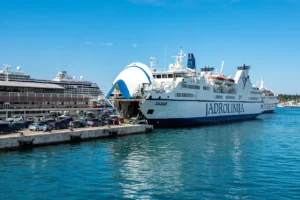
Getting around Croatia with pets on large passenger ferries is generally straightforward: animals must stay on the open deck, while only small pets in approved carriers (up to 8 kg) are allowed inside indoor lounges. In summer this often means spending the journey outside with limited shade, which can be challenging on longer routes. Owners should bring water and, if possible, something light to create shade during longer crossings.
Smaller boats and catamarans follow mixed rules. Private fast-boat operators often allow pets on open decks under the owner’s responsibility, while most catamaran companies accept only small pets in carriers and do not allow larger animals at all.
During July and August, even pet-friendly services may refuse boarding if the vessel is near capacity. Some operators transport pets free of charge, while others charge around 50% of the adult ticket price. For detailed information on using boat transport in Croatia, read our guide Croatian Ferry System Explained: Cars, Catamarans, Tickets and Boarding.
Taxis & ride-hailing: usually the easiest option
Taxis and ride hailing services in Croatia are generally pet friendly, but rules vary and it is always best to check before booking.
Uber Pet and Bolt Pet allow you to request a vehicle that accepts animals, while city taxis in some areas may also take pets, though a few drivers insist that animals travel in the luggage compartment, which is not suitable for most pets. Always ask the driver how they handle pet transport before you confirm the ride.
Private transfers: The smoothest way to travel with pets
Private transfers are usually the smoothest option for getting around Croatia with pets. Some companies specialise in pet travel across Croatia, while others simply accept pets on request, so it is always worth asking in advance. Transfers work well because you have space, flexibility and the ability to stop for water or shade whenever needed.
Drivers can refuse a journey if a pet is aggressive or not trained for transport, so owners should make sure their animals are calm and under control before boarding.

Pet-friendly accommodation in Croatia
Finding pet-friendly accommodation in Croatia is usually possible. Many hotels, apartments and private rentals allow pets, yet the term “pet-friendly” can mean different things depending on the host. In practice, it often comes with conditions. Expect questions about your pet’s size, number of animals and sometimes behaviour, especially in privately owned apartments, which make up a large part of the accommodation market.
Private apartments tend to be the most flexible option, particularly outside the busiest summer weeks. Still, flexibility has limits. Hosts may ask that pets are not left alone in the apartment, kept off certain furniture or supervised on balconies and in shared outdoor spaces. Hotels usually have clearer, written policies, but these often include daily fees, designated pet rooms or limits on how many animals are allowed per room.
The best approach is simple and direct communication before booking. In most cases, hosts respond positively when you communicate clearly in advance. In Croatia, most arrangements are handled informally but clearly. A short message confirming house rules avoids awkward situations later and helps establish trust with the host.
Beaches, old towns & public spaces
Across Croatia, pets are generally welcome in public areas, but rules differ depending on where you are. Dogs are allowed on promenades, parks and most outdoor spaces, although they must be on a leash everywhere except in designated dog parks. Breeds classified as dangerous by Croatian law are required to wear a muzzle.
In historic centres such as Dubrovnik, Split or Trogir, the leash rule is strictly enforced due to crowds, and owners are expected to pick up after their pets at all times because fines for not doing so can be significant.

Access to indoor spaces depends on the establishment; many cafes and some shops allow pets, while others do not, and this is usually clearly marked at the entrance.
When it comes to beaches, most coastal towns now have clearly marked dog friendly zones, unofficial local spots also exist where dogs swim freely, and the main city beaches often do not allow pets, especially in peak summer months.
If you are unsure where to go, locals will usually point you toward a quiet stretch of shoreline where your dog can swim without disturbing anyone.
Entry requirements and summer heat safety
For entry into Croatia, pets from EU countries need a valid EU pet passport, proof of microchip and up-to-date rabies vaccination. Pets from non-EU countries must present an official veterinary health certificate in addition to a valid rabies vaccination and microchip.
When getting around Croatia with pets, paperwork is only part of the preparation. Summer heat can be an even bigger concern: coastal stone streets and pavements become scorching, so walking during midday should be avoided, especially on beaches where dogs may run and swim for hours under strong sun.
Always carry water, avoid the hottest hours, and check pavement temperature with your hand before walking. Sunstroke and dehydration are real risks for pets.
The local truth about getting around Croatia with pets
Most of Croatia, especially the coast, runs on common sense. People are warm, used to animals and more flexible than official rules might suggest. You will often find water bowls outside cafés and it is common for passersby to stop and ask if they may pet your dog. There is a general willingness to help, especially when people see that you are travelling with an animal.
Getting around Croatia with pets becomes easier when you communicate early with transport providers, bring the essentials your pet needs, avoid the biggest crowds and stay flexible and patient throughout your journey.
With a bit of planning, travelling the Adriatic with a pet can be just as relaxed and memorable as travelling without one, sometimes even more so.
Frequently asked questions about getting around Croatia with pets
Can dogs travel on intercity buses in Croatia?
Yes, but rules vary by company. Some allow small pets in carriers, others require pets to travel in the luggage compartment and some refuse animals entirely.
Are pets allowed on Croatian ferries?
Yes. Large ferries allow pets on open decks, while only small animals in carriers are permitted inside lounges.
Can large dogs travel on catamarans in Croatia?
It depends on the operator, but in peak season most catamarans accept only small pets in carriers because of limited space.
Is Croatia pet friendly for travellers?
Generally yes. Pets are welcome in many public areas and accommodations, but rules vary by provider.
Are dogs allowed on beaches in Croatia?
Most towns have designated dog-friendly beaches, while main city beaches usually restrict pets in summer.
What documents are required to enter Croatia with a pet?
If you are looking for detailed information about entry requirements, documentation and the 21-day rabies rule, see our guide Planning a Trip to Croatia With a Dog: Entry Requirements and Pet Travel Rules.