Taking a ferry in Croatia is not a tourist novelty. It is part of everyday life along the coast. For locals, taking the ferry feels closer to catching a bus than to having a special experience. For visitors, however, it is often the most confusing part of planning a trip, especially in summer, when everything looks simple online but feels chaotic once you arrive at the port.
The good news is that Croatian ferries are straightforward once you understand a few basic rules: what type of vessel you are taking, whether you are travelling with a car and how boarding actually works.
This guide explains the Croatian ferry system in clear, simple terms so you can plan realistically and avoid the most common mistakes.
In this article
Ferry vs Catamaran: What’s the Difference?
Do You Need to Book in Advance?
Ferry vs catamaran: the one difference that changes everything
In Croatia, there are two main types of scheduled passenger sea transport.
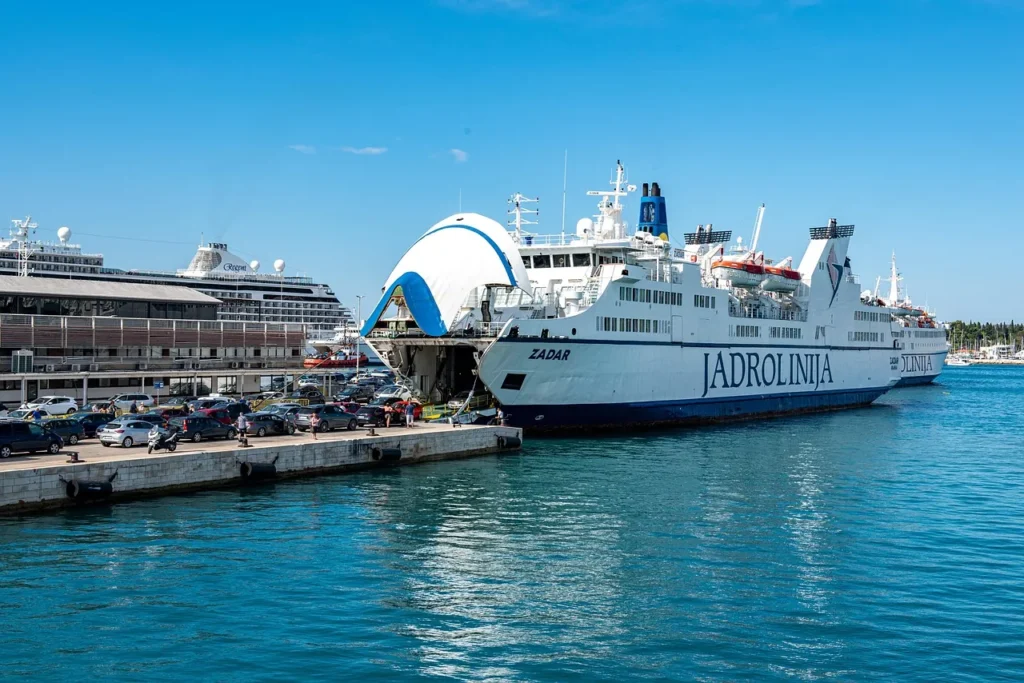
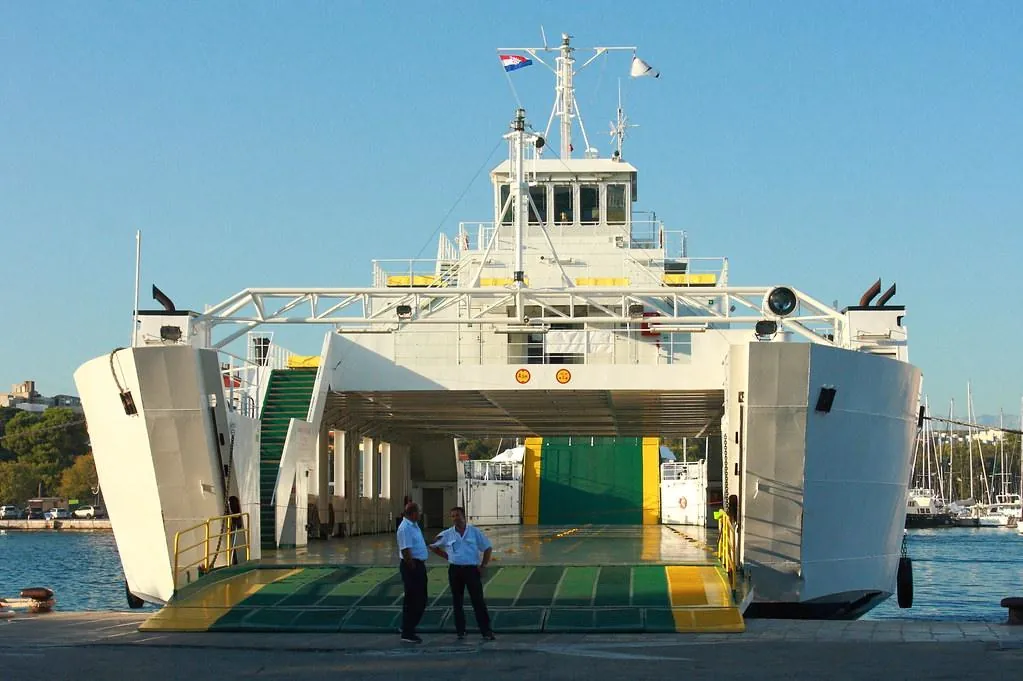
A ferry, often referred to as a car ferry, usually carries both vehicles and foot passengers. You use a ferry if you are travelling to an island with a rental car or your own vehicle. There are exceptions, however, as some ferries don’t carry cars.

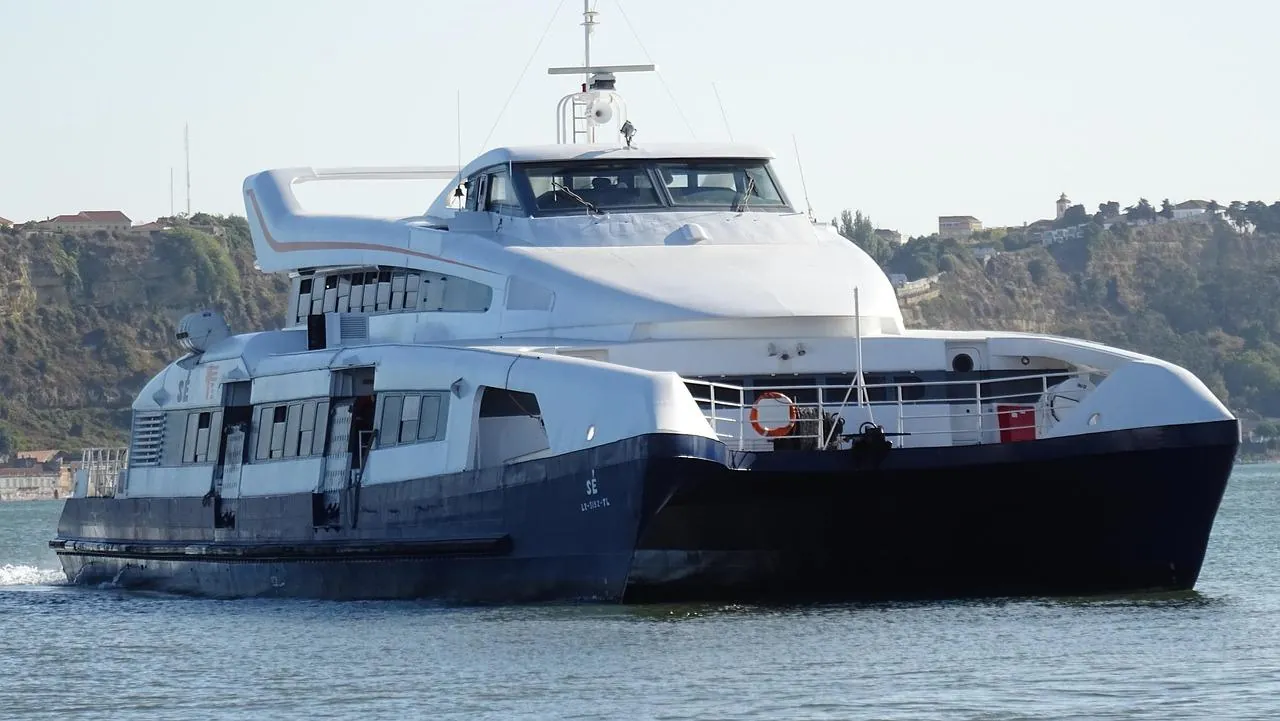
A catamaran is a fast passenger vessel that generally carries foot passengers only, without vehicles. Catamarans are ideal for island hopping without a car, but they have limited capacity, stricter boarding rules and are more sensitive to weather conditions.
There are also other types of fast passenger vessels operating along the Croatian coast. For passengers, the rules and conditions are almost the same as on catamarans.
Confusing ferries with fast passenger vessels is the source of most misunderstandings. People see “a boat to Hvar” and assume all options work the same way. They do not. If you are travelling with a car, always check whether the vessel allows vehicle boarding.
Many ferry issues don’t happen on the ship itself, but because travellers misunderstand how the wider transport system works. If you are travelling without a car, our guide Travelling Without a Car in Croatia breaks down what works in practice and what doesn’t.
Who runs ferries in Croatia (Jadrolinija vs private operators)
Croatia has one main national ferry operator, Jadrolinija, which runs the majority of coastal and island routes and serves as the official source for timetables and ticket purchases. For most travellers, especially those with a car, Jadrolinija is the only realistic option. For the most accurate and up-to-date departure and arrival information, always check their official website.
In addition to Jadrolinija, there are private operators, mainly running catamaran and passenger-only routes, such as TP Line and Krilo.
In practice, one simple rule applies: always check the timetable on the operator’s official website shortly before travelling, especially during shoulder seasons and outside the main summer period. Keep in mind that a timetable valid today may not be valid tomorrow.
What to expect at Croatian ferry ports
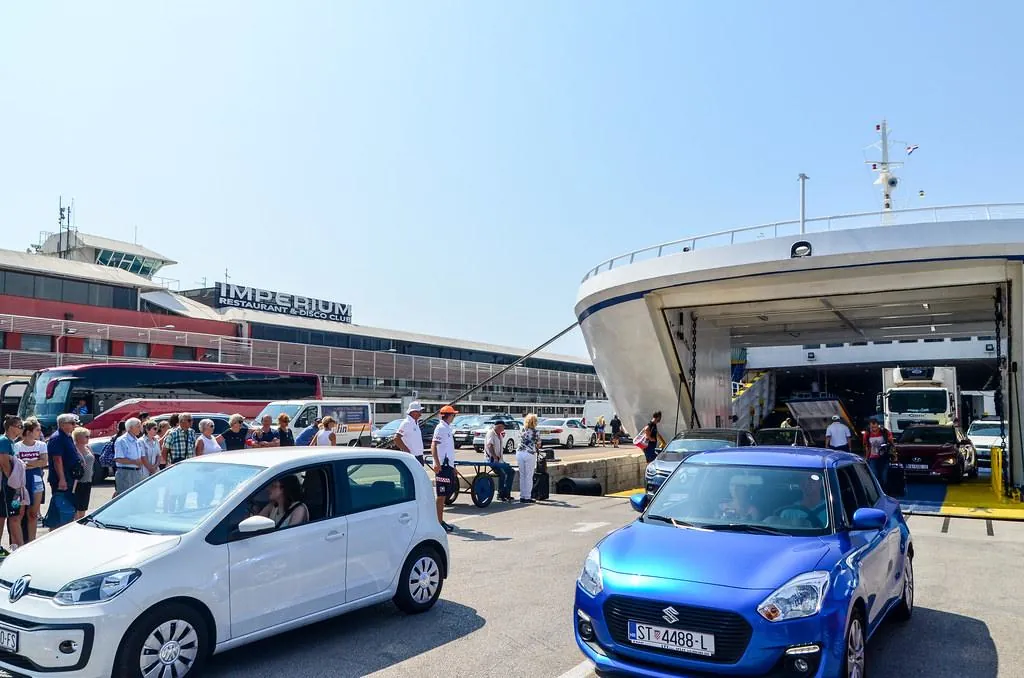
Most Croatian ferry ports do not operate like classic passenger terminals found in other countries. There are often no enclosed waiting areas, no check-in desks and no clearly marked gates. Instead, you will usually find open berths, parking areas, ramps, several lanes for vehicles and a small ticket booth.
Ports are functional rather than polished, which can surprise first-time visitors used to larger terminals and more formal travel infrastructure.
This does not mean the system is disorganised. It simply functions in a more stripped-down way, adapted to local traffic and everyday use.
Do you need to book in advance?
The answer depends almost entirely on two factors: when you are travelling and whether you are travelling with a car.
If you are travelling in peak season, which for most of the Croatian coast means July and August, though this advice also applies to June and September, you should buy tickets at least a few days in advance. During summer, additional sailings are often added on popular routes, but it is not uncommon for ferries to sell out days ahead.
If you are travelling by catamaran or fast boat, such as those operated by Krilo, your chances of finding last-minute tickets are even lower. On some routes, tickets sell out several days in advance.
This is especially true for the most popular departure points such as Dubrovnik. For a detailed overview of routes, prices and how these connections actually work in practice, see our Dubrovnik ferry guide for 2026: How to get to the Elaphiti Islands, Lokrum, Mljet, Korčula, Hvar and Split.
Schedules change by season (more than you think)
Ferry, catamaran and fast boat schedules are adjusted according to season and demand. While most routes operate multiple daily sailings in summer, this is often not the case for the rest of the year.
Some operators do not run at all during winter, while others significantly reduce the number of departures. Always check official schedules, especially if you are travelling outside the main season.
This is particularly true for catamaran and fast boat services.
Travelling with a car: tickets don’t guarantee a spot
In this case, it is crucial to understand the boarding rules. Many routes operate on a first-come, first-served basis, meaning that buying a ticket does not automatically guarantee that your car will board a specific departure. This is the most common and most expensive mistake tourists make.
Some routes offer reservations. If you have a reservation, it comes with specific arrival rules and Jadrolinija explicitly advises passengers with reservations to arrive at the port early during the summer season.
Outside of peak season, you can usually afford to be more relaxed and arrive closer to departure time. During the height of summer, especially on weekends and on popular routes, ferries should be treated as a limited resource if you are travelling with a car. In summer, this approach quickly turns into a risk.
Prices: what you can expect to pay
Ticket prices depend on the route, the season, the type of vessel and the type of passenger, whether a child or an adult and whether you are travelling with a car, camper, bicycle or similar.
On Jadrolinija ferries, children under the age of three travel free of charge. Children up to the age of twelve usually pay around 50 percent of the adult fare. Adult ticket prices typically range from about 2 to 20 euros, depending on the route, season and vessel type.
Prices for passenger cars generally range from around 10 to 60 euros. Campers are charged based on size and are often almost double the price of the smallest passenger cars. Bicycles usually cost the same as an adult passenger ticket.
Catamaran and fast boat services are generally more expensive than Jadrolinija ferries and depend on the route. Children under three travel for free, while children up to twelve usually pay around 50 percent of the adult fare. Adult prices typically range from 5 to 50 euros. Some operators allow pets on board.
With Jadrolinija, pets travel free of charge under specific conditions, such as not being allowed in enclosed passenger areas. With private operators, pet fees usually range from 50 to 100 percent of the ticket price, depending on the type and size of the animal.
For all options, tickets can be purchased online or at ticket booths in the port. With some private operators, tickets can also be purchased on board.
Luggage rules (ferries vs catamarans)
On Jadrolinija ferries, larger amounts of luggage are generally not a problem. Passenger boarding usually takes place via a ramp and there is enough space for extra luggage, strollers and similar items.
On catamarans, space is limited. One larger piece of luggage per person is usually allowed and additional luggage is accepted only if there is space available, which should not be relied upon during peak season. Some operators offer the option of bringing additional luggage by purchasing an extra adult ticket.
On fast boats and catamarans, luggage is typically stored in a shared area rather than kept next to your seat.
Kids and strollers: ferries are easier
Travelling by ferry with children is common and straightforward. Strollers, however, can be inconvenient on catamarans due to limited space. If you are travelling with small children and a stroller, a ferry is almost always the more practical option.
Bikes: limited space on catamarans
Bicycles are generally not a problem on Jadrolinija ferries. On catamarans, however, only a limited number of bicycles are allowed, so always check in advance and arrive early for boarding. As mentioned earlier, bicycle tickets must be purchased in advance.
Onboard facilities: toilets, cafés, air conditioning
Most ferries have multiple toilets and a small café offering a decent selection of drinks and food. Catamarans often have only a basic toilet and a limited selection of drinks or snacks, depending on the vessel and route.
All vessels are air-conditioned, including smaller boats. On larger ferries, you can usually access the outdoor deck, while some fast boats do not offer this option.
How early to arrive (foot passengers vs cars)
This is the part visitors most often underestimate and it can significantly affect your plans.
Foot passengers should arrive 30 to 45 minutes before departure for standard ferries. For catamarans, many operators recommend arriving at least 15 minutes before departure and sometimes earlier, depending on the route.
If you are travelling with a car during peak season, especially on weekends, arrive one to two hours early. If you are travelling during holidays or must catch a specific departure, arriving several hours in advance is not unreasonable. In some ports, this means waiting outdoors, without shade or additional facilities.
If you have a reservation on a route that offers reservations, Jadrolinija advises arriving at least 60 minutes before departure during the summer season. This is not about bureaucracy. Lines form quickly and vehicle capacity is limited.
How boarding works (cars vs foot passengers)
Most Croatian ferry ports are very simple once you know what to expect.
Cars
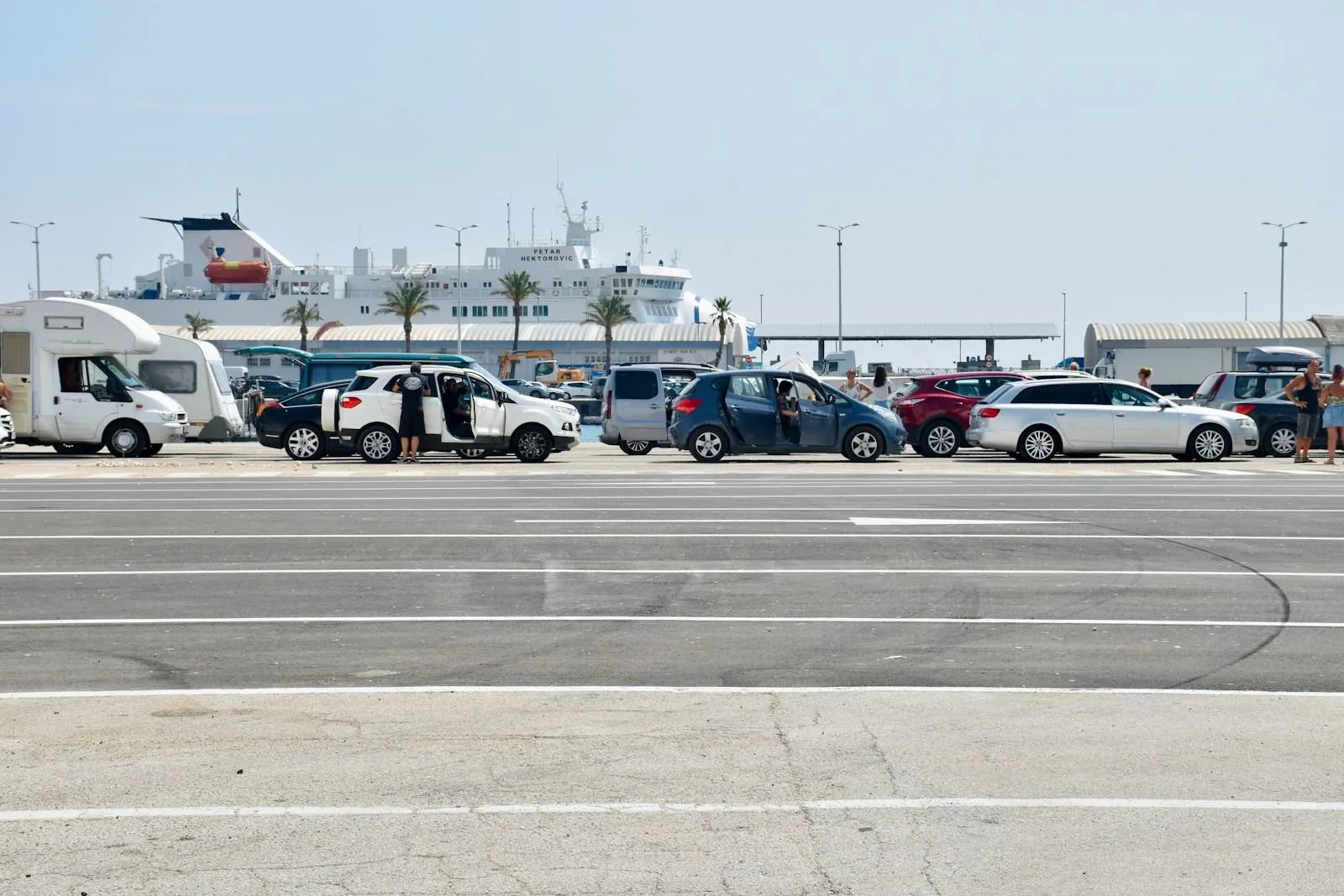
If you have a vehicle, you drive to the berth from which the ferry departs, enter the marked lanes and wait. Port staff direct vehicles once boarding begins. You should generally stay near your car, as the line moves gradually.
Sometimes the wait to board with a car can exceed an hour, but you are allowed to leave your vehicle as long as you stay close enough to move it when boarding starts. This is normal behaviour and not considered a violation of any rules.
When it is your turn, you drive onto the ferry, park according to instructions and then proceed to the passenger areas. During the crossing, you usually do not have access to your vehicle, except on ferries with open car decks.
Foot passengers
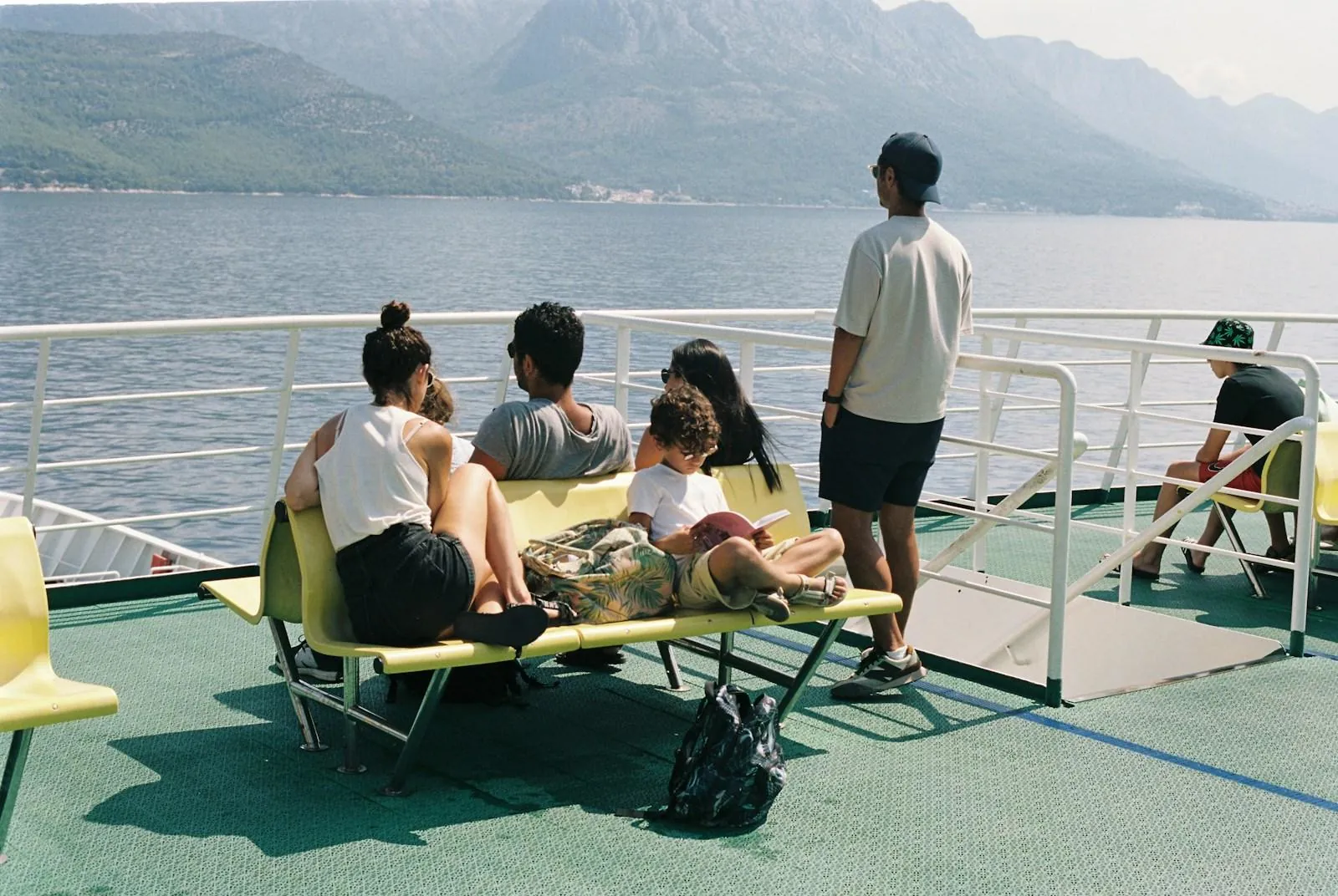
You go to the passenger boarding area and enter once boarding begins. Most routes do not have assigned seating. Passengers choose their own seats and on ferries it is often possible to sit outside if the weather is nice.
The biggest ferry myth: “I bought a ticket, my car is guaranteed”
A very common assumption among tourists is: “I bought my ticket online, so my car is guaranteed on that sailing.” This is not always true. On many routes, especially those without a reservation system, arriving early and being in line is what secures a spot.
Ferry or catamaran: which one should you choose?
It depends on what type of traveller you are and which destination you are heading to.
A ferry is the better choice if you:
- are travelling with a car
- are travelling with a lot of luggage, children or beach equipment
- want a more stable crossing in slightly rougher conditions
- prefer more space and more flexible boarding
- prefer comfort, access to a café and something to eat
A catamaran or fast boat is often chosen for speed and is the best option if you:
- are island hopping without a car
- value speed over flexibility
- have a simple itinerary and travel light
Catamarans are fast and efficient, but due to their smaller capacity they can sell out quickly and are more sensitive to weather conditions.
In the off-season, departures may be delayed or cancelled due to bad weather. Ferries are cancelled only in the most severe conditions.
What if you miss your boat?
It depends on the route and the season.
On popular summer routes, there are often multiple departures per day. On smaller islands or outside the season, there may be only a few sailings daily, so missing one can delay your plans by several hours or even until the next day.
Best practice is always to check the last return sailing of the day, whether the timetable changes on Sundays or outside the season and how frequent or infrequent the route is.
If your entire day depends on a single departure, do not plan to arrive at the port without any time buffer.
If you miss a ferry, you are generally not entitled to a refund, although most operators allow ticket changes if made sufficiently before departure.
Weather delays
Ferry transport is reliable, but it is still maritime transport.
In the Adriatic, strong winds such as the bora and the sirocco can cause delays or cancellations, especially for smaller and faster vessels. One practical rule locals know is that larger ferries handle rough conditions better than catamarans.
If you are travelling during shoulder season or winter, build flexibility into your plans, especially if you have a flight to catch.
If a departure is cancelled by the operator, you are entitled to a refund of the paid amount.
Taking a rental car to an island
If you plan to take a rental car to an island, check the rental conditions. Some rental companies allow ferry transport without restrictions, others require prior notice and some have special rules.
At the port, be prepared to show vehicle details. When purchasing a ticket for a vehicle, you are required to present the vehicle registration document.
Common tourist mistakes when using the Croatian ferry system
Many visitors run into problems not because the Croatian ferry system is complicated, but because they misunderstand how it works. The most common issues include assuming that a ticket guarantees a place for a car, arriving too late during peak season and planning the last ferry of the day without a backup option.
Underestimating heat and waiting times at ports or treating catamarans like ferries when travelling with luggage or tight schedules, can also lead to unnecessary stress.
Once you understand a few basic rules, when to book, how early to arrive, and the difference between ferries and catamarans, ferry travel becomes predictable rather than stressful. And in Croatia, boring transport is exactly what you want.