Entering Croatia is generally straightforward, but visa requirements depend on your nationality and the purpose of your stay. Most tourists do not need a visa for short visits, and travellers who already hold a valid Schengen visa or residence permit can usually enter Croatia without applying for an additional Croatian visa.
Different rules apply if you plan to stay longer than 90 days, work remotely as a digital nomad, study, or relocate for employment. These situations are not covered by tourist visas, and the applicable permits vary depending on where you are travelling from.
This guide provides a practical overview of Croatia visa rules in 2026 for tourists, digital nomads, students and anyone considering a short-term or longer stay. As visa regulations can change, always check the official information published by the Croatian Ministry of Foreign and European Affairs.
Jump to section:
› Do you need a visa to enter Croatia
› How the 90/180-day rule works
› How to apply for a Croatian visa and which documents are required
› Which permits apply to digital nomads
› What rules apply to students and workers
› What is ETIAS and who will need it from late 2026
› Frequently asked questions and Croatia visa requirements by nationality
Who does NOT need a visa to enter Croatia?
Most travellers do not need a visa for short stays in Croatia if they come from countries that have a visa-free regime with the Schengen Area. This includes citizens of the European Union, the United Kingdom, the United States, Canada, Australia and other visa-free countries.
They can stay in Croatia for up to 90 days within any 180-day period, provided the visit is for tourism, private visits or short business activities. This type of stay does not allow employment.
This applies to travellers with a valid passport who meet the general Schengen entry conditions, such as having valid travel documents, proof of accommodation and proof of onward or return travel.
The same rules also apply to certain national visas and residence permits issued by Bulgaria, Romania and Cyprus, in line with current EU regulations.
While these travellers do not need a visa to enter European countries, EES rules still apply to them. For a clear explanation, see our guide on EES Europe: what the new system means at borders and airports in 2026.
Who needs a visa for Croatia?
Citizens of countries without a visa-free agreement with the Schengen Area, such as China, India, and many African and Asian countries, usually need a short-stay Croatian visa (C visa).
The exact list of countries depends on current EU rules and may change, so it is always recommended to check the official list before planning your trip.
A short-stay visa allows you to remain in Croatia for up to 90 days within a 180-day period and is issued for tourism, private visits or business travel.
It is important to note that holding a visa does not automatically guarantee entry into Croatia. Border police may request additional documents upon arrival, such as proof of accommodation, return tickets, travel insurance or proof of sufficient funds.
How the 90/180-day visa rule works
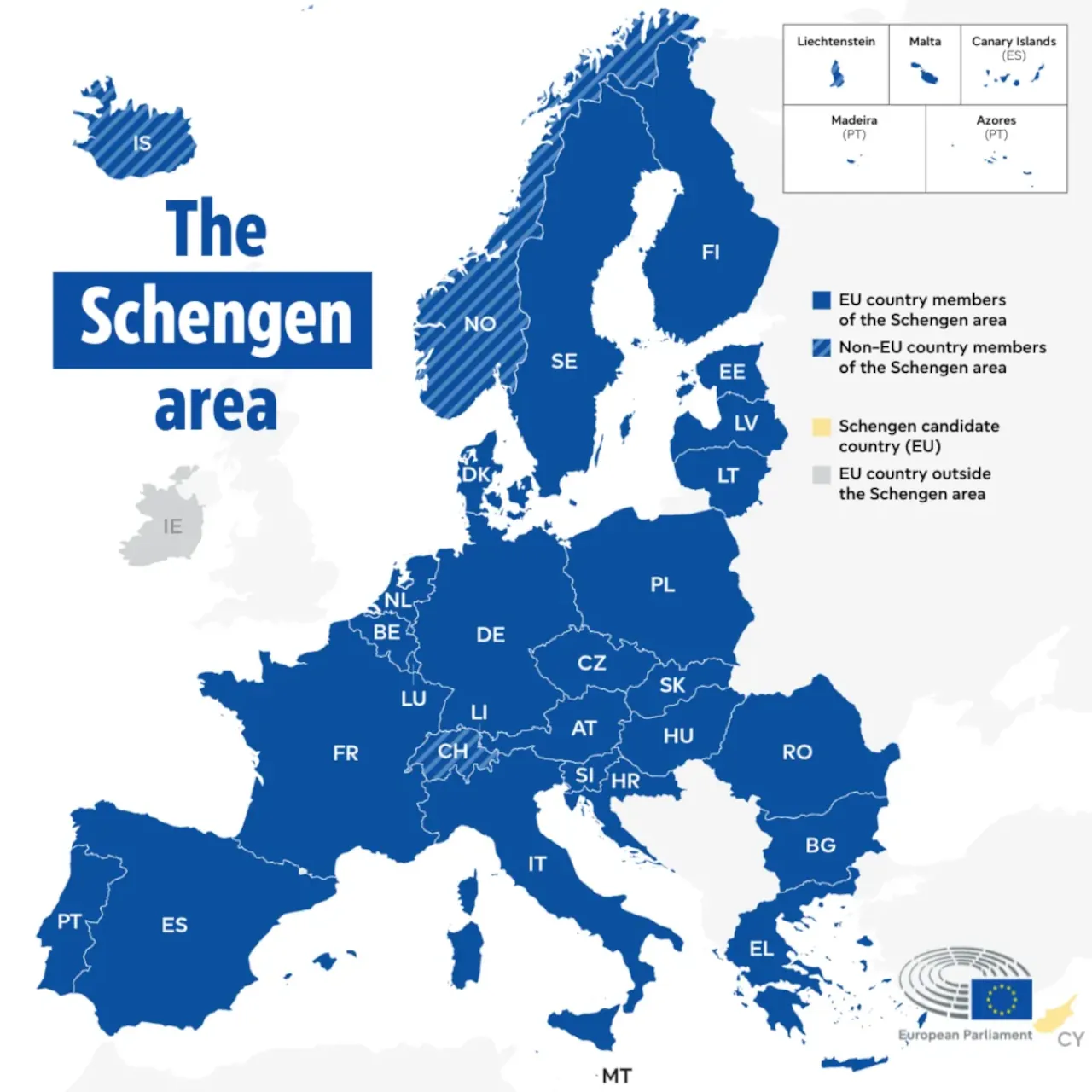
Most visa-free travellers can stay in Croatia for up to 90 days within any 180-day period. These 90 days are counted over time across the entire Schengen Area, not per country and not per individual visit. This means that leaving Croatia for a few days, travelling to another Schengen country, or returning later does not start a new 90-day allowance. All days spent in Schengen continue to count toward the same limit. Once the 90-day maximum is reached, you must leave the Schengen Area or apply for an appropriate residence permit before your stay expires.
What a Croatian short-stay visa allows (and what it doesn’t)
A Croatian short-stay visa allows you to remain in the country for up to 90 days and may be issued for single, double or multiple entries, depending on the circumstances.
What matters most is that a tourist visa does not allow employment and does not permit stays beyond the allowed time frame. For work, studies or long-term stays, different permits and procedures apply, which are explained later in this guide.
How to apply for a Croatian visa
A Croatian visa application must be submitted in person at the relevant Croatian embassy or consulate, or through authorised visa centres. Applications can be submitted no earlier than three months before the planned entry date.
The standard processing time is up to 15 days, but in some cases it may take longer. Applying shortly before travel increases the risk that the visa will not be issued in time.
Which documents are required for a Croatian visa?
Although the exact requirements may vary depending on the country and the consulate, applicants are most commonly asked to provide a completed and signed visa application form, a valid passport, a photograph, proof of travel health insurance, and documents confirming the purpose of the trip, accommodation and financial means.
Travel health insurance must cover the costs of emergency medical treatment and possible repatriation to the country of residence, with a minimum coverage of 30,000 euros.
Common visa mistakes travellers make
A common mistake is changing accommodation reservations after the visa has already been issued, which can cause problems at the border in some cases.
It is also recommended to carry all relevant documents in hand luggage rather than checked baggage.
Visa fees are generally non-refundable, even if the application is refused.
Family members of EU, EEA and Swiss citizens
Family members of EU, EEA or Swiss citizens who are third-country nationals can enter Croatia without a visa if they hold a valid EU family member residence card and are travelling with or joining the EU citizen.
If such a card is not available, a visa is usually required, but the procedure is handled under an accelerated process with minimal documentation.
Staying in Croatia longer than 90 days
If you want to stay in Croatia for more than 90 days, you must apply for temporary residence. This applies to longer stays for work, remote work as a digital nomad, studies, family reunification or other non-tourist purposes.
Tourist stays cannot be extended beyond the 90-day limit.
In exceptional situations such as humanitarian reasons, force majeure or serious personal circumstances, a visa or permitted stay may be extended. This is not automatic and must be approved by the authorities before the visa expires. Even in these cases, the total stay cannot exceed 90 days within any 180-day period.
Digital nomad residence permit in Croatia
Digital nomads who are not citizens of the EU, EEA or Switzerland can apply for temporary residence in Croatia as digital nomads. It is important to note that this is not a tourist visa.
If you are unsure which status applies to you, the digital nomad residence permit is most often the option explored by people who want to stay longer in Croatia while working remotely.
This permit is intended for people who work remotely for a foreign employer or their own company registered outside Croatia, exclusively through digital technologies, without providing services to Croatian employers or the Croatian market.
Temporary stay can be granted for up to 18 months. If a shorter period is approved, an extension may be requested, but no later than 60 days before the current permit expires. After the permit ends, a new digital nomad application is only possible after a six-month break.

Financial planning is key. Applicants must prove stable income or savings. Currently, this means a minimum of 3,295 EUR per month, or a corresponding lump sum in a bank account for longer stays.
Applications can be submitted online or through competent authorities. The process and rights differ depending on whether you need a visa to enter Croatia.
This permit does not allow you to work for Croatian employers or clients, and it does not automatically exempt you from all tax obligations. Your individual tax situation depends on your country of residence and personal circumstances.
It is also important to know that a 90-day tourist stay cannot simply be converted into a digital nomad residence permit without additional steps. Longer stays must be planned in advance, not arranged after arrival.
Studying in Croatia
If you are coming to Croatia to study, the rules depend on whether you are an EU/EEA citizen or a third-country national.
Students from EU or EEA countries can enter Croatia without a visa and stay for up to three months without additional formalities. If they plan to stay longer, for example for studies or internships, they must register temporary residence at the local police station. This registration is free, and a biometric residence card can be requested if desired.

Students from third countries usually need an entry visa (C visa) first and then apply for temporary residence for study purposes. This can be done either before arrival through a Croatian embassy or after arrival in Croatia, depending on nationality.
Applicants must prove enrolment at a higher education institution, valid health insurance and sufficient financial means. Most students must also obtain a biometric residence permit.
Temporary residence for students is usually granted for one academic year.
An important detail that is often overlooked is the obligation to register your address within three days of arrival. Hotels and student dormitories usually handle this automatically, but for private accommodation you should check with your landlord.
Most international students will also need an OIB (personal identification number), which is issued quickly and free of charge and is required for administrative matters during the stay.
Working in Croatia (for third-country nationals)
If you are coming from outside the EU, working in Croatia is generally not allowed without the appropriate permit.
The most common option is a residence and work permit, which is issued for a specific job and a specific employer.
In most cases, the employer initiates the process, and a labour market test is often required to check whether suitable workers are already available in Croatia or the EU. If no suitable candidates are found, the employer may apply to hire a foreign worker.
There are exceptions where a labour market test is not required, as well as special regimes such as the EU Blue Card for highly qualified workers.
It is important to know that working without a valid permit or appropriate status is not allowed, even temporarily, except in clearly defined cases such as limited student work, family reunification or research stays. The rules are precise, so it is essential to confirm which procedure applies to your situation before planning work in Croatia.
Croatia visa rules for seasonal workers
Seasonal workers are subject to simplified rules. Residence and work permits are usually issued for shorter periods (up to 90 or 180 days), mainly in tourism, hospitality and agriculture, based on employer application.
Planning the right status before arrival is essential, as most long-term permits cannot be arranged casually after entering Croatia as a tourist.
ETIAS for Croatia: new entry requirement from 2026
For a clear explanation of the upcoming rules, see our guide ETIAS travel rules for Europe: What US and other non-EU travellers need to know before visiting Croatia in 2026.
From late 2026, visa-exempt travellers visiting Croatia and other Schengen countries will need an approved ETIAS travel authorisation before travelling.
ETIAS is a short online application linked electronically to your passport. It allows short stays of up to 90 days within any 180-day period across the Schengen Area and is expected to be valid for up to three years or until your passport expires.
ETIAS does not replace visas or residence permits. Travellers staying longer than 90 days will still need the appropriate Croatian residence or work permit.

Frequently asked questions about Croatia visa requirements
Do I need a visa if I am travelling from the US, UK or Canada?
No. Citizens of the United States, the United Kingdom and Canada can enter Croatia without a visa for short stays of up to 90 days within a 180-day period.
Do travellers from Asian countries need a visa for Croatia?
In many cases, yes. Citizens of countries without a visa-free agreement with the Schengen Area usually need a short-stay (C) visa.
I want to study in Croatia. What documents do I need?
Short stays may be visa-free, but longer studies require temporary residence approval and a biometric residence permit.
What are the visa rules for digital nomads in Croatia?
Digital nomads apply for a special temporary residence permit that allows them to live in Croatia while working remotely for a foreign employer.
Can I work in Croatia as a foreign citizen?
Most non-EU citizens need a residence and work permit, with specific rules depending on the job and employer.
How long can I stay in Croatia without a visa?
Most visa-free travellers can stay in Croatia for up to 90 days within any 180-day period. Staying longer requires a temporary residence permit.
Do I need ETIAS to travel to Croatia?
From late 2026, visa-exempt travellers must obtain an approved ETIAS before entering Croatia for short stays of up to 90 days within any 180-day period. ETIAS is an online travel authorisation linked to your passport and does not replace a visa or residence permit for longer stays.
Check your nationality: do you need a visa for Croatia?
Whether you need a visa for Croatia depends on your nationality and the length and purpose of your stay. If your country is not clearly listed as visa-free, assume that a visa is required and check the official list before booking travel.
Visa-free short stays (up to 90 days)
Citizens of the European Union, the United Kingdom, the United States, Canada, Australia, New Zealand, Japan, South Korea and other countries with a visa-free agreement with the Schengen Area can enter Croatia without a visa for short stays.
Visa required
Citizens of countries without a visa-free agreement with the Schengen Area, including China, India and most African and Asian countries, usually need a short-stay (C) visa.
Visa rules can change, and some exceptions apply depending on the type of passport or residence permit you hold. For the official and always up-to-date list by nationality, check the Croatian Ministry of Foreign and European Affairs website.
For more practical information about travelling in Croatia, including common questions travellers have before arrival, see our Croatia Travel FAQ.