The EU Entry/Exit System (EES) is a new digital system that records when you enter and leave the EU, replacing passport stamps with digital entry records.
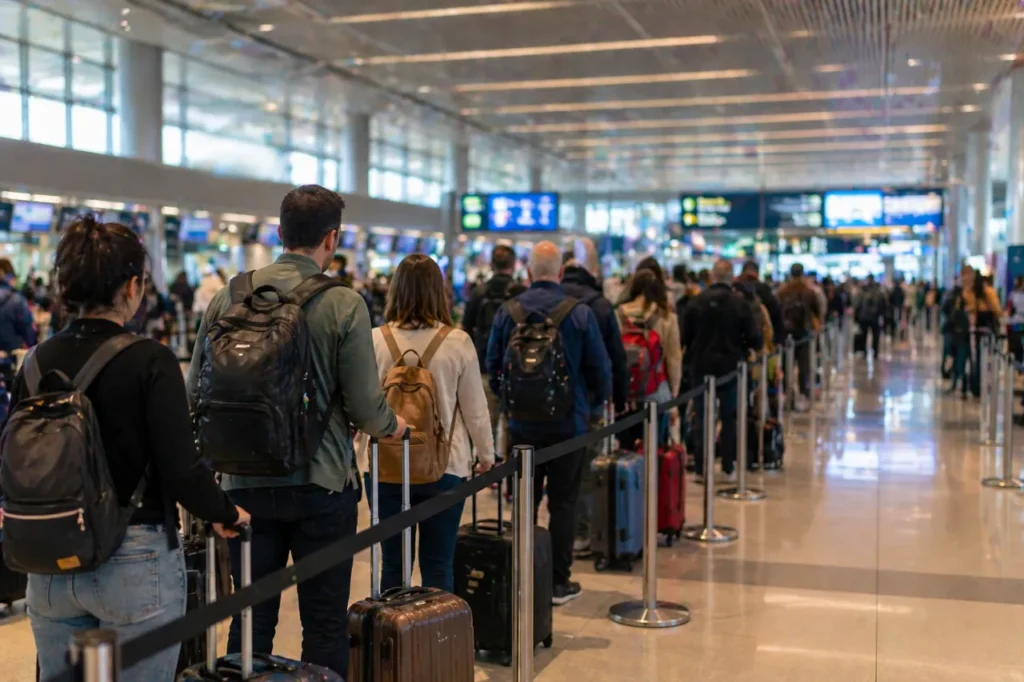
It was launched in mid-April 2026 at the borders of the Schengen Area, including Croatia, and it was meant to make border crossings faster. Instead, it has already led to longer queues at airports across Europe, with some travellers missing flights.
Many travellers still do not fully understand what EES Europe actually is and are now worried it could affect their trip. It is also often confused with ETIAS.
In reality, it is a small change for travellers. There is nothing you need to do before your trip. The process happens when you arrive at the border.
If you’re unsure how ETIAS fits into all this, read our ETIAS Travel Rules for Europe guide.
Jump to section:
What is EES and what it means for travel to Europe
If you are planning a trip to Croatia or any other country in the Schengen Area, you have probably already come across the term EES, but may not be entirely sure what it actually means.
EES is a new digital system that changes how people enter and leave the European Union. It is not a visa or an extra form you need to fill out in advance. It happens directly at the border or at the airport and is simply how your entry is recorded. Its goal is to improve security across the EU.
It has been getting attention because of the delays it has caused at borders and airports. Each traveller needs to complete their own registration, which in practice means getting out of the car at land borders and waiting in longer queues at airports.
Who needs EES? Do UK and US travellers need it?
Yes, UK and US travellers need EES, as do travellers from Canada, Australia and other non-EU countries. Below, we explain who is exempt.
If you are coming from within the EU, nothing changes for you. The same applies to Cyprus and Ireland.
How EES works at borders and airports, and what it looks like in Croatia
Until now, the process was simple: you arrive at the border, an officer stamps your passport, and that is it. With EES, the same process becomes digital.
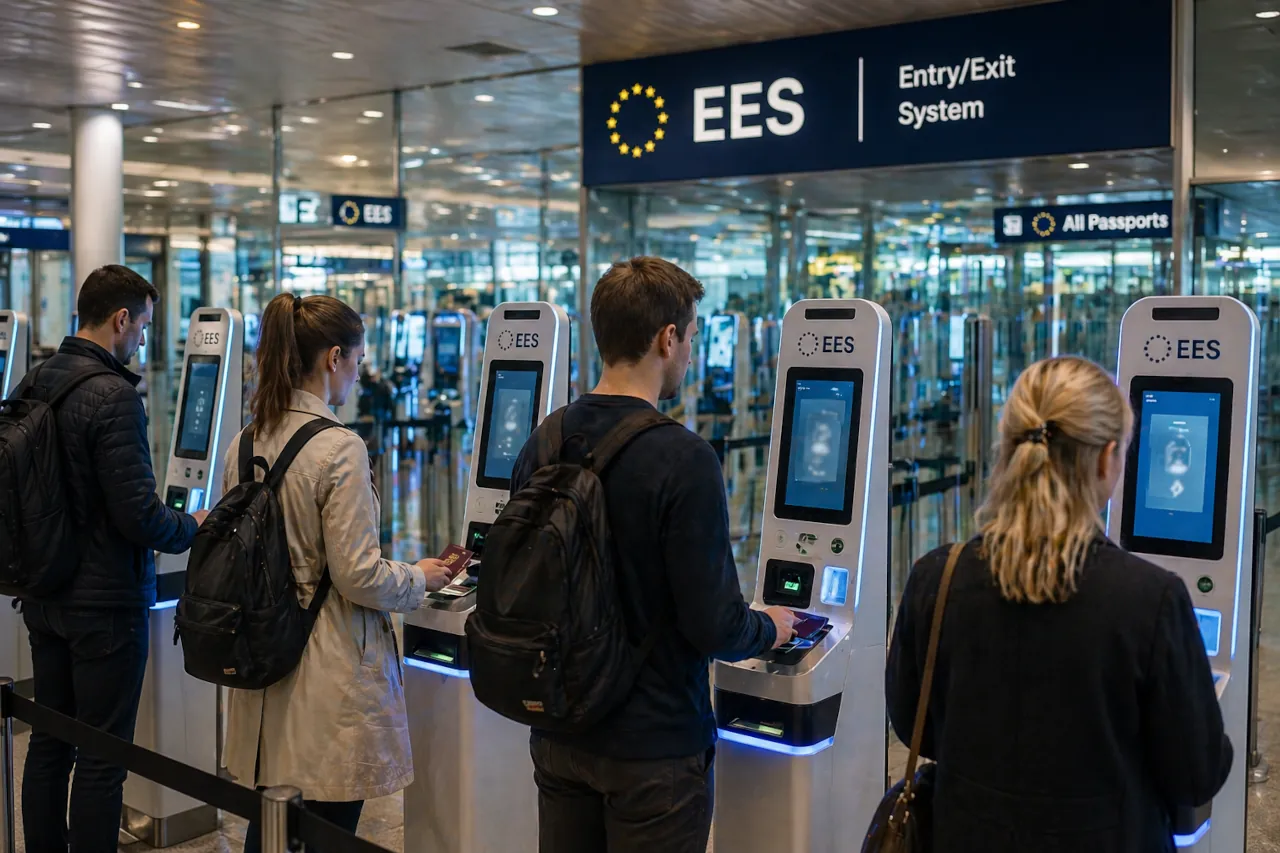
Instead of simply showing your passport to an officer, you go through a short registration at self-service machines set up at airports and border crossings.
Self-service EES kiosks are currently available at six airports in Croatia: Zagreb Airport, Split Airport, Dubrovnik Airport, Pula Airport, Zadar Airport and Rijeka Airport.
At the kiosk, travellers complete a short registration that includes scanning their passport, capturing a facial image and fingerprints (usually four fingers of the right hand), and answering a few questions about the purpose of their trip. The process itself is quick and usually takes just a few minutes, but during busy periods queues can form.
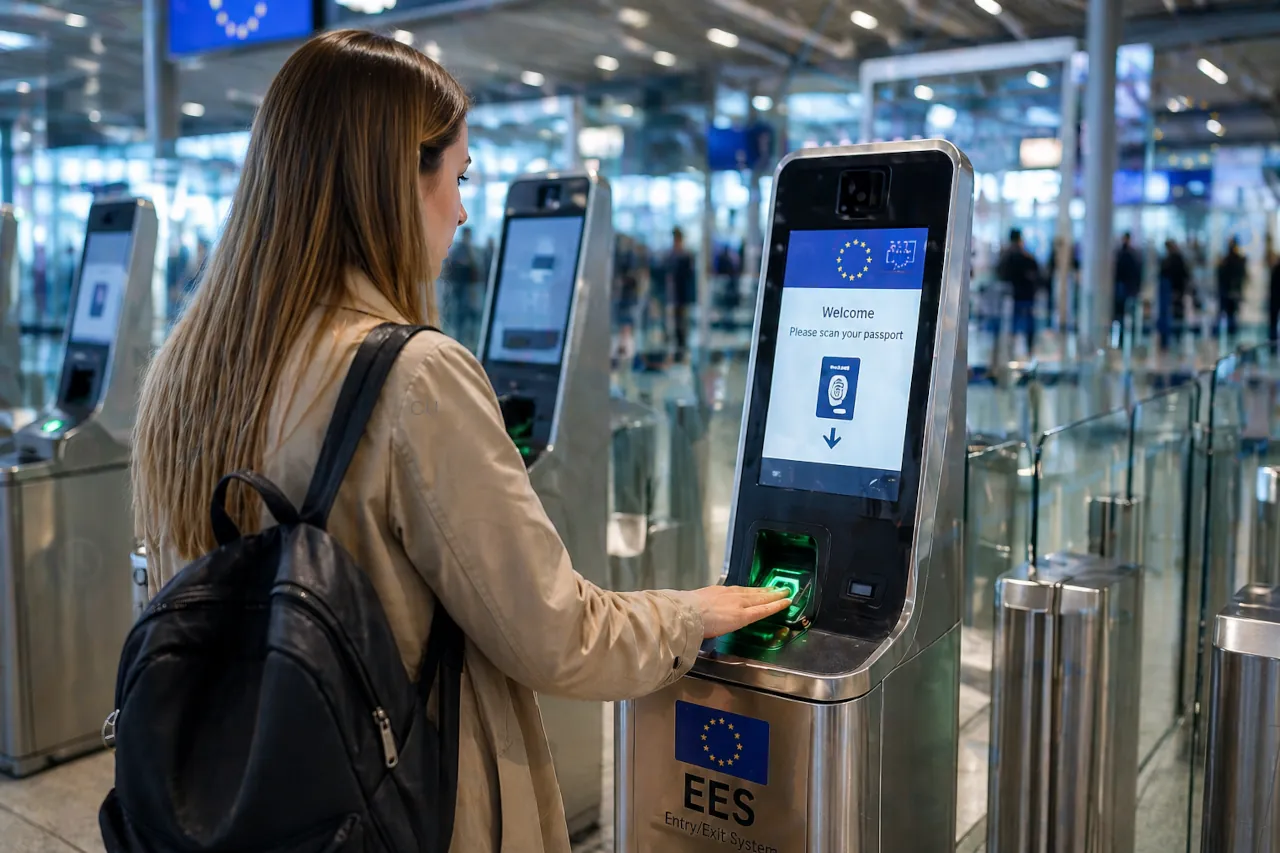
After completing the EES registration, travellers proceed to a manual border check where their data is verified and their EES record is created. If a record already exists in another EU country, this step is not required and the traveller can go directly to the border control booth.
There is no fee for EES.
What data EES collects and how long it is stored
The EES collects basic personal details from your travel document, including your full name, date of birth and nationality. It also records the date and place of each entry and exit from the Schengen Area.
In addition, it stores biometric data such as a facial image and fingerprints. If a traveller is refused entry, that information is also recorded.
Personal data is usually stored for three years after your last exit from the Schengen Area and then automatically deleted. If someone stays beyond the allowed period, their data can be kept for up to five years.
Will entering the EU be slower or faster with EES?
In theory, EES was meant to speed things up. In practice, it has led to longer queues and delays, as every traveller has to go through biometric registration and data checks.
Because of this, some EU countries have started temporarily suspending the system during peak periods to reduce queues. This does not mean border checks are skipped, it simply means a temporary return to manual checks.
For now, Croatia has not needed to do this, as everything has been running smoothly, but you should still expect slightly longer waiting times at the border.
Over time, the process is expected to become much faster. Waiting times should decrease after the initial rollout phase, once a larger number of individual EES records have been created.
If you want a quick visual explanation, this short video shows how the EES system works in practice.
EES Europe vs ETIAS: What’s the difference?
This is where most confusion comes from. EES and ETIAS are not the same thing.
EES operates at the border and has been in place since April 2026. It records when you enter and leave the EU.
ETIAS is an online travel authorisation you will need to complete before your trip. It has not been introduced yet and is currently expected later in 2026.
Simply put, EES records your entry and exit, while ETIAS is permission to travel, similar to the US ESTA system.
Why the EU introduced EES
The main reason is better control of how long travellers stay in the EU, along with improved security.
A rule that already applies to most non-EU travellers is the 90/180 rule, meaning you can stay up to 90 days within any 180-day period in the Schengen Area. Until now, this was tracked manually through passport stamps, which was not always reliable.
EES replaces this with an automatic system. It records entries and exits digitally, making checks more accurate and reducing the risk of overstaying or misuse.
If you’re unsure how the 90/180-day rule works, see our guide Do You Need a Visa for Croatia in 2026?
Who is exempt from EES
EES does not apply to EU citizens. It also does not apply to EU countries that are not part of Schengen, such as Cyprus and Ireland.
Some non-EU travellers are also exempt. This includes people with residence permits or long-stay visas, as well as family members of EU citizens who have the right to move freely within Europe.
There are also a few specific cases, such as people travelling for studies, research or work programmes, and citizens of microstates like Andorra, Monaco, San Marino and the Vatican.
In addition, individuals with special border privileges, local border permits, or certain transport crew members are not covered by the system.
If you’re planning a trip to Croatia and still have questions, visit our Croatia Travel FAQ page for clear, practical answers to common travel questions.