The easiest way to get from Split to Hvar is by ferry or catamaran. Most travellers take a passenger catamaran to Hvar Town, which takes around 1 hour and costs €25 per person. The ferry is cheaper and can carry cars, but it is a slower option and arrives in Stari Grad, not Hvar Town.
There are many daily departures, but in summer tickets can sell out days in advance. If you’re planning a day trip to Hvar or island hopping with Hvar as one of the stops, this guide will help you choose the right option.
Split to Hvar in short
For day trips:
Catamaran to Hvar Town
1 hour, around €25
With a car:
Ferry to Stari Grad
2 hours, from €5.90
Car fare from €35
If you’re arriving by plane, see how to get from Split Airport to the city before heading to the port.
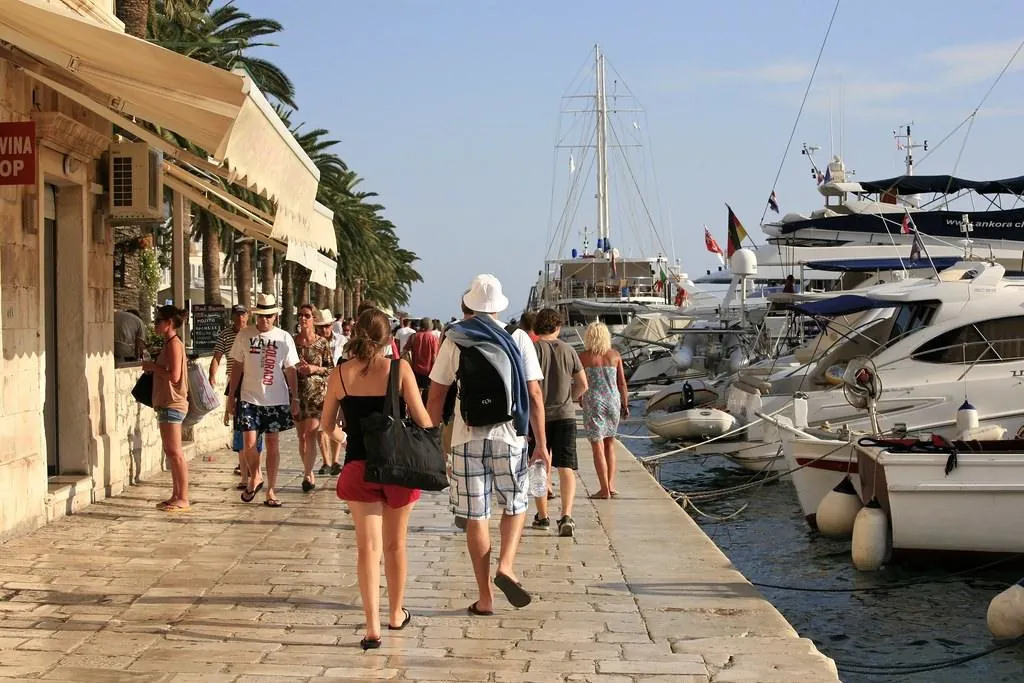
Ferry vs catamaran to Hvar: what’s the difference
In Croatia, catamarans are fast passenger-only boats, while ferries can carry both passengers and cars. Most travellers heading to Hvar use catamarans, as they arrive directly in Hvar Town.
If you’re not sure which one to choose or how the system works, see Croatian ferry system guide for details.
Split to Hvar routes: Hvar Town vs Stari Grad
There are two main routes from Split to Hvar, which is a common source of confusion, especially for first-time visitors.
Catamarans run directly from Split to Hvar Town and are the most straightforward option for most travellers. They are passenger-only boats, so you won’t be able to bring a car, but they get you straight into the centre without any extra transfers.
Ferries arrive in Stari Grad, on the northern side of the island. This is the better option if you’re travelling with a car, carrying more luggage, or planning to stay in that part of Hvar.
If your destination is Hvar Town, you’ll need to continue from Stari Grad by bus, taxi or a car. It’s about 20-minute drive.
Split to Hvar by ferry
The ferry is usually the best option if you’re travelling to Stari Grad or nearby places like Vrboska, Jelsa or Zavala, or if you want to bring a car to Hvar.
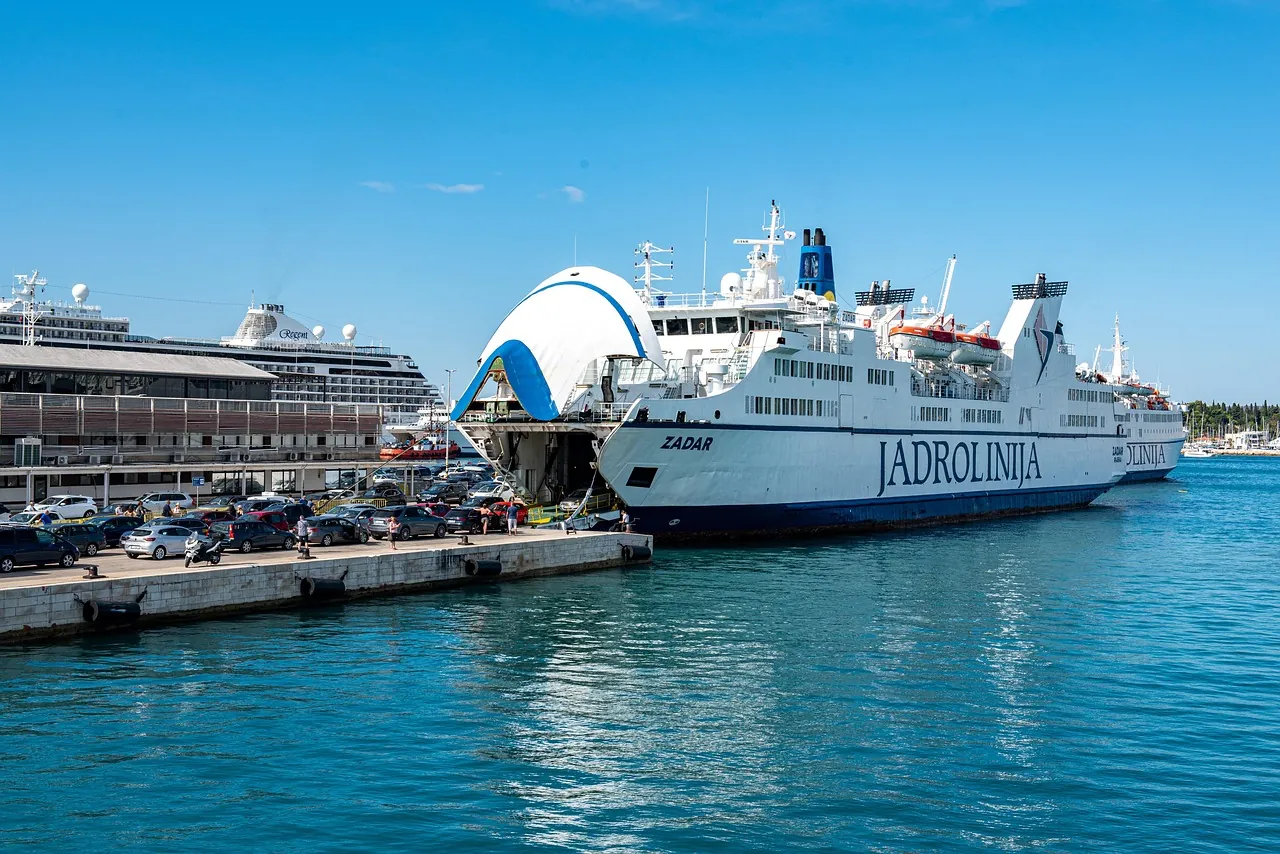
Where does the ferry to Hvar depart from
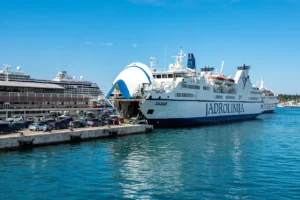
Ferries depart from the Port of Split, right in front of the main ferry terminal building. If you’re travelling on foot, arriving 15 to 20 minutes before departure is usually enough. If you’re bringing a car, you may need to arrive much earlier. In high season, many departures sell out, so planning ahead is important.
Outside the main season, there are around four daily departures from Split, with some reduced schedules on weekends and public holidays. In summer, ferries run up to seven times a day, with the same frequency for the return journey from Stari Grad to Split.
The journey takes about two hours in each direction.
Ferry ticket prices for Split to Hvar and where to buy them
In peak season, ticket prices are around €8.40 per person, with children under 12 paying €4.20. Transporting a car costs around €47.60. Prices outside the season are typically about 30% lower. Hand luggage up to 20 kg is included, while additional luggage may incur a small extra fee.
Ferry tickets for the Split to Hvar route (and the return) can be bought online via the Jadrolinija website, at the ferry terminal building or at kiosks in the port. It’s always better to buy tickets in advance, especially if you’re bringing a car.
Where the ferry from Split arrives in Hvar
The ferry arrives at Stari Grad ferry port, about 2 kilometres from the town centre. It’s a pleasant walk along the coast, but buses and taxis are available and usually meet the ferry on arrival, so getting to your accommodation is straightforward.
Split to Hvar by catamaran
Most travellers take a catamaran to Hvar Town, as it’s the fastest and simplest option.
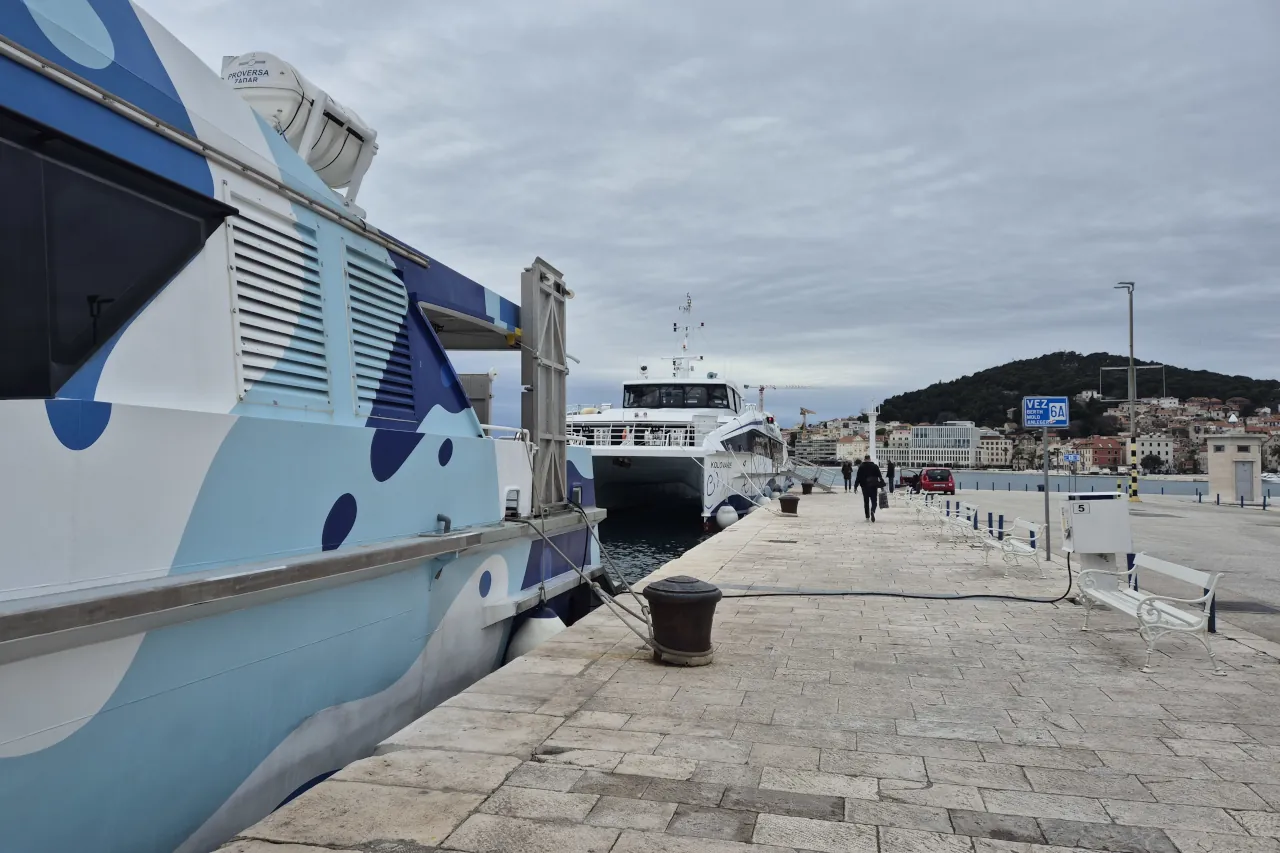
Catamarans are fast passenger-only boats that run directly from Split to Hvar Town, making them the most convenient option if you’re staying in Hvar Town or nearby places like Milna. The journey takes around 1 hour, which is significantly faster than the ferry.
Split to Hvar catamaran operators, prices and luggage
Catamarans on this route are operated by Jadrolinija, Krilo and TP Line, with several daily departures, especially in the summer. Ticket prices are €25 per person one way. Children under 12 pay 50% of the fare, while children under 3 travel free. Basic luggage is included, with additional bags costing around €5.
Where to buy Split to Hvar catamaran tickets
Tickets can be bought online, at kiosks in the port, or directly from the operator. Jadrolinija tickets are sold in the main ferry terminal building, while TP Line and Krilo have kiosks near the waterfront. While it is possible to buy tickets on board, departures often sell out in peak season, sometimes days in advance, so booking ahead is recommended.
Where Split to Hvar catamarans depart in Split
Departure points vary slightly depending on the operator, but all are located within the main port area in central Split. Jadrolinija departs near the main ferry terminal, while TP Line and Krilo board closer to the Riva promenade, near the tourist office. Everything is within a few minutes’ walk.
Where does the Split to Hvar catamaran arrive
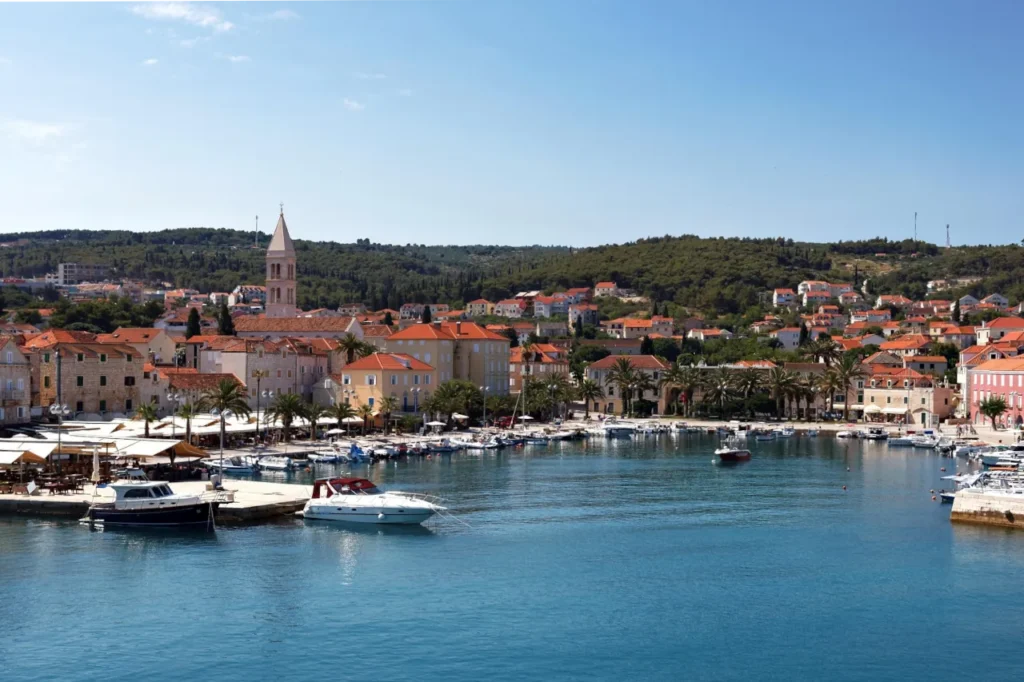
On arrival, catamarans dock directly in the centre of Hvar Town. From there, it’s just a short walk along the waterfront, around 2 to 3 minutes, to reach the main square. If you’re continuing to other parts of the island, such as Stari Grad, Jelsa or Milna, the bus station and taxi stand are about a 5-minute walk from the port.
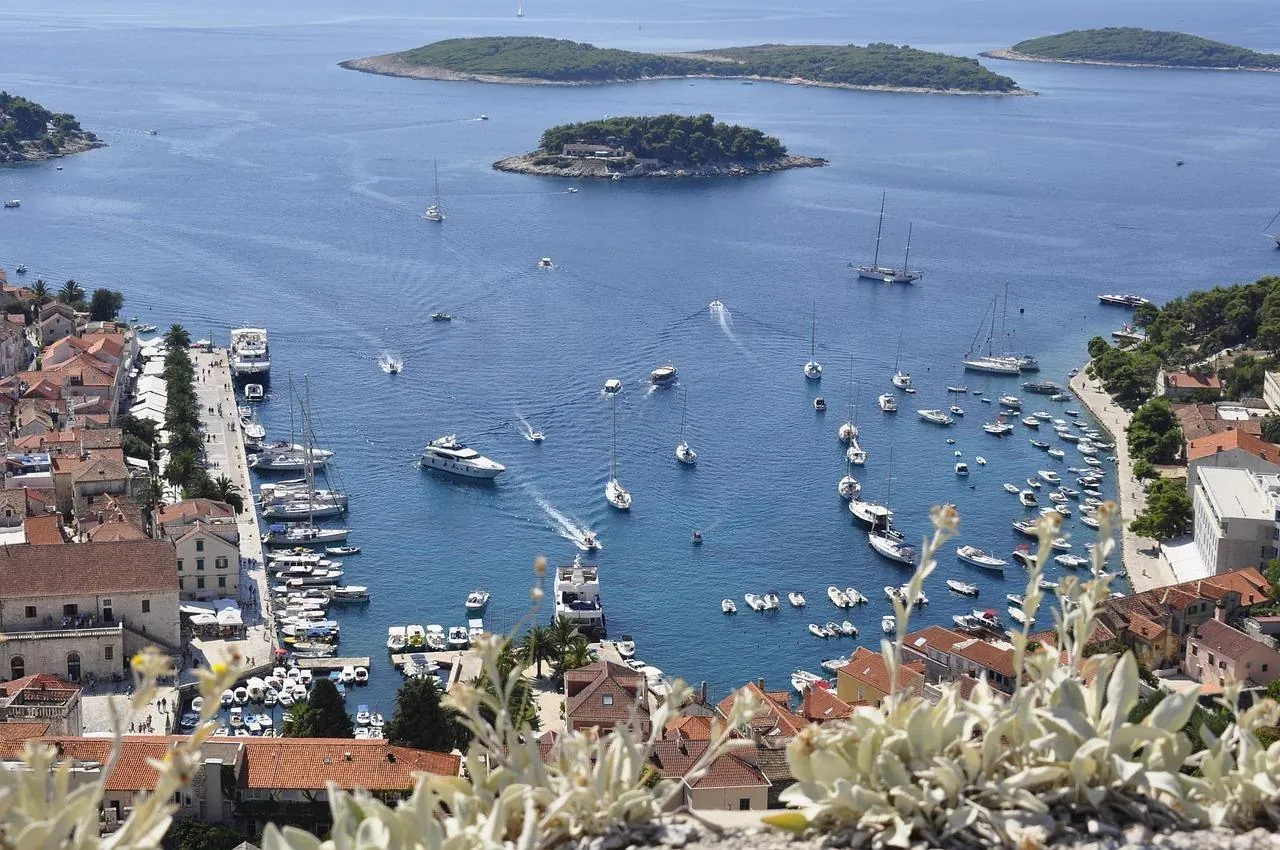
Is a Split to Hvar day trip worth it
A day trip from Split to Hvar is possible and can be a very enjoyable experience, as long as you’re comfortable spending the day in one part of the island. With early morning departures and evening returns, you can spend the whole day either in Hvar Town or in and around Stari Grad. That’s enough time to walk through the town and nearby areas, see the main sights, have lunch by the sea and spend the afternoon at the beach.
A day trip to Hvar works best if you focus on one place, usually Hvar Town. If you plan to explore other parts of the island, staying at least one night usually makes more sense.
How to do a Split to Hvar day trip: simple itinerary
The easiest way to do a day trip from Split to Hvar is by catamaran.
The first catamaran from Split departs at 9:00 in the morning, while the last one from Hvar Town leaves around 19:00 in the evening.
Ferries, on the other hand, depart from Split as early as 5:00 (with another at 8:00), while the last ferry from Stari Grad to Split leaves at 23:00. This gives you more time on the island, but the logistics are more complicated unless you plan to stay in the Stari Grad area.
Split to Hvar Town day trip by catamaran
A typical day trip might look like this: depart from Split at 9:00, arrive in Hvar Town by 10:00, walk through the main square and along the waterfront, visit the Spanish Fortress, have lunch by the harbour, and spend the rest of the afternoon swimming.
For the return, you can take a catamaran at 17:25 with Jadrolinija or at 19:15 with Krilo. This is more than enough time to explore Hvar Town and experience the atmosphere of a summer day on the island.
Split to Stari Grad day trip by ferry
The first ferry departs at 5:00, with another at 8:00, arriving in Stari Grad around 10:00. If you decide to continue to Hvar Town, it takes about 20 minutes by car, giving you enough time to explore the town, swim and enjoy the day.
Another option is to stay in Stari Grad and visit nearby places like Jelsa and Vrboska, charming coastal towns that are lively in summer, with good swimming spots, traditional restaurants and interesting historical sites.
If you plan to return on the last ferry, you can explore Stari Grad and, for example, Vrboska or Jelsa without rushing, as long as you organise your transport well. The easiest, but most expensive option is private transport. Just make sure you return to the Stari Grad ferry port at least 15 minutes before departure.
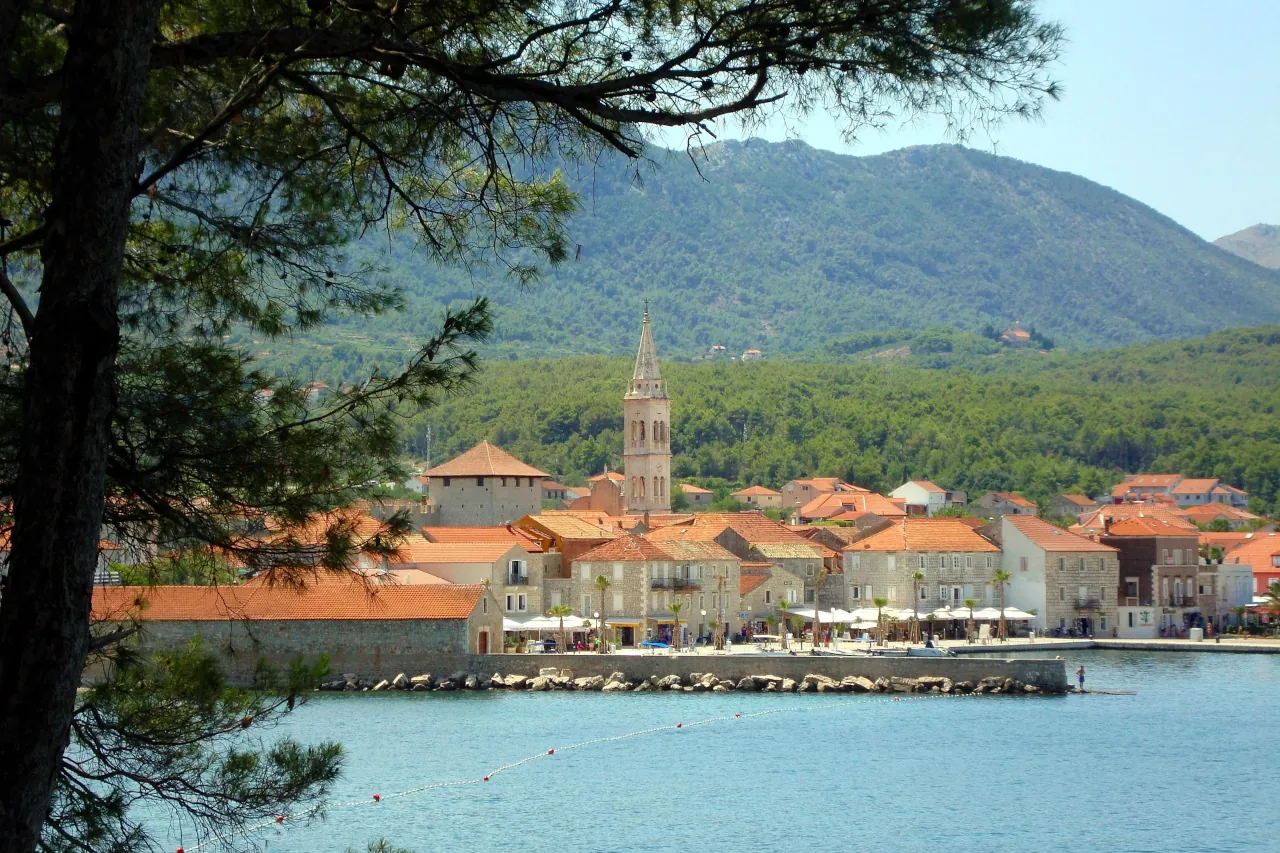
What most people get wrong about a Split to Hvar day trip
A day trip to Hvar is absolutely possible, but it’s important not to be too ambitious. Many people assume one day is enough to see a large part of the island, but that’s rarely the case. It’s much better to focus on one place, or two nearby locations, otherwise the day can turn into constant moving around without really experiencing anything.
While a day trip works, Hvar is best experienced over a few days, when you can explore different places at a slower pace, enjoy the beaches without watching the clock, and visit areas that are otherwise harder to reach, such as Dol or Sveta Nedjelja.
Transporting a car from Split to Hvar: what to expect
The only way to take a car from Split to Hvar is by Jadrolinija ferry to Stari Grad. As mentioned, the journey takes around 2 hours. In the main season, transporting a car costs €47.60, while the off-season price is €35.60.
Reservations are not available on this route, so it’s important to buy your ticket in advance and arrive at the port early, ideally at least one hour before departure. Once you arrive, you’ll need to queue for boarding. For the Hvar ferry, this is the far-right lane leading towards the ferry terminal building. After entering the port area, you can join any available lane.
You’ll wait in your car until boarding begins. You can turn off the engine and step out while waiting, as it can take some time, but stay nearby so you can move your car when boarding starts.
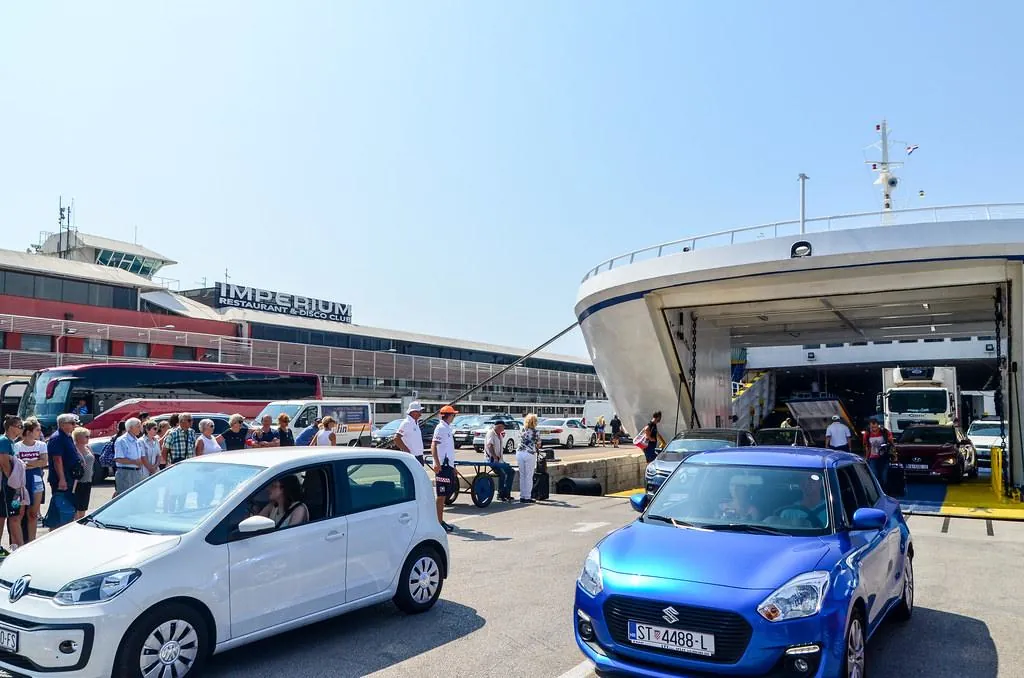
When it’s your turn, the crew will guide you onto the ramp and direct you where to park inside the ferry garage. It’s important to follow their instructions. After parking, you leave the car and go to the passenger area. Access to the garage is not allowed during the crossing, so take everything you need with you.
On arrival in Stari Grad, the crew will guide you again when it’s time to disembark. You’ll drive off the ferry into the port area and need to move your car away from the unloading zone immediately.
If you’re travelling from Hvar to Split by car, the process is essentially the same. You arrive at Stari Grad port, wait for boarding and follow the crew’s instructions. Prices and travel time are the same in both directions.
Another way to do a Split to Hvar day trip: speedboats and tours
Besides ferries and catamarans, it’s also possible to reach Hvar on organised tours or private speedboat transfers. These are usually faster and more flexible, often combining Hvar with nearby islands and swimming stops along the way.
This is also the most expensive way to get to Hvar, but it can make sense if you want to avoid fixed schedules and crowded ferries, or turn the journey itself into part of the experience.
Many tours include stops like the Blue Cave, smaller islands and some of the best swimming spots in the area, while others focus on local food, wine or guided walks through Hvar Town.