Featured image: Muzeji i galerije Konavala
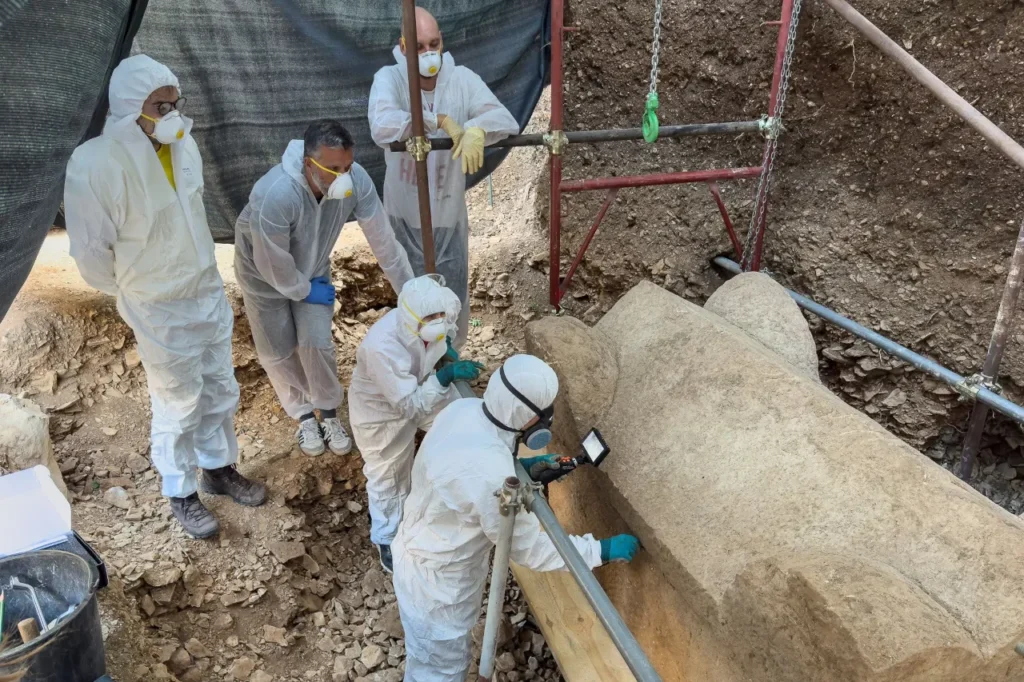
A remarkably rare archaeological discovery has been made in Cavtat, offering a new glimpse into the ancient past of southern Croatia. During excavations at the Zorina 8 site, archaeologists uncovered an intact and sealed Late Roman sarcophagus that had remained undisturbed in its original position for more than 1,500 years.
The Roman sarcophagus found in Cavtat was discovered within the necropolis of ancient Epidaurum, the Roman colony that preceded present-day Cavtat and was one of the most important settlements in the southern part of Roman Dalmatia.
“The exceptional value of this discovery lies in the fact that the sarcophagus was found in its original position, as a sealed and untouched burial unit with preserved lime mortar between the lid and the coffin. Finds of this kind are extremely rare in the Croatian archaeological context,” the Museums and Galleries of Konavle said.
A five-tonne sarcophagus
The stone sarcophagus, of the Salona type, has been tentatively dated between the 4th and 6th centuries AD. Weighing around five tonnes, it was discovered at a depth of approximately three metres.
Inside, archaeologists identified the primary burial of a single individual. Although the skeletal remains were poorly preserved, organic material and other deposits recovered from the tomb will undergo further laboratory analysis, which may reveal more about the deceased and life in late antique Epidaurum.
The excavations were led by Helena Puhara, with expert collaborators Jelena Beželj of the Museums and Galleries of Konavle and Krešimir Grbavac of the Archaeological Museum of the Dubrovnik Museums. The research team also included Lukša Klaić, Ivo Letunić, Ana Požar Piplica, Karmen Rihter and the company Arheo Plan.
The documentation and investigation of the sarcophagus involved surveyor Miljenko Žabčić, anthropologist Dr Mario Novak, conservator-restorers Sandra Lucić Vujičić, Sara Šimetić and Mihael Golubić, as well as photographer Ljubo Gamulin of the Croatian Conservation Institute. Ana Požar Piplica carried out the removal of the binding mortar between the lid and the coffin and collected samples for upcoming laboratory analyses.
One of the most demanding stages of the project was the operation to lift the lid, extract the sarcophagus and move it to a new location. The work was led by conservator-restorer Siniša Bizjak in cooperation with sculptor Tomislav Šalov, with assistance from Luko Piplica and Andrija Piplica, as well as many others who happened to be on site at the time.
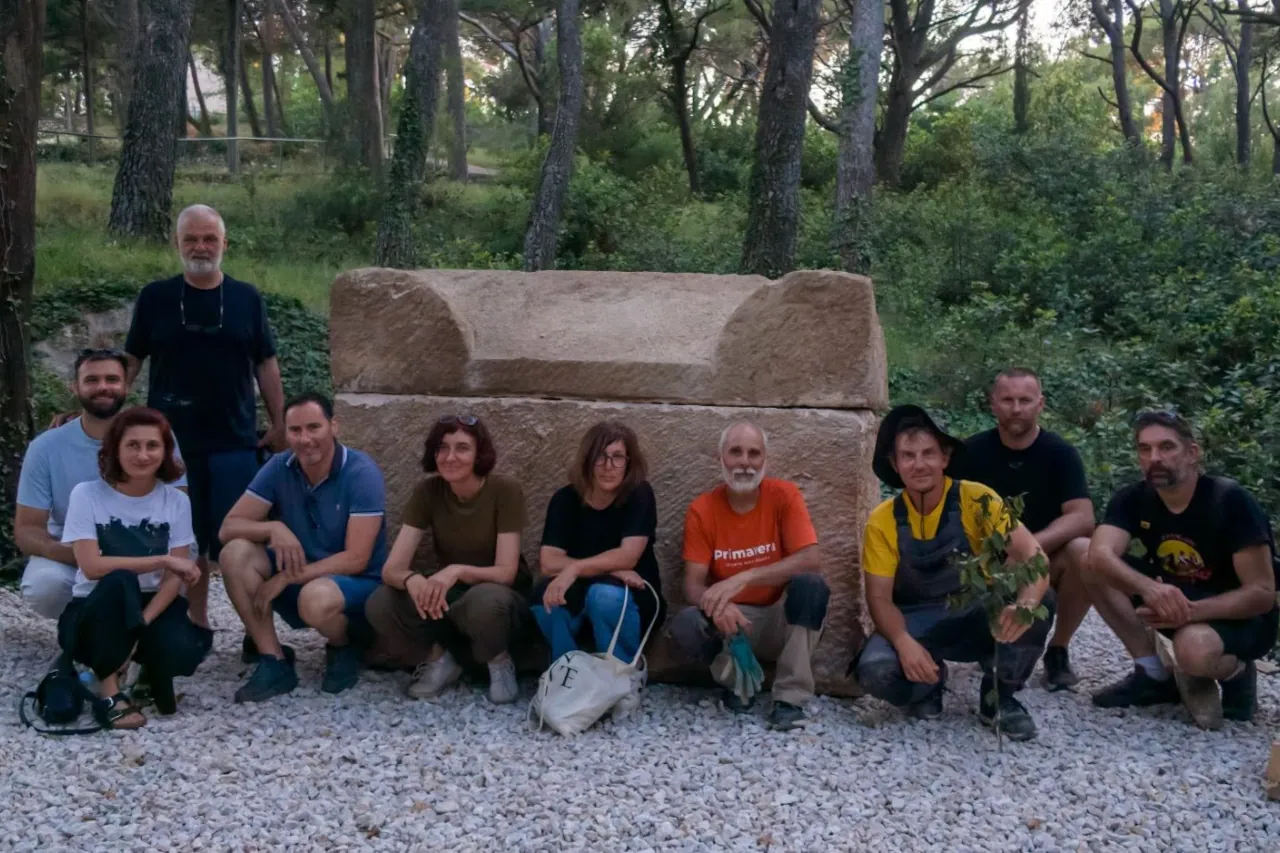
Now on public display in Cavtat
Following the completion of the research, the sarcophagus was not returned underground. Instead, it has been placed in a publicly accessible location in Cavtat, at the junction of the paths leading to the Račić Family Mausoleum, St. Roko Cemetery and the steps descending to Ključice Beach.
There, residents and visitors alike can see a rare survivor from the Roman era and a tangible reminder of the town’s ancient roots.
The discovery once again highlights the rich ancient heritage of Cavtat. Beneath the streets and houses of the modern town lie the remains of Epidaurum, a city that served as an important centre of life on the southern Adriatic long before Dubrovnik rose to prominence.
While many visitors come to Cavtat for its waterfront promenade and relaxed atmosphere, discoveries like this reveal a much deeper history. If you’re planning to explore the Dubrovnik region, our Dubrovnik Travel Guide includes practical advice, local tips and ideas for places worth visiting beyond the city walls.