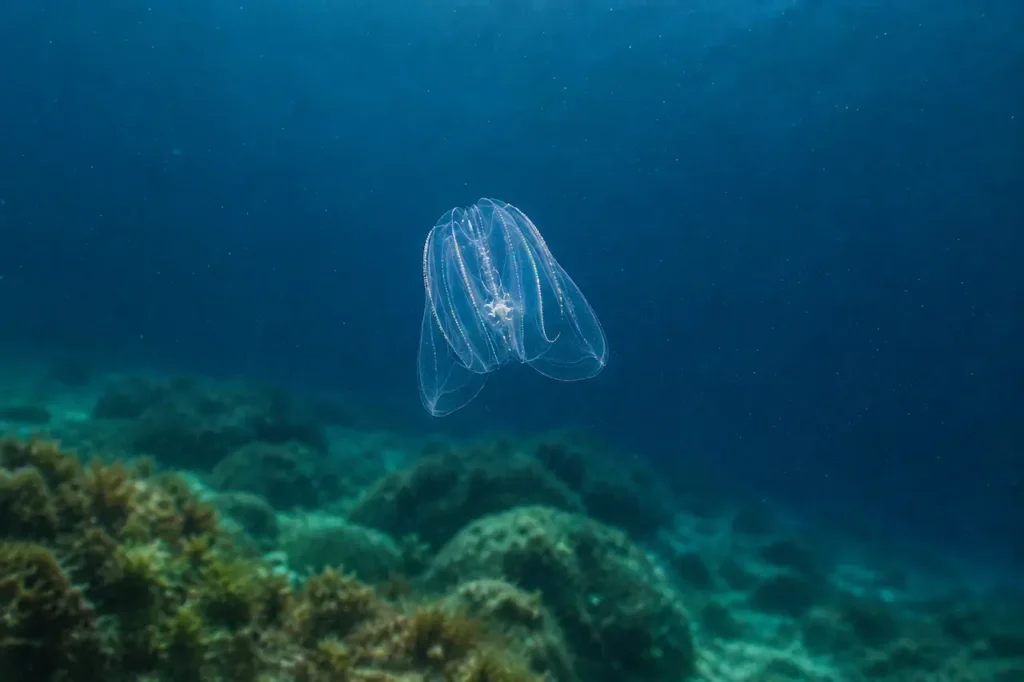
Featured image: New species in the Adriatic Sea, Sea walnut/CU
A transparent creature drifting through the Adriatic may look like a jellyfish at first glance, but the sea walnut is something quite different. The comb jelly, native to the western Atlantic, is now also found in the Adriatic Sea, and it is one example of a much broader change scientists are watching closely.
More species in the Adriatic Sea are appearing outside their natural ranges, often transported by human activity. Some may arrive in the ballast water of ships, while others can travel attached to their hulls.
But a newcomer is not necessarily bad news. A non-native species only becomes invasive when it successfully establishes itself, spreads and begins causing harm to native organisms, ecosystems or economic activities, scientists from the Ruđer Bošković Institute explain.
Not every newcomer is an invasive species
One concern is competition for resources already used by native Adriatic species.
“Invasive species can compete with native Adriatic species for food, habitat and other resources. For example, if they consume the same food source, less remains available to native species, which is important for species such as small pelagic fish, a resource that has been used for centuries,” explains Dr Daniela Marić Pfannkuchen from the Ruđer Bošković Institute’s Center for Marine Research in Rovinj.
The sea walnut (Mnemiopsis leidyi) is one of the species being studied as part of the ALIENA project. It feeds on zooplankton, the tiny animals drifting in seawater that form an important part of the marine food web. Fish also depend on zooplankton, meaning very large populations of sea walnuts can increase competition for the same food resources.
What is a sea walnut?
The sea walnut (Mnemiopsis leidyi) is a transparent comb jelly with an oval body that can grow up to 10 cm long. It has two large lobes that may open widely while feeding, while eight rows of cilia along its body help it move through the water.
Native to the western Atlantic, it is a non-native species in the Adriatic Sea and is considered one of the world’s 100 most invasive species. Its presence in the Adriatic has been reported throughout the year since 2016, with large aggregations particularly common in summer and autumn.
Despite its jellyfish-like appearance, the sea walnut does not have stinging cells and does not sting.
Scientists are tracking species in the Adriatic Sea
Simply recording the arrival of a non-native species is not enough. Scientists also need to know where it has appeared, how abundant it is and whether, and how quickly, it is spreading.
“When we find a species at a new location, we get a new point on the map of its spread. If an invasion began in the southern Adriatic, we can track whether it moves northwards from year to year,” Marić Pfannkuchen explains.
Species transported in ballast water can follow a very different pattern, she adds, because they may appear directly in a port and establish a population there.
Early detection can give both scientists and authorities valuable time to respond. If a species appears for which existing regulations do not provide a method of removal or control, the rules themselves may also need to be adapted.
Tracking new species through Project ALIENA
That is where ALIENA comes in. Its full name is ALIENA, ALIgning Efforts to control Non-indigenous species in the Adriatic sea, a particularly fitting name for a project focused on organisms arriving somewhere they did not previously live.
Scientists and institutions from Croatia and Italy are working together to build a shared knowledge base and a more coordinated system for monitoring non-native species in the Adriatic Sea.
Field observations are being combined with computer models designed to identify when environmental conditions favour the presence and spread of particular non-native species. The first versions of the forecasting tools have already been developed and are being tested against data collected during research in four pilot areas of the Adriatic.
The aim is not simply to compile a list of the sea’s new residents. Researchers want to detect changes earlier and develop an early-warning system that gives scientists and authorities more time to assess potential risks and, where possible, respond.
Some ‘new’ species may have been here all along
The technology used to study Adriatic marine life is also changing.
Molecular methods can now detect organisms that are difficult to identify using traditional techniques because they are very small, scarce or closely resemble other species.
“Molecular methods give us a completely new insight into Adriatic biodiversity. We are detecting species that were not previously on our lists, but that does not mean they are all new or invasive. Some may have always been here; we simply could not identify them using earlier methods,” Marić Pfannkuchen says.
It is an important distinction: finding previously unrecorded species in the Adriatic Sea does not necessarily mean that those organisms have recently arrived.
Swimmers and divers can help scientists too
People spending time in the Adriatic can also contribute to monitoring these changes.
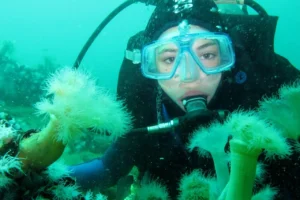
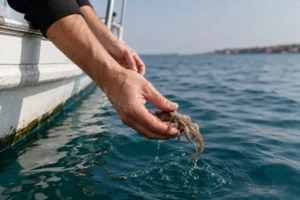
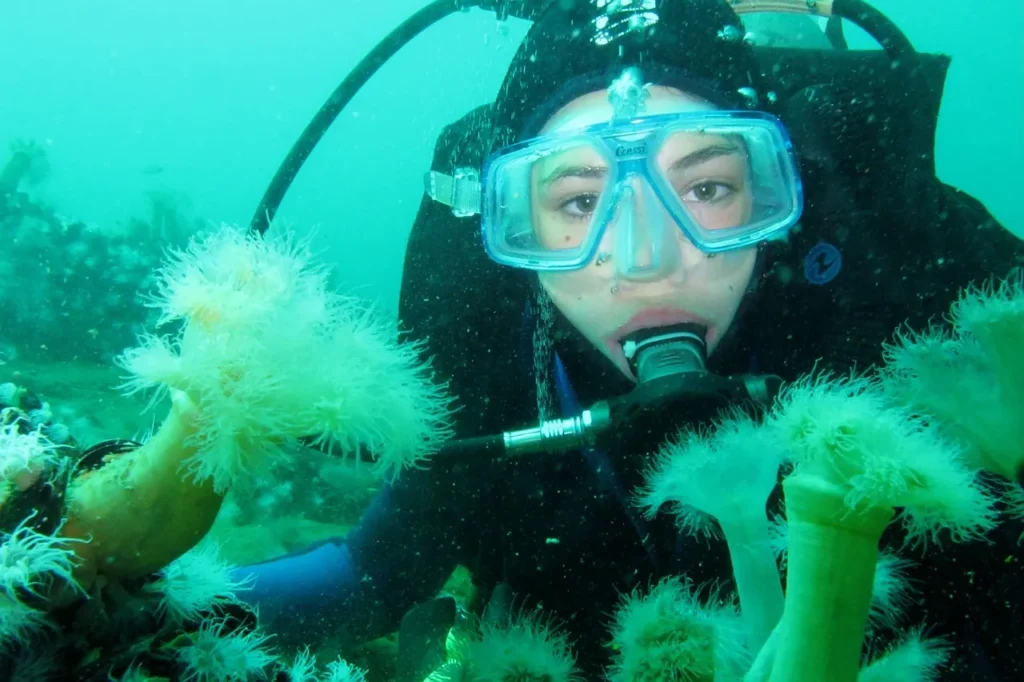
Anyone who notices an unfamiliar or unusual marine organism while swimming or diving can provide scientists with useful information. A clear photograph together with the location and time of the sighting can help researchers identify and track unusual observations.
These observations can also help scientists build a clearer picture of how unusual species in the Adriatic Sea are appearing and spreading over time.
Sightings can be submitted through the Crafting the Sea app, allowing members of the public to contribute directly to monitoring changes taking place beneath the surface of the Adriatic. The system has already recorded 76 sea walnut sightings in Croatia, mostly in Istria and the Kvarner area.
ALIENA is being carried out through the Interreg Italy-Croatia 2021-2027 programme. The project brings together seven partners from Croatia and Italy, including the Ruđer Bošković Institute’s Center for Marine Research in Rovinj and Croatia’s Institute of Oceanography and Fisheries.