Featured images: Institut Plavi svijet
Researchers from the Blue World Institute have observed the first newborn bottlenose dolphins in Croatia this year near the island of Vis.
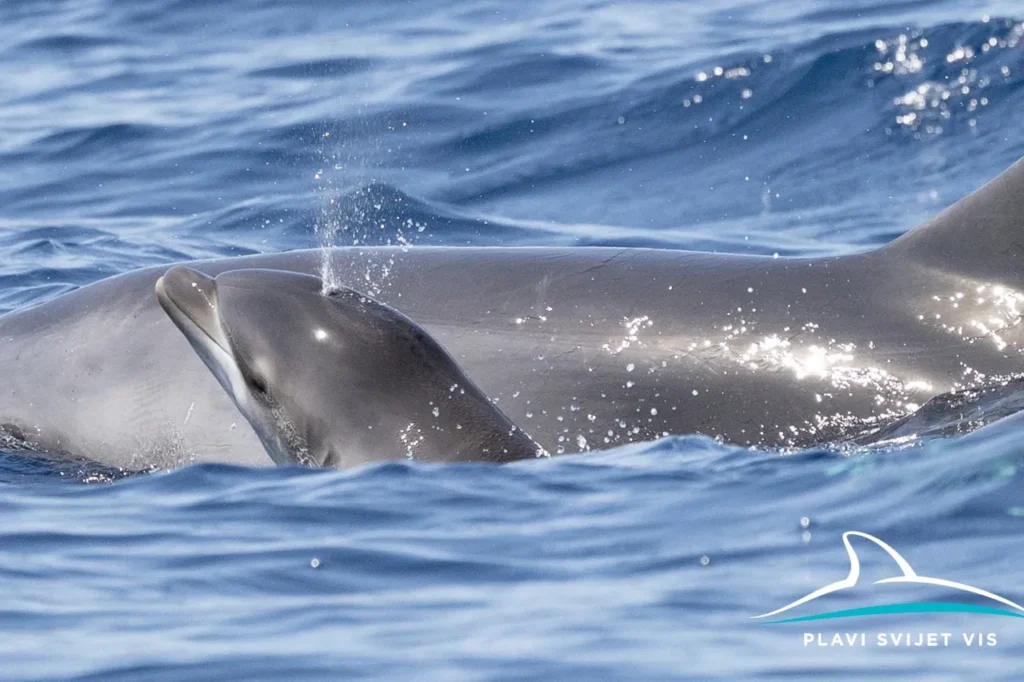
The calves were swimming alongside their mothers, Arganel, Jaglica and Dinko, marking the arrival of a new generation of bottlenose dolphins in the Adriatic.
Newborn dolphin calves stay close to their mothers
Newborn dolphins were observed swimming directly beside their mothers, where they can benefit from the movement of water created as the adults swim.
This slipstream reduces the amount of energy the calves need to use while moving through the sea. Their proportionally larger amount of blubber also improves buoyancy, helping them remain near the surface during the earliest stage of their development.
Researchers also observed the one-year-old calves of Srećko and Gatula in the same group.
Srećko’s calf demonstrated how quickly young bottlenose dolphins develop, making a small jump that showed its increased size and mobility compared with the newborns.
First newborn dolphins in Croatia recorded near Vis. Photo: Plavi svijet
Researchers continue monitoring dolphins near Vis
The Blue World Institute follows individual dolphins in Croatia over many years, identifying them by the shape, marks and scars on their dorsal fins.
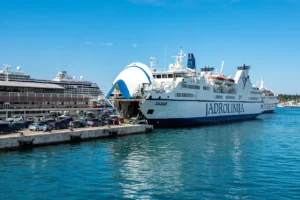
Just days before the newborn calves were recorded, researchers also reported the return of Mijo, a well-known dolphin previously seen swimming in the bow wave of the ferry Petar Hektorović on the Split–Vis route.
Mijo was observed near the port of Vis in a group of 15 dolphins, which also included Gabrijel, Marko and several calves. He can be recognised by notches on his dorsal fin and numerous scars across his body, believed to be the result of interactions with other dolphins.
The institute’s long-term monitoring allows researchers to document family groups, movements and changes among dolphins in Croatia across generations.
People can support the research through the institute’s symbolic dolphin adoption programme, which helps fund continued observation and protection of bottlenose dolphins in the Adriatic.
Bottlenose dolphins in the Adriatic
Bottlenose dolphins are protected by law in Croatia and are listed as an endangered species in the country’s Red Book of Mammals. Their conservation is considered a priority in both Croatian and European nature protection, while research carried out by the Blue World Institute contributes to a better understanding of their population, behaviour and habitat in the Adriatic. Its Adriatic Dolphin Project, launched in 1987, is the longest continuously running study of a bottlenose dolphin community in the Mediterranean.
Adult bottlenose dolphins in the Adriatic can grow to around three metres and usually live for about 30 years. Females mature relatively late and generally give birth only once every three to five years, after a pregnancy lasting about 12 months. Calves remain with their mothers for several years, which makes each new birth important for the long-term survival of the population.
Where to see dolphins in Croatia
As part of its educational and conservation work, the Blue World Institute organises dolphin-watching trips, educational programmes, volunteering opportunities and a symbolic dolphin adoption programme that helps support continued research.
Dolphins are most commonly observed around Lošinj, but they can also be seen near the Brijuni Islands, Rovinj and in the Pašman Channel. Sightings are possible throughout the Croatian Adriatic, although dolphins are less often seen close to the shore. They are more likely to be spotted from a boat in open water, where groups of dolphins can sometimes be seen swimming, feeding or approaching vessels.
If you encounter dolphins at sea, slow down and keep a respectful distance. Avoid chasing them, cutting across their path or separating mothers from their calves, and never try to touch or feed them. Boats should move slowly and predictably, preferably on a parallel course, while sightings should be kept brief to avoid disturbing the animals.
Dolphins are among the best-known marine animals in the Adriatic, but they share these waters with many other species, including several types of sharks found in Croatia.