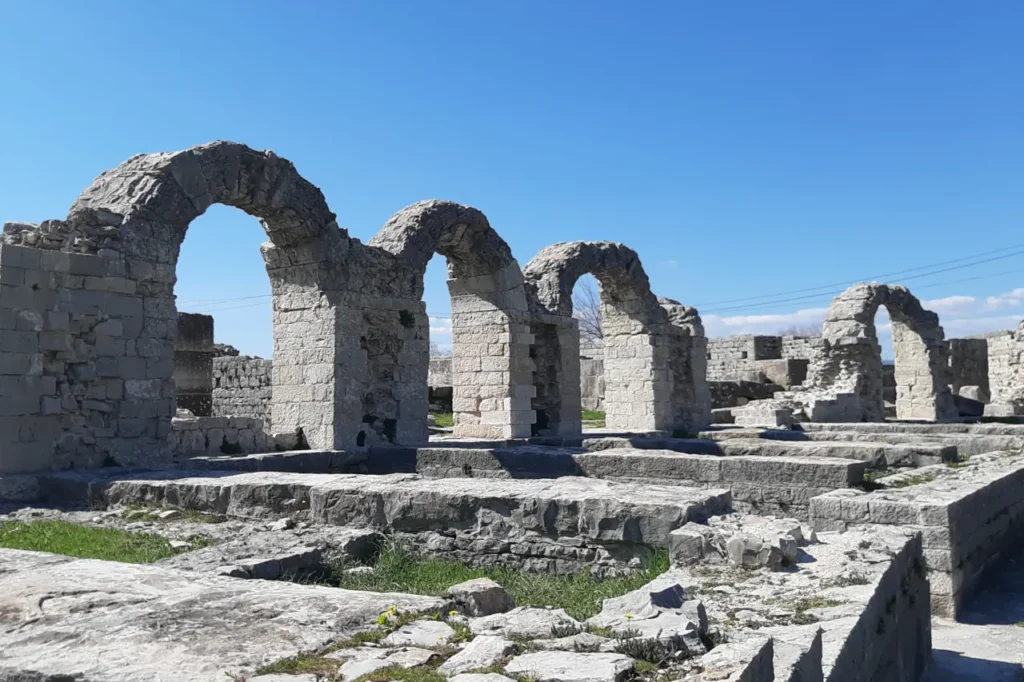
Salona is a place almost every traveller passes on their way to Split without even realising what is actually there.
Nearly two thousand years ago, Salona was the capital of the Roman province of Dalmatia and the largest Roman city on the eastern Adriatic coast.
Today, the area of Solin is home to vast archaeological sites with massive remains of amphitheatres, basilicas, city walls and former Roman streets.
Why is Salona famous?
Salona is a protected archaeological park and one of the most important ancient sites in this part of Europe.
Across the area of present-day Solin lie the remains of the former Roman city, including amphitheatres, city walls, baths, basilicas and early Christian cemeteries. The site is especially important for early Christian history, and the area is closely connected to Saint Domnius, the patron saint of Split.
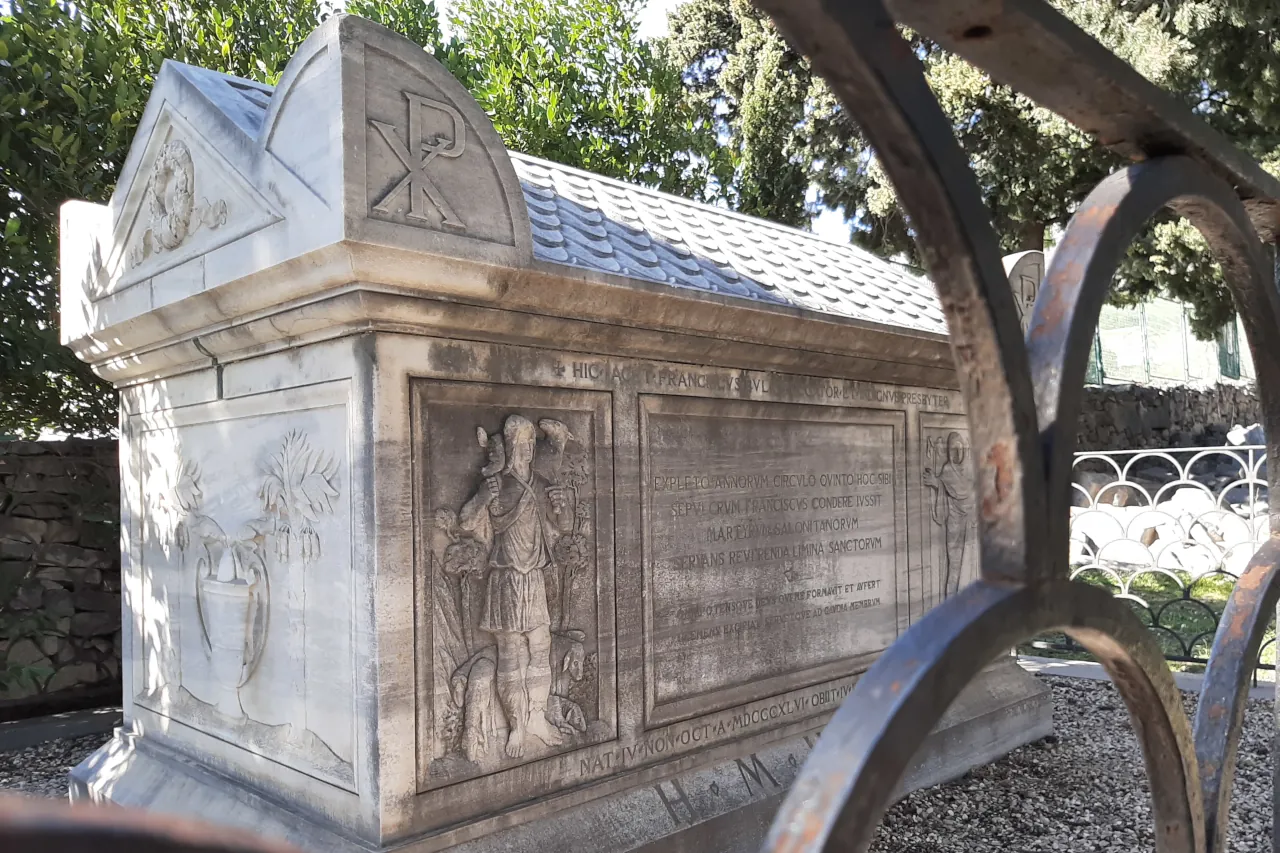
Unlike Diocletian’s Palace, which is still woven into the everyday life of Split, Salona feels open and raw. And unlike many historic sites across Europe, it has not been heavily reconstructed or turned into a polished tourist attraction.
Large parts of the archaeological park are surrounded by greenery and it is possible to walk among the ruins for hours with a feeling that you are exploring a forgotten city rather than a typical tourist location.
Where is Salona located?
Salona is located in Solin, around 6 kilometres east of Split. By car, it usually takes around 15 minutes to reach from the centre of Split, depending on traffic.
It is also easy to visit by public transport. Local bus lines 1 and 16 connect Split and Solin regularly, with the journey taking around 20 minutes. A one-way ticket costs around €2.5 and can be bought from the driver, at a kiosk or through the Promet Split app.
Many visitors combine Salona with nearby places such as Klis Fortress or Trogir as part of a half-day trip from Split.
If you prefer exploring Salona with a guide who can explain the history of the site and show you some of its lesser-known corners, there are plenty of tour options available. You can check some of them here.
What can you see in Salona today?
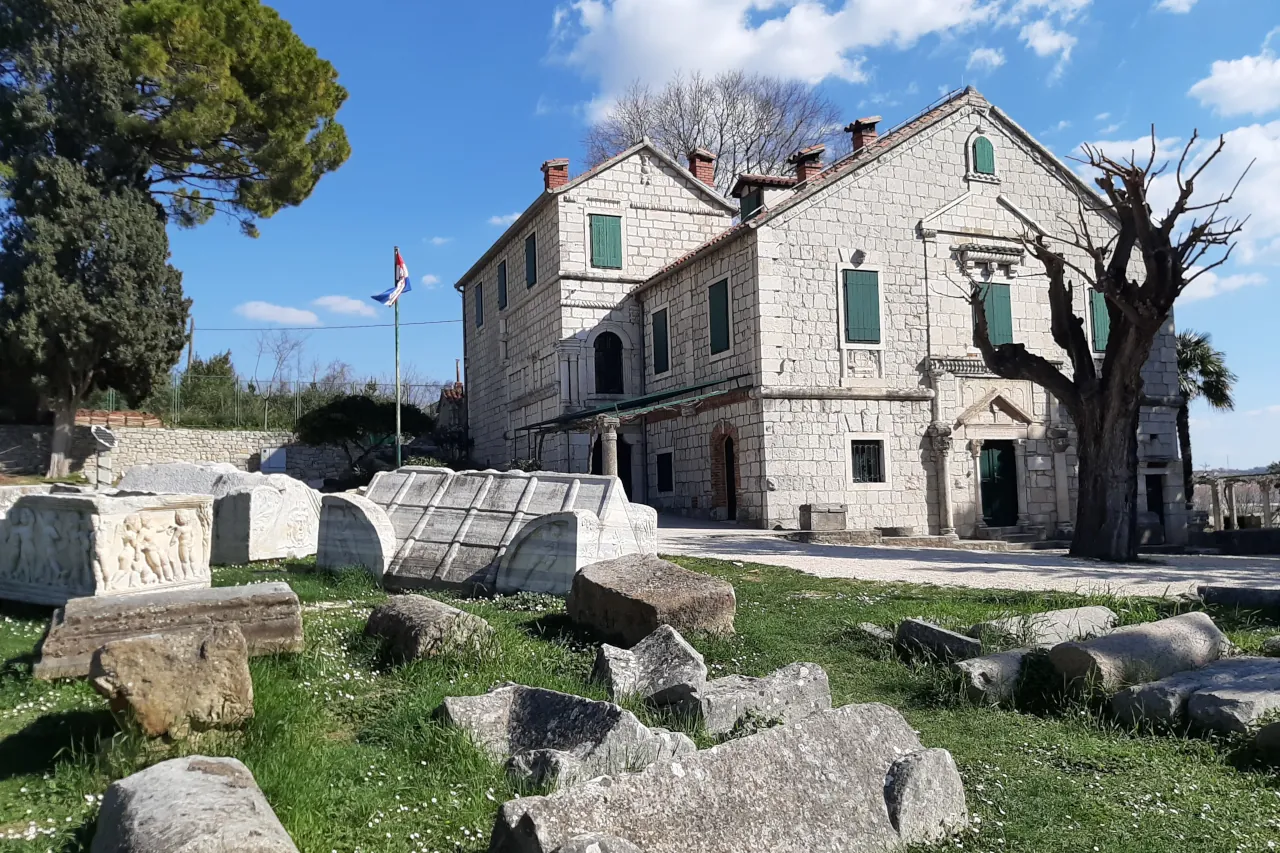
When you arrive in Salona, it doesn’t feel like visiting a museum or a single monument where you look around for a few minutes, take a photo and move on. Exploring Salona is more like wandering through the ruins of an entire ancient city.
The amphitheatre is the best known part of the site, but across the archaeological area you can also see the remains of basilicas, early Christian cemeteries, Roman walls, columns, mosaics and old streets that once connected different parts of the city. And everything is spread across wide green meadows crossed by small streams.
One of the things that makes Salona feel different from many archaeological attractions in Europe is how open and accessible it still feels. Visitors can wander among the ruins at leisure, stopping wherever something catches their attention.
If you are planning a longer stay in the area, our Three Days in Split guide also includes ideas for historical sites and day trips around the city.
How much time do you need to visit Salona?
Most people spend between two to three hours in Salona, usually exploring Manastirine, the richest archaeological area of the site, and then walking another five to six minutes to the amphitheatre.
But there is so much more to see. If you are interested in history or archaeology, it’s easy to stay for hours, especially if you also visit the collection inside Tusculum, explore Manastirine, the amphitheatre and other archaeological locations around Solin.
Many locals treat Salona almost like a full-day outdoor escape. People often bring snacks, badminton rackets, balls or board games, while others come simply to walk their dogs or spend time in nature.
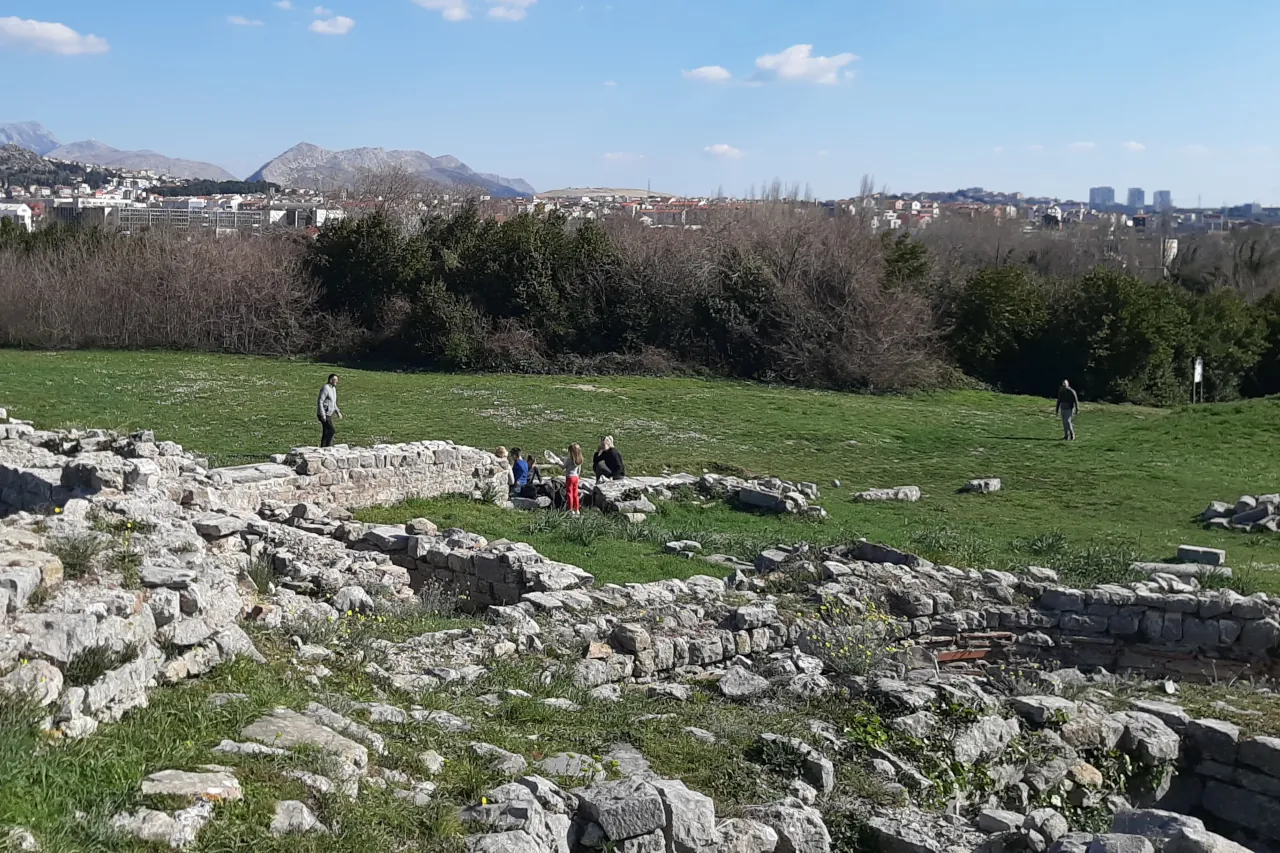
The entire archaeological area is crossed by walking paths stretching for around two kilometres, making it one of the most unusual green spaces near Split.
During summer, it’s best to visit early in the morning or later in the evening, as there’s very little shade across the site. Sunset in Salona is also a special experience in itself.
Is Salona worth visiting?
Yes. Especially if you are interested in Roman history, quieter places and less touristy locations around Split. For many visitors, Salona ends up becoming one of the most interesting places they visited during their stay in Croatia.
What makes it even more fascinating is that the archaeological site most visitors see today is actually only a small part of the former Roman city. Ancient Salona once covered a much larger area of present-day Solin and ruins of the old city are still scattered throughout the town.
Because of that, it is worth setting aside a few extra hours to explore Solin itself, especially along the Jadro River.
If you are looking for more ideas beyond Salona, our guide Best Day Trips from Split includes some of the most interesting places to visit from Split.