One of the most common questions people ask before travelling to Croatia is whether locals speak English.
The answer is yes. English is widely spoken across Croatia, especially along the coast.
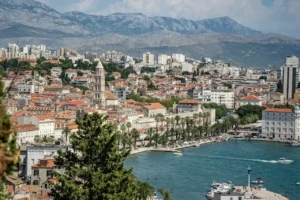
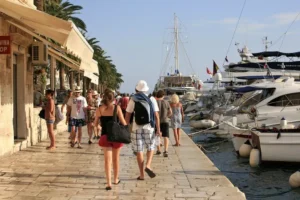
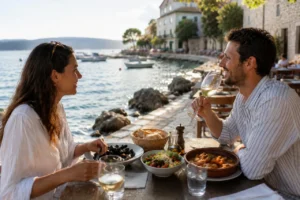
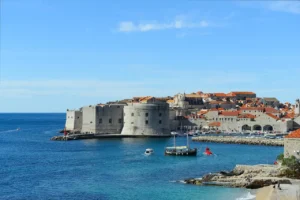
In places like Split, Dubrovnik, Hvar, Zagreb and most tourist areas, restaurant staff, hotel workers, ferry crews and people working in tourism generally speak very good English. The only situations where you may run into language barriers are usually with older generations.
Still, learning a few basic Croatian words like hello, thank you or how to order a coffee in Croatian can make travelling easier and often leads to warmer interactions with locals.
Jump to section
› Croatian words travellers use most
› Useful Croatian words for getting around
Do people speak English in Croatia?
Croatians generally speak English very well. For generations, children have started learning English in primary school from an early age, and some even begin in kindergarten.
Things can be slightly different in smaller villages or more rural parts of Croatia, where English may be limited. Older generations are also less likely to speak it fluently, if at all.
That said, Croatia is generally an easy country to navigate as an English-speaking traveller. Most visitors quickly realise they worried about the language much more than necessary.
Croatian words travellers use the most
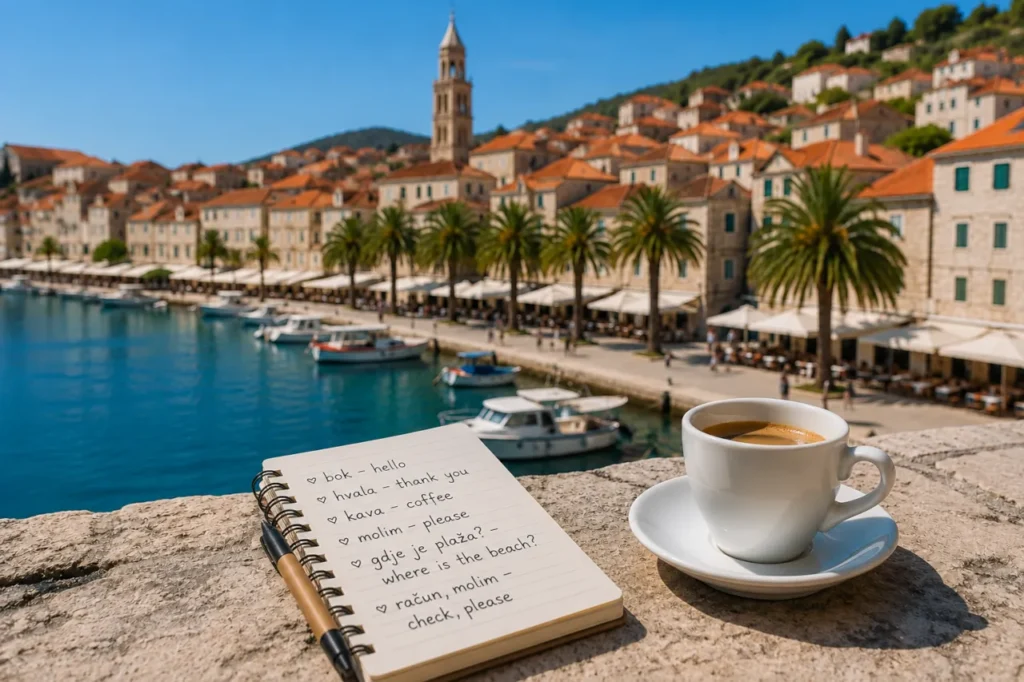
If you only remember a few Croatian words during your trip, these are the ones you will probably use most often in cafés, restaurants, ferries and everyday situations around Croatia.
| MEANING | CROATIAN | PRONUNCIATION |
|---|---|---|
| Hi / Bye | Bok | bohk |
| Goodbye | Doviđenja | doh-vee-JEH-nyah |
| Thank you | Hvala | hvah-lah |
| Please / Welcome | Molim | moh-leem |
| How are you? | Kako si? | kah-koh see |
| Check, please | Račun, molim | ra-CHOON moh-lem |
| Coffee | Kava | kah-vah |
| Beer | Pivo | pee-voh |
| Cheers | Živjeli | ZHEE-vyeh-lee |
| Where is…? | Gdje je…? | gd-yeh yeh |
| Beach | Plaža | plah-ZHAH |
| Ferry | Trajekt | try-ehkt |
| Toilet | WC | veh-tseh |
| How much does it cost? | Koliko košta? | koh-lee-koh koh-SHTAH |
You would use the phrase “Gdje je…?” for questions like “Where is the beach?”. In that case, you simply add the place, person or thing you are looking for at the end.
For example: Gdje je plaža? pronounced roughly as gd-yeh yeh plah-ZHAH.
Same goeas for the phrase “Koliko košta?” which is used for questions like “How much does the coffee cost?”. You just add “kava” at the end: Koliko košta kava? pronounced roughly as koh-lee-koh koh-SHTAH kah-vah.
Basic Croatian words and greetings
These are some of the Croatian words and greetings you will hear constantly while travelling around the country.
| MEANING | CROATIAN | PRONUNCIATION |
|---|---|---|
| Yes | Da | dah |
| No | Ne | neh |
| Good morning | Dobro jutro | doh-broh yoo-troh |
| Good day | Dobar dan | doh-bahr-dahn |
| Good night | Laku noć | lah-koo NOTCH |
| Sorry / Excuse me | Oprostite | oh-proh-stee-teh |
| Help | Pomozite | poh-moh-zee-teh |
The phrase “Pomozite” is used when you need help with something, for example finding an address.
There is also the expression Upomoć used in emergencies or dangerous situations, pronounced roughly as oo-poh-MOCH.
Croatian food names worth knowing
Some restaurant menus in Croatia are translated well, others less so. These are some of the Croatian food names and menu words you will see most often along the coast.
| MEANING | CROATIAN | PRONUNCIATION |
|---|---|---|
| Squid | Lignja | leegn-yeh |
| Shellfish | Školjke | SHKOL-YKEH |
| Shrimp | Škampi | SHKAHM-pee |
| Tuna fish | Tuna | too-nah |
| Prosciutto | Pršut | pr-SHOOT |
| Cheese | Sir | seer |
| Lamb | Janjetina | YAH-NYET-tee-nah |
| Beef stew | Pašticada | PASH-tee-tsah-dah |
| Slow-cooked dish under a bell | Peka | peh-kah |
| Can I…? | Mogu li…? | moh-goo lee |
| Waiter | Konobar | koh-noh-bahr |
| Tasty | Ukusno | oo-koos-noh |
| Not good | Nije dobro | nee-yeh doh-broh |
The phrase “Mogu li…?” is used when you want to ask if you can have or get something, for example: Mogu li dobiti kavu? pronounced roughly as moh-goo lee doh-bee-tee kah-voo.
If you are not familiar with Croatian food and want a better idea of what these dishes actually are before ordering, read our guide What to Order in Croatia: Local Food on the Dalmatian Coast.
Croatian words for public transport and getting around
These can be surprisingly useful if you are travelling by bus, ferry or walking around Croatian cities and islands.
| MEANING | CROATIAN | PRONUNCIATION |
|---|---|---|
| Bus | Autobus | ow-toh-boos |
| Ferry | Trajekt | try-ehkt |
| Port | Luka | loo-kah |
| Ticket | Karta | kahr-tah |
| Bus stop | Stanica | stah-nee-tsah |
| Main bus station | Kolodvor | koh-lohd-vor |
| Airport | Aerodrom | ah-eh-roh-drohm |
| Highway | Autocesta | ow-toh-tseh-stah |
| Left | Lijevo | lee-yeh.voh |
| Right | Desno | dehs-noh |
| Straight | Ravno | rahv-noh |
“Trajekt” is worth remembering because ferries are a major part of travel along the Croatian coast. You will also see “katamaran” frequently, especially on routes connecting Split with islands like Hvar or Vis.
If Croatian ferries feel confusing at first, read our guide to the Croatian ferry system explained, including the difference between ferries and catamarans, how tickets work and what travellers often misunderstand before arriving.
Fun Croatian words and swears travellers often remember first
Even visitors who learn only a few Croatian words usually end up remembering some purely because they sound fun, unusual or surprisingly expressive.
| MEANING | CROATIAN | PRONUNCIATION |
|---|---|---|
| Take it easy / slow down | Pomalo | poh-mah-loh |
| Dalmatian feeling of lazy relaxation | Fjaka | fyah.kah |
| Wow / jeez / oh man | Asti! | ah-stee |
| Dad (in Dalmatia) | Ćaća | CHAH-CHAH |
| Come on / okay / let’s go | Ajmo | eye-moh |
| Okay / works | Može | moh-ZHEH |
| Casual version of “hvala” | Fala | fah-lah |
| Damn it | Jebemu | yeh-beh-moo |
| Shit / damn | Sranje | srah-NYEH |
| For god’s sake | Bog te maz’o | bohg teh mah-zoh |
| Go away / no way | Aj ća | eye CHAH |
| Unbelievable / Seriously? | Svašta! | svah-SHTAH |
In Dalmatia, “Aj ća” can mean surprisingly many different things depending on tone and context, from excitement and disbelief to frustration, sarcasm or literally telling someone or something to go away.
The same goes for expressions like “Asti”, “Ala” and “Ma”, which can completely change meaning depending on tone, situation and who is saying them.
How Croatian pronunciation works
Croatian can seem difficult at first, especially for English speakers, because of letters and sounds that do not exist in English, such as č, ć, dž or lj.
Still, Croatian pronunciation is actually more consistent than many visitors expect. Once you understand a few basic sounds, reading menus, street signs and place names becomes much easier.
Some of the most useful Croatian pronunciation basics are:
- “j” is pronounced like the “y” in “yes”
Example: Jadran (the Adriatic) sounds roughly like yah-drahn - “č” sounds like “ch” in “chair”
Example: račun (bill/check) sounds roughly like rah-CHOON - “š” sounds like “sh” in “show”
Example: škampi (shrimp) sounds roughly like SHKAHM-pee - “ž” sounds similar to the “s” in “measure”
Example: poželjno (desirable/recommended) sounds roughly like po-ZHEL-yno - “ć” is softer than “č”, although many visitors barely notice the difference at first
Example: kuća (house) sounds roughly like KOO-cha with a softer “ch” sound
Pronunciation of Croatian cities and islands
- Split is pronounced almost exactly as written
- Hvar sounds roughly like Hvaar
- Brač sounds roughly like Brach
- Korčula sounds closer to Kor-chu-la
- Many visitors pronounce Dubrovnik as Doo-brov-nic, while the Croatian pronunciation is DOO-brov-neek
Many travellers are surprised by how phonetic Croatian is once they hear it spoken a few times.
You do not need to speak Croatian perfectly
A lot of visitors overthink the Croatian language before arriving. In reality, most trips work perfectly fine with a few basic words, some English and a bit of patience.
Croatians generally appreciate the effort even when pronunciation is imperfect, and after a few days on the coast, you will probably notice yourself casually saying “bok”, “hvala” or “račun, molim” without even thinking about it anymore