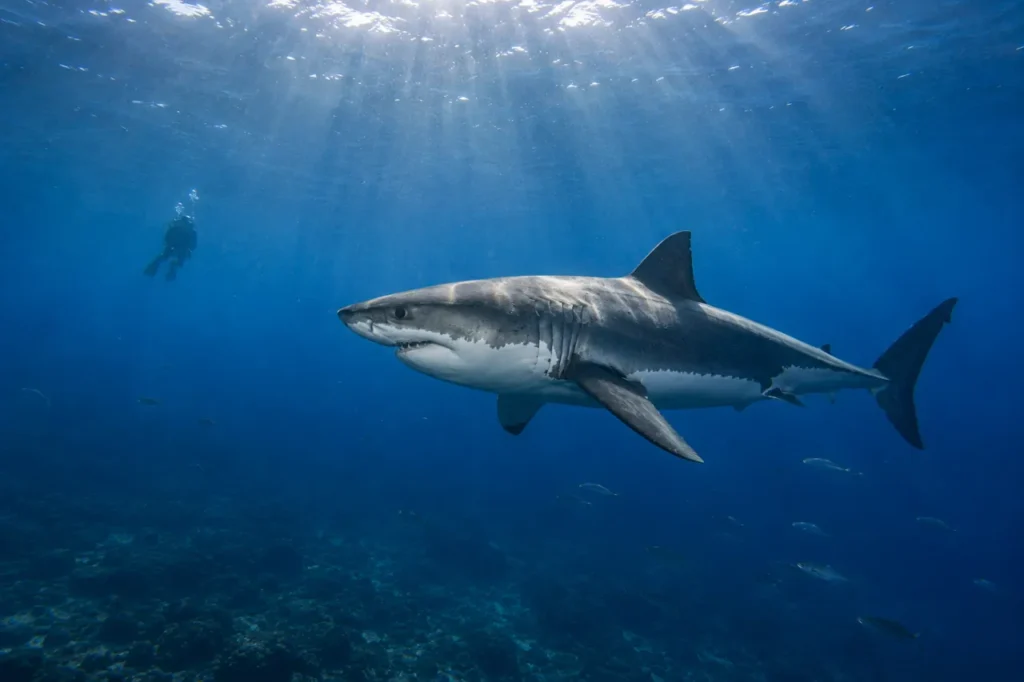
Featured image: Great white sharks in Croatia/CU
Almost every summer, a story about sharks in Croatia and the Adriatic Sea begins circulating online. All it takes is a photograph of a dorsal fin, a blurry video from the sea or news of an unusual catch for social media to fill with questions about whether Croatia’s beaches are really safe.
The short answer is yes, great white sharks have occasionally been recorded in the Adriatic Sea, including along the Croatian coast. However, that doesn’t mean swimmers should panic or avoid the sea.
On the contrary, encounters with great white sharks in Croatia are exceptionally rare and millions of people swim on Croatia’s beaches every year without ever seeing any shark.
For most visitors, it’s far more useful to know where sea urchins are common and which marine animals you may actually encounter while swimming or snorkelling near the Croatian coast. You can read more in our guide Strange Underwater Creatures in the Croatian Adriatic.
Are there sharks in the Adriatic Sea?
Yes. Sharks naturally live in the Adriatic Sea, including the waters along Croatia’s coastline. More than 30 shark species have been recorded in the Adriatic, but the overwhelming majority are harmless to humans and live far from popular beaches.
Why is everyone talking about great white sharks in Croatia again?
The subject resurfaced following the publication of a scientific paper describing a juvenile shark caught off the Croatian coast near Rogoznica in September 2023.
The animal was initially identified as a different species, but researchers later concluded, based on the available photographs, that it was in fact a juvenile great white shark.
Following publication, some experts questioned the identification, which is a normal part of the scientific process, particularly when dealing with rare marine species and photographs that were not taken under controlled conditions.
The authors later published a detailed response, supported by internationally recognised great white shark specialists, explaining why they remain confident that the identification was correct.
For the average reader, the most important point is this: the scientific debate does not mean Croatia’s beaches have suddenly become dangerous. If anything, it highlights just how rare and scientifically significant such records are.
It’s also worth remembering that the incident took place in 2023 and there have been no confirmed sightings of great white sharks in Croatia since then.
Great white sharks are not new to the Adriatic Sea
The great white shark (Carcharodon carcharias) has historically been present throughout the Mediterranean Sea, including the Adriatic Sea. In the past, occasional catches and sightings were recorded, particularly during periods when tuna populations were more abundant, one of the species closely associated with the shark’s movements.
Today, the situation is very different. Great white sharks are now considered extremely rare in the Adriatic and confirmed sightings are the exception rather than the rule.
For the vast majority of people visiting Croatia, the chance of seeing a great white shark while swimming is practically negligible.
Should swimmers be worried?
Realistically, no.
Croatia is one of Europe’s most popular summer destinations. Every year, millions of people swim, dive, sail, kayak and spend countless hours in the sea. If dangerous shark encounters were a genuine everyday risk, it would be impossible not to notice.
When great white sharks do appear in the Adriatic, they are not patrolling beaches looking for swimmers. They are large marine predators typically associated with deeper offshore waters.
When was the last shark attack in the Croatian Adriatic?
Shark attacks in the Croatian Adriatic are extremely rare. The last widely reported non-fatal attack occurred near the island of Vis in 2008, when an underwater fisherman was injured. The last fatal shark attacks in the Croatian Adriatic took place several decades ago.
It’s also important to understand the context. Spearfishing is very different from ordinary swimming. Spearfishers often carry their catch attached to a belt or float, which can attract large marine predators.
What species of sharks live in the Adriatic Sea?
Around thirty species of sharks have been recorded in the Adriatic Sea, including Croatia’s coastal waters, but the vast majority pose no danger to humans. Some inhabit deep offshore waters, some are very small, while others feed exclusively on plankton or small marine organisms.
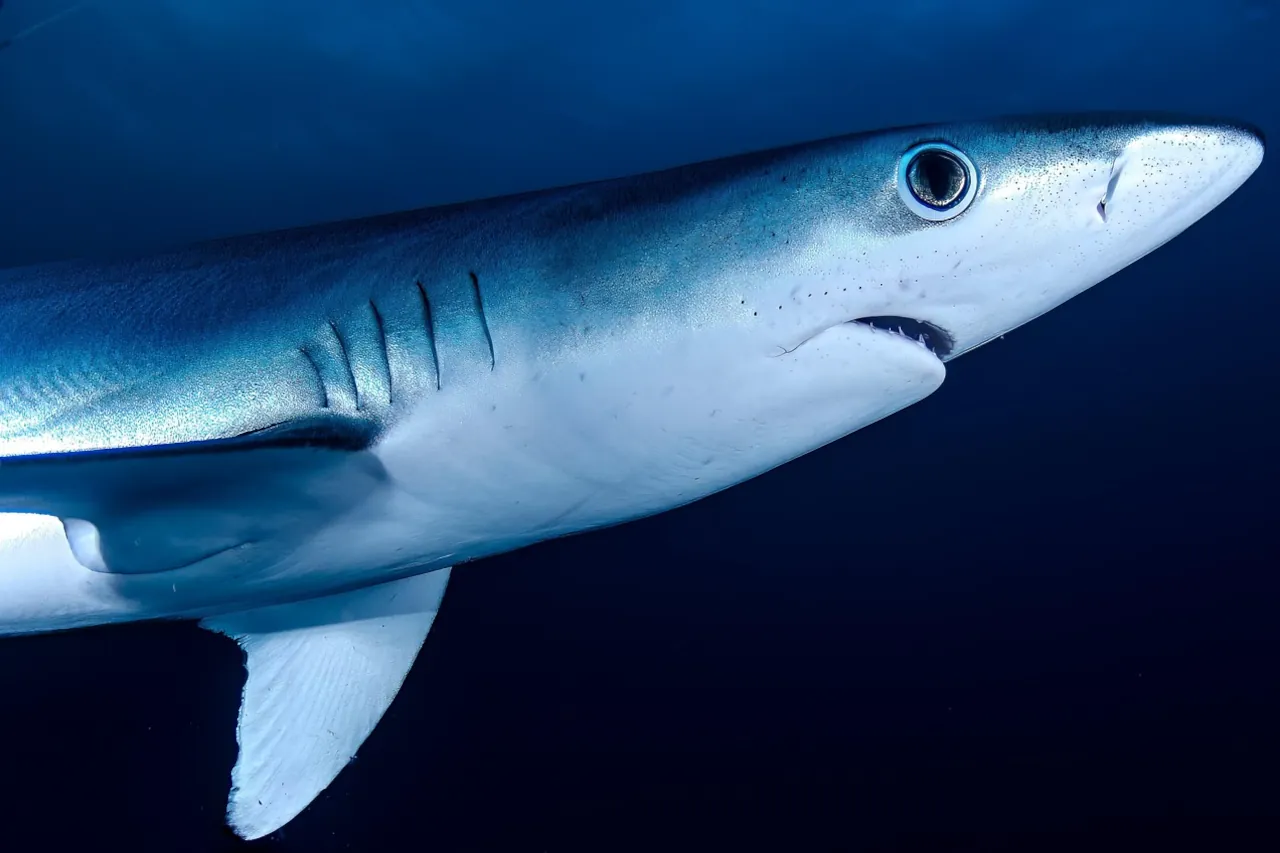
One of the species most often mentioned is the blue shark (Prionace glauca). It is regularly recorded in the Adriatic, mainly in offshore waters and only rarely approaches the coast. The blue shark is not known for attacking people and is a protected species in Croatia, making it illegal to kill or disturb it.
The basking shark (Cetorhinus maximus) is also occasionally seen in the Adriatic. Although its enormous size can appear intimidating, it is completely different from a great white shark. Basking sharks feed on plankton and pose no threat to swimmers.
The shortfin mako (Isurus oxyrinchus) is another large shark species occasionally recorded in the Adriatic. It is one of the fastest sharks in the world and lives mainly in offshore waters. Naturally shy around people, it tends to avoid swimmers and is only very rarely seen near Croatia’s beaches.
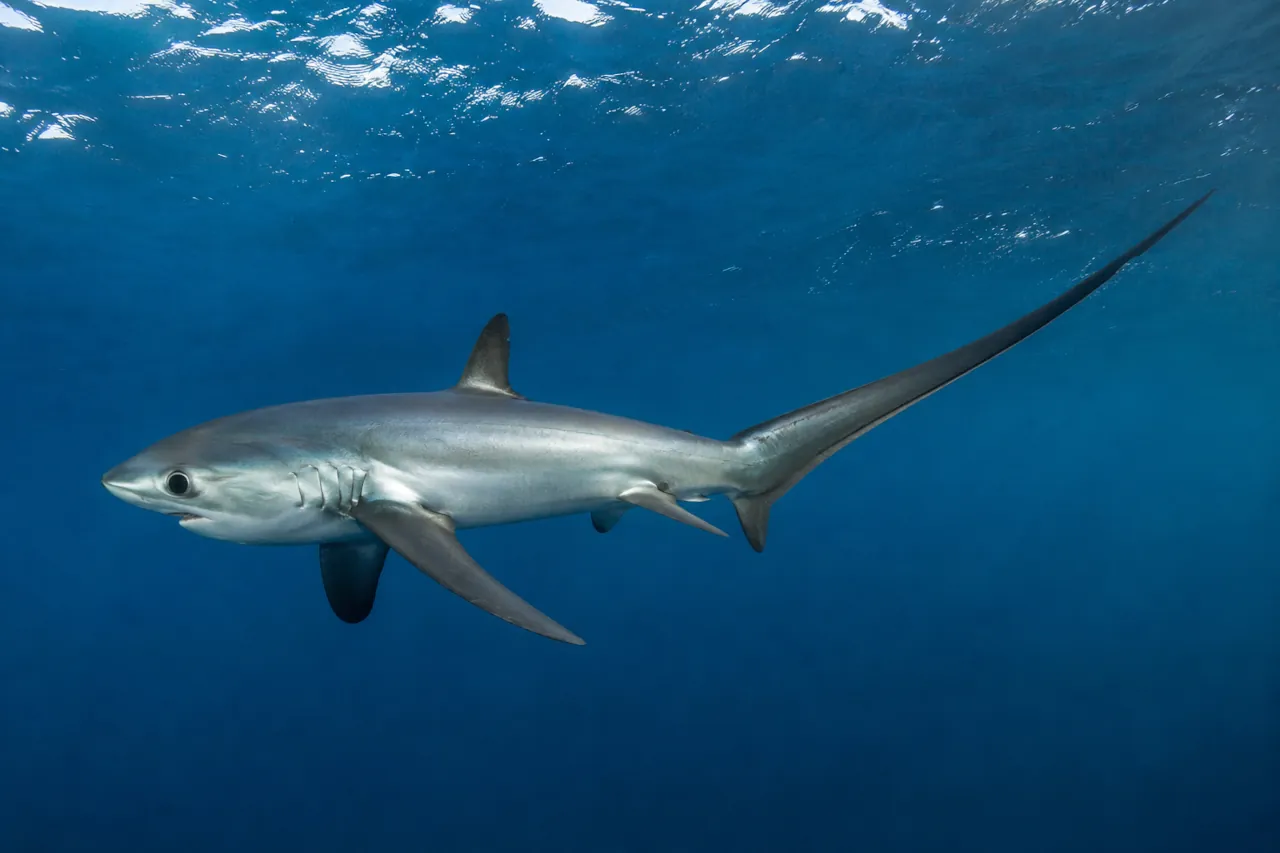
The thresher shark (Alopias vulpinus) is easy to recognise by its exceptionally long upper tail fin, which it uses to stun schools of fish. Although it can grow to an impressive size, it is not considered dangerous to swimmers and is only occasionally recorded in the Adriatic Sea.
There are also several smaller shark species that most visitors will never notice, particularly if they spend their time swimming in shallow tourist beaches.
Is it safe to swim in Croatia?
Yes. Croatia’s Adriatic Sea is considered very safe for swimming and fear of sharks in Croatia should not stop anyone from enjoying the country’s beaches, islands or boat trips.
If you want to be sensibly cautious, follow the usual safety advice: swim at designated beaches, avoid venturing too far offshore if you’re not an experienced swimmer, avoid swimming at night in unfamiliar places and don’t enter the water near fishing activity or blood in the sea.
These are simply common-sense precautions rather than special warnings about sharks in Croatia.
And if you happen to be one of the very few people who spots a shark far from the coast, the best thing you can do is stay calm. Most shark species found in the Adriatic are harmless to people and many are legally protected because they play an important role in maintaining a healthy marine ecosystem.