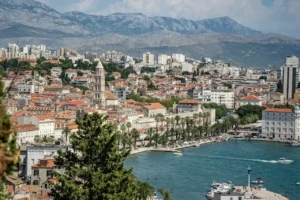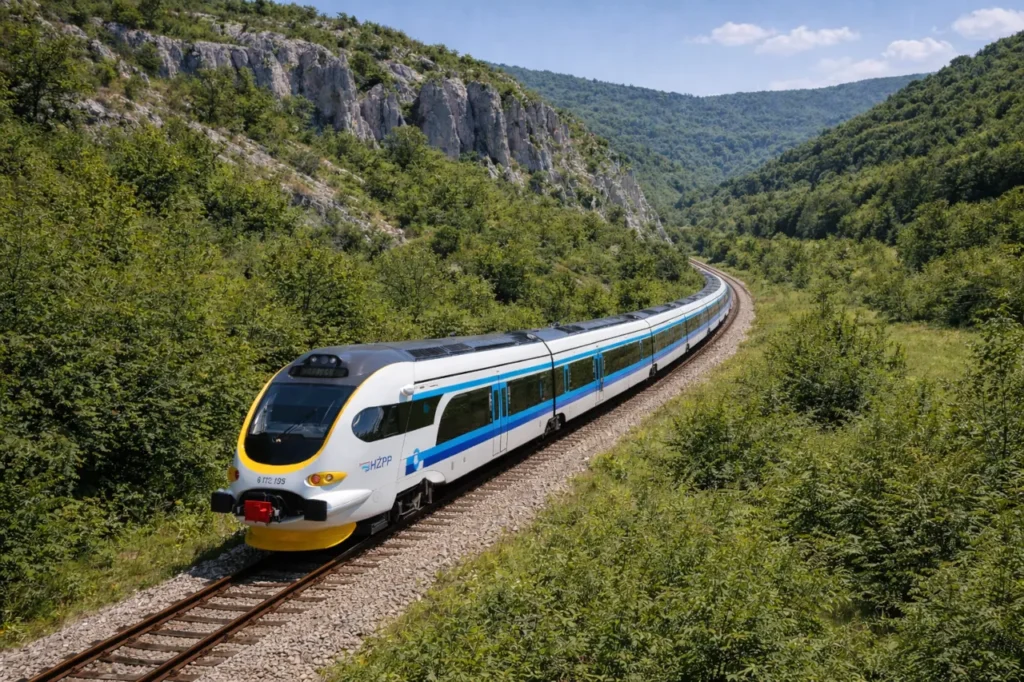
Trains in Croatia often surprise visitors, especially those from other European countries, because rail travel here does not work the way many travellers are used to at home.
Croatia has a relatively developed railway network, but primarily in the inland part of the country, while the coast is very limited in terms of rail connections.
This guide explains how rail transport in Croatia actually works, where trains make sense and in which situations another form of transport is the more practical choice.
If you are planning your first visit and still deciding how to move around the country, you may also find our guide Planning a Trip to Croatia? The Basics You Need to Know First helpful for understanding how transport actually fits into a realistic itinerary.
In this guide:
How Croatia’s railway network actually works
Main train routes and how to read the rail map
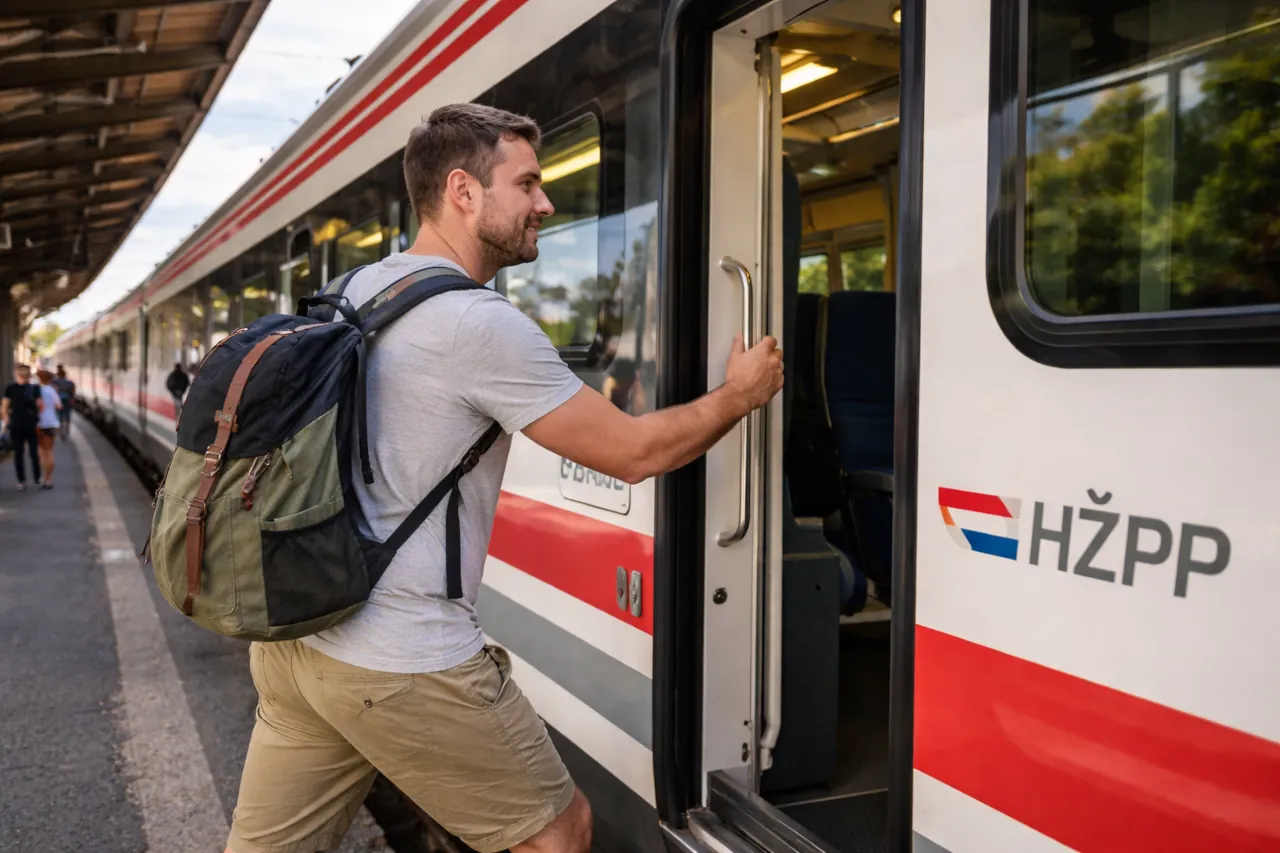
How the railway network in Croatia actually works
The Croatian railway system primarily connects inland cities with Zagreb as the main hub. Most lines radiate from the capital to other parts of the country, while the coast is significantly less connected.
There are no high-speed trains in the sense of the high-speed rail lines found in Western Europe. Most trains operate at standard speeds, and the infrastructure is not designed for high-speed travel. For that reason, it is important to adjust your expectations before planning your trip.
Because of this structure, trains play a limited role in typical tourist itineraries focused on the coast and the islands. If you understand this early on, you will avoid unrealistic expectations and plan your movement around Croatia more efficiently.
International rail connections
Zagreb is relatively well connected by rail with several European countries, including Slovenia, Hungary, Austria and Germany, and there are also additional seasonal international lines.
For travellers arriving from Central Europe, the train can be a realistic alternative to flying, especially if you are travelling flexibly and without strict time constraints.
Train map of Croatia: how to read it without planning mistakes
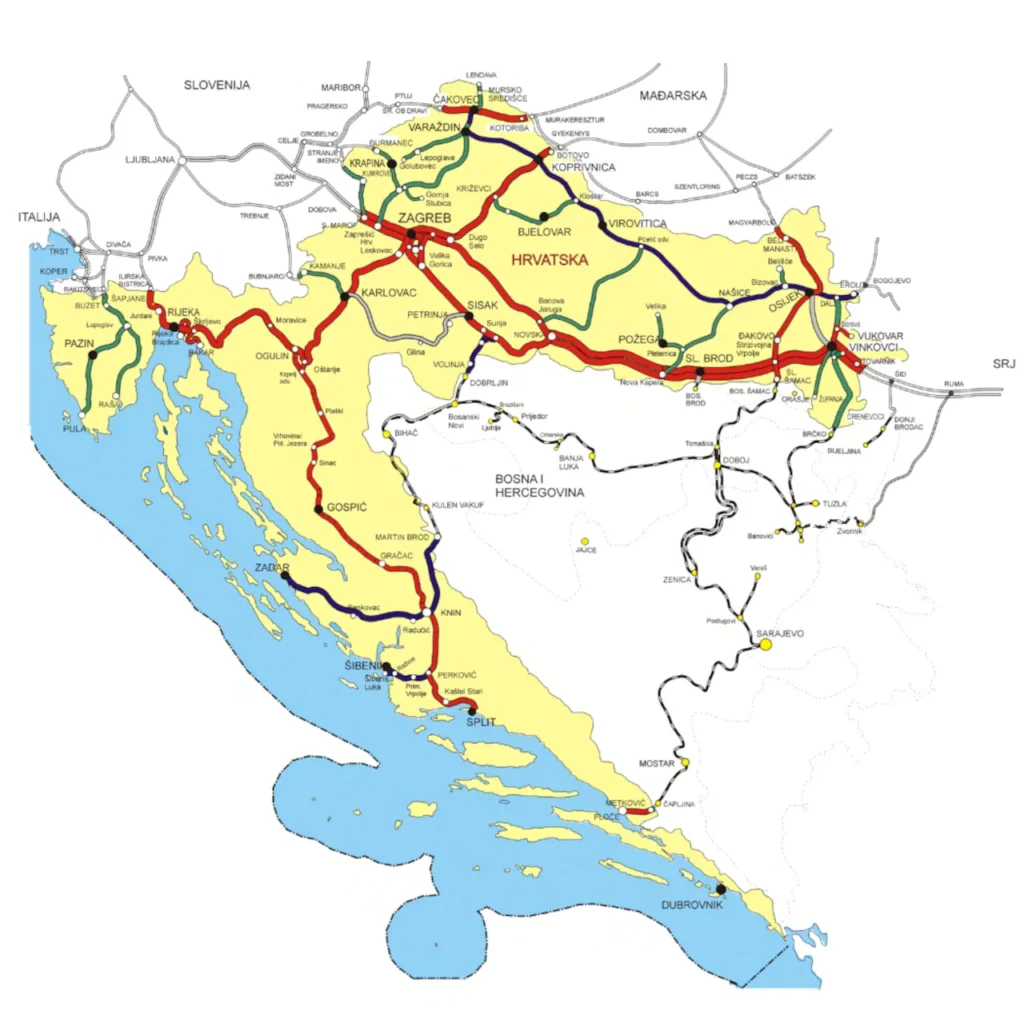
Croatia’s railway map can be misleading if you do not know what you are looking at.
Although it shows tracks across the country, it does not indicate travel speeds, service frequency or how useful certain lines are for passengers. Some of the routes shown are used primarily for freight transport.
If you look at the railway map of Croatia, you will notice a dense network around Zagreb and in northern Croatia, east–west connections through Slavonia, limited lines towards the Dalmatian coast, and the absence of a continuous railway line along the coast.
In practice, this means that trains are most useful for inland travel, not for moving along the coast.
Main direct railway routes in Croatia
Zagreb – Split
The best-known long-distance route, used by both locals and foreign visitors. Travel time is usually around 7 to 8 hours, but delays are not uncommon, especially during the summer season. On the same route, buses are typically faster and offer more daily departures.
When operating, the night train can make the most sense, as it allows you to sleep during the journey and save one night of accommodation. If a few hours’ difference could disrupt your schedule, the train may not be the best choice.
Zagreb – Rijeka
The journey takes approximately 4 to 5 hours, depending on the type of train and track conditions. It is mostly used by locals, but increasingly also by tourists travelling to Kvarner and Istria.
Zagreb – Osijek; Zagreb – Vinkovci/Vukovar
One of the more stable inland lines, with a travel time of around 5 to 6 hours. On this route, the train can make practical sense.
Are there trains along the Croatian coast?
There is no railway line connecting cities along the coast.
The map can be particularly misleading here because it shows tracks extending to Ploče, but these are primarily freight routes and international connections rather than passenger services running along the coast. To clarify: there is no passenger train from Split to Dubrovnik, nor from Zadar to Split. It is possible, for example, to travel from Zagreb to Šibenik or Zadar, but with a transfer.
This is one of the biggest surprises for visitors who imagine a “scenic coastal train” running continuously along the Adriatic.
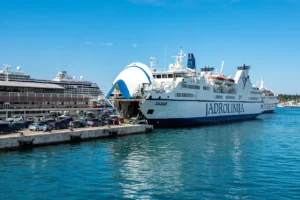
Most coastal travel is done by bus, ferry, catamaran or car. For island travel in particular, the ferry system plays a much bigger role than trains, which we explain in detail in Croatian Ferry System Explained: Cars, Catamarans, Tickets and Boarding.
Seasonal schedules, timetable changes and service reliability
Timetables change depending on the season. In summer, certain lines run more frequently, while in winter they are less frequent. Always check the current timetable on the official Croatian Railways website before travelling, especially if you are planning connections or have a time-sensitive arrival.
Trains in Croatia are unfortunately known for delays, so a journey from Zagreb to Split that should take around 7 hours can sometimes stretch to 10. Keep this in mind when planning your trip.
Does travelling by train in Croatia make sense for tourists?
It depends on your route and expectations. Trains can make sense if you are arriving in Zagreb from other European cities (for example Prague or Vienna), travelling flexibly, or exploring inland Croatia on a tighter budget. They are also practical if you have more luggage or plan to use a night train, especially on routes like Zagreb to Split.
However, trains are usually not the best choice if your trip focuses on the coast and islands, if you have a tight schedule, or if you are combining multiple transfers in one day. For most summer visitors, trains are a secondary option rather than the backbone of the itinerary. Once you are on the coast, buses and ferries are generally more practical.
If you are travelling without a car, we explain what actually works in practice in our guide Travelling Without a Car in Croatia: What Actually Works and What Doesn’t.
Buying tickets and practical information
Tickets can be purchased online via the official Croatian Railways website, through the Croatian Railways mobile app, at railway stations and, in most cases, directly on the train. Payment is possible in cash and by contactless card.
On most domestic lines, tickets can be bought on the day of travel. However, for night and seasonal services, especially Zagreb – Split in summer, earlier purchase is recommended. Also, on this route, seat reservation is mandatory.
Prices are generally lower than bus fares. On the Zagreb – Split route, tickets usually range between 15 and 25 euros, depending on the season and the options you choose. Zagreb – Rijeka typically ranges between 8 and 15 euros.
Interrail and Eurail passes are valid on Croatian trains.
What can you expect on the train?
The experience of travelling by train in Croatia depends on the route and the type of train. On longer routes such as Zagreb–Split, trains are generally clean and functional, but do not expect the standards of Western European high-speed services. Seats are comfortable enough for several hours of travel, luggage space is usually sufficient, and crowds are more common during the summer months and on weekends.
Most newer trains are air-conditioned, but this is not always the case on older regional lines.
On suburban, local and regional services, WiFi is available and free of charge, but due to the terrain the train passes through, you should not expect a stable connection throughout the entire journey. Power sockets are available in newer train sets, but they are not guaranteed on all routes.

Travelling by train in Croatia is more of a functional way to get from A to B than a panoramic experience. If you adjust your expectations and plan with time flexibility, the journey can be comfortable and without major surprises.
Luggage, bicycles, cars and pets
Passengers on Croatian trains can carry standard personal luggage free of charge, and there is usually enough space for suitcases, especially on longer routes.
On daytime trains, bicycles can be transported in designated bike compartments (usually up to 10 spaces). On night trains, only folding bicycles can be carried as hand luggage. The ticket for a bicycle costs 1.99 euros.
Car transport is not a standard option. Croatia does not operate regular car-carrying train services. Seasonal services are occasionally introduced on specific routes but do not rely on it.
Pets are allowed on all trains. Small dogs up to 30 cm that can be held on your lap and animals in carriers travel free of charge. For larger dogs, 50 percent of the passenger fare is charged, provided the animal is on a leash and wears a muzzle. A pet passport is mandatory. Dangerous dog breeds are not allowed on trains, so always check the regulations before travelling.
If you are travelling around Croatia with a dog or another pet, you can find broader practical advice in Travelling Croatia With Pets: A Practical Local Guide.
The most common mistakes travellers make
The most common mistake is assuming that trains connect coastal cities and that it is possible to travel easily along the Adriatic by rail. Many travellers choose the train instead of the bus expecting it to be faster, although in Croatia this is usually not the case.
Another frequent mistake is planning tight transfers, especially when combining multiple modes of transport on the same day.
Croatian trains are not inherently inefficient; they were built around different priorities.
If you understand the limitations of the railway network, the train can be part of your journey. If you do not, it can easily cost you time. In Croatia, the train is not the backbone of tourist mobility, but it can be a reasonable addition if you know when to use it.
Common questions about trains in Croatia
Are trains in Croatia safe?
Yes. Trains are safe and operate in accordance with European safety standards.
Is there a train along the Croatian coast?
No. There is no railway line connecting Dalmatian coastal cities.
Can I travel by train from Zagreb and Split Airport to the city centres?
Neither Zagreb Airport nor Split Airport is directly connected to the railway network. You need to take a bus or taxi from the airport to reach the nearest railway station.
Is there a Croatian rail pass?
Croatia does not have a dedicated domestic tourist rail pass, but international passes such as Interrail are valid on certain lines.
Can I buy food and drinks on the train?
On daytime trains on the Zagreb–Split–Zagreb route, there is a limited selection of food and drinks such as sandwiches, snacks, coffee and soft drinks. If you use a night train sleeper in domestic or international traffic, breakfast is included.
Can I change or refund my train ticket in Croatia?
Refund and change conditions depend on the type of ticket purchased. Flexible fares can usually be changed or refunded before departure, while discounted tickets may be non-refundable. If your train is significantly delayed, EU passenger rights apply and partial compensation may be available depending on the length of the delay. Always check the specific fare conditions before purchasing, especially if your travel plans are time-sensitive.
If you are planning a wider trip and have more general questions about transport, costs or practical travel details, you can find additional answers in our Croatia Travel FAQ.