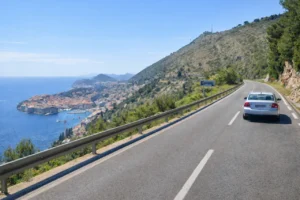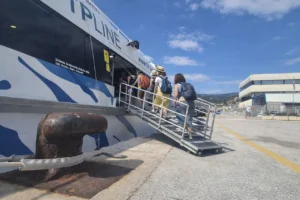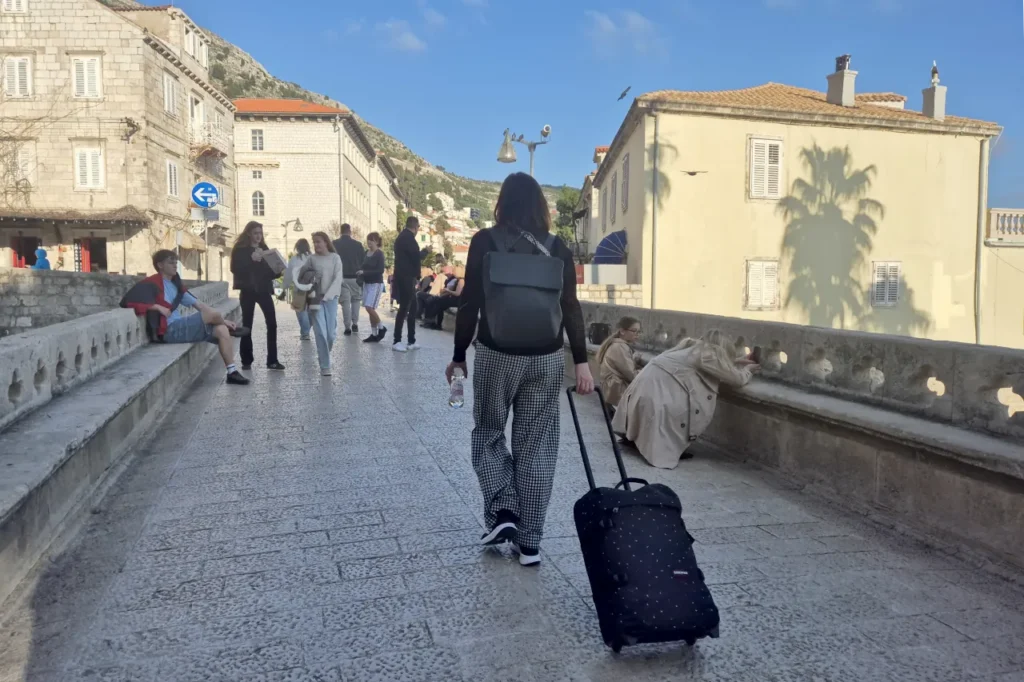
Croatia without a car is absolutely possible, especially if you stay in Split, Dubrovnik, Zagreb or on one island. Buses and ferries connect the main routes well, but travelling becomes much harder in places like Istria, Plitvice or smaller coastal villages.
In short: Croatia works well without a car if your itinerary is simple. If you plan multiple stops or want flexibility, renting a car will save time and stress.
Jump to section:
Can you travel Croatia without a car?
Yes, you can travel Croatia without a car, especially if you plan to stay longer in one place or on a single island and avoid frequent accommodation changes. During the main season, travelling without a car can even be more practical, as you avoid traffic congestion and the constant search for parking. Public transport is generally reliable, frequent on main routes and usually cheaper than renting a car.
The downside is that the system is reliable but rigid. You must plan around fixed schedules and allow extra time for transfers, rather than expect flexibility or spontaneous last-minute changes.
When travelling without a car works in Croatia
If you stay in larger cities or on the most popular islands during the main season, travelling without a car can be a perfectly realistic option. Cities such as Zagreb, Split, Zadar and Dubrovnik are well connected by intercity buses. During the season, there are frequent ferry and catamaran connections to popular islands and foot passengers often have more flexibility than those travelling with a car.
Trips without a car work particularly well when the structure is simple: one or two cities, one island and clearly defined arrival and departure dates. In these cases, public transport is predictable and occasional delays or timetable changes rarely disrupt the entire plan.
Travellers who pack light, carry minimal luggage and do not need to change locations every day tend to have the most positive experiences travelling without a car.
Getting around Croatian cities without a car
Most popular tourist destinations in Croatia are well served by local bus networks. Tickets are inexpensive, usually between €1.50 and €2.50, buses are clean, air-conditioned and run relatively frequently, especially during the season.
Official city taxis are also available, but their prices can be high. In cities such as Zagreb, Split and Dubrovnik, Uber availability is good and prices are generally more reasonable, making it a practical option for short distances or evening returns.
What many visitors only realise after arriving is that Croatian cities are actually quite small. In Split and Dubrovnik, for example, you can easily get around on foot. Most attractions are located in historic city centres and distances between them are often shorter than they appear on a map.
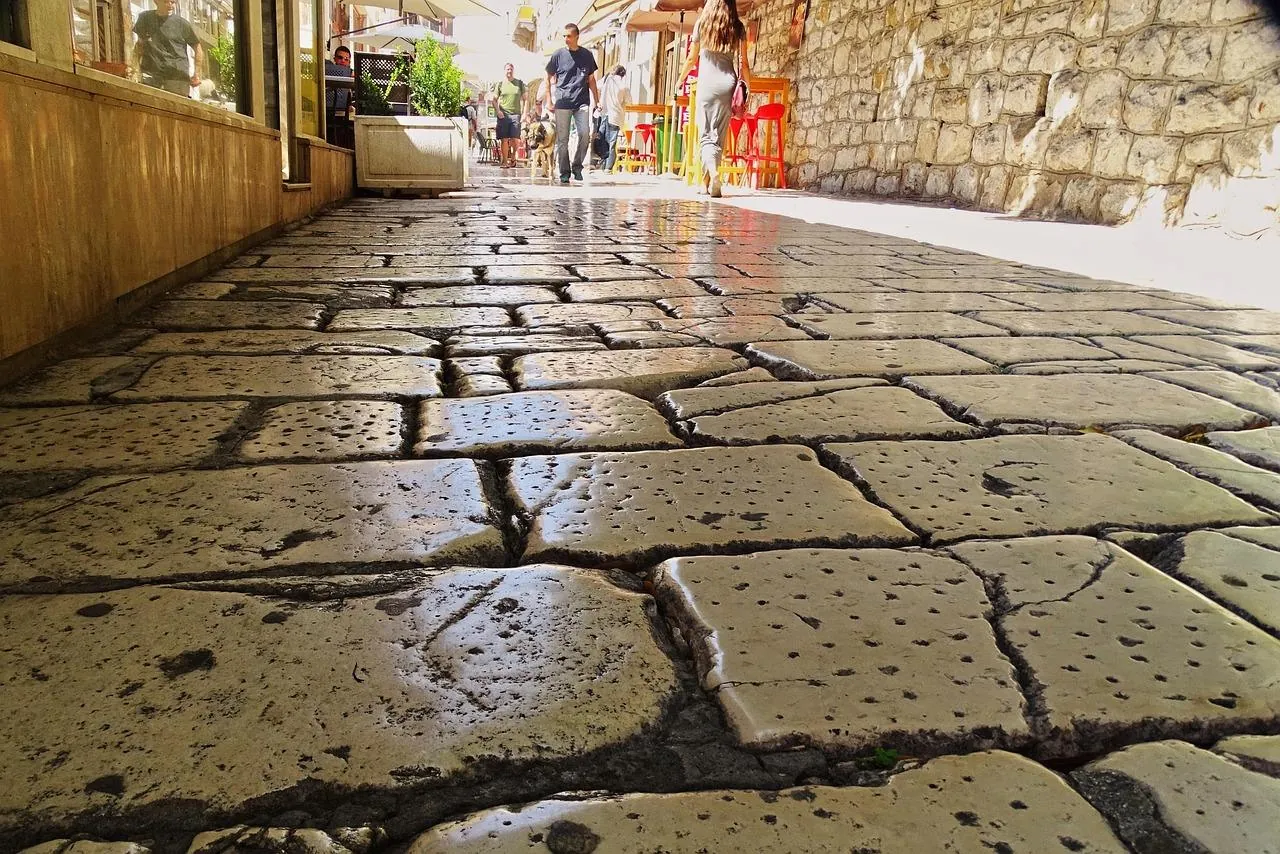
If your accommodation is outside the centre, this usually means around a 20 to 30 minute walk, as most Croatian coastal cities are relatively compact. When you are tired or returning late in the evening, a local bus or Uber is more than sufficient.
On islands and in smaller towns, things are often even simpler, as walking is shorter, more pleasant and more practical than driving.
If you plan to stay in one place and only occasionally change locations, you often do not need a car at all.
Ferries and catamarans without a car
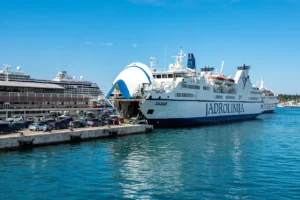
When travelling without a car, ferries and catamarans often seem like the easiest part of the journey, but only as long as you stick to main routes and fixed dates. Foot passengers generally have more options than those travelling with vehicles, but that does not mean you can travel without planning.
For example, you arrive by plane in Split and plan to continue to Brač or Hvar. If your flight lands around noon and the boat departs at 3 pm, the plan is risky. A delayed flight or waiting for luggage can easily mean missing the departure. On top of that, travelling from Split Airport to the ferry port during peak season is often affected by traffic congestion and delays and can take longer than expected.
A much safer approach is to book a later sailing or spend the night in Split and travel to the island the following day, even if that looks like lost time on paper.

It is also worth keeping in mind that during the season, catamarans often sell out days in advance. This is especially true on Fridays and Sundays, when both international visitors and domestic travellers move between the mainland and islands. If you are travelling in summer, assume that last-minute ticket purchases are often not an option, even if you are travelling without a car.
For a detailed explanation of maritime transport, the differences between ferries and catamarans and boarding rules, see our guide Croatian Ferry System Explained: Cars, Catamarans, Tickets and Boarding.
Buses: reliable, but less flexible than expected
Buses are the main form of public transport in Croatia and are far more important than trains, especially along the coast. Major routes such as Zagreb–Split, Zagreb–Zadar, Split–Dubrovnik and Zagreb–Rijeka have multiple daily departures, reasonable prices and relatively reliable schedules.
For example, a bus ticket from Zagreb to Split typically costs between €20 and €30, the journey takes around five hours and during the season there are numerous daily services. On these routes, travelling without a car works very well. Problems start when travellers assume smaller routes work the same way.
A common situation where travellers get stuck is planning to arrive by bus in a coastal town and continue onward by ferry or another bus on the same day with only a 30 to 60 minute transfer window. In practice, the bus is delayed, the next connection does not wait and the following departure is only the next day.
Outside the main season, many bus routes operate only once per day and sometimes only a few times per week. If you miss that single departure, there is often no same-day alternative. This is why travelling without a car outside the season requires much more careful advance planning.
Trains: limited use for most travellers
Croatia does have a railway network, but it is not developed in the way many tourists expect. Trains are slower than buses and railway lines do not follow the coast.
Trains can make sense on certain inland routes, for example between Zagreb and larger cities in continental Croatia. Prices are often lower than bus tickets, but travel times are longer.
It is important to understand that railways do not connect the entire coastline. For example, you can travel by train from Zagreb to Split, but not further south towards Dubrovnik. If your itinerary is focused on the coast and islands, trains will play a minor role or none at all.
If you are considering rail travel, our detailed guide Trains in Croatia: Routes, Rail Map, Tickets and What to Expect explains how the system works in practice and which routes are realistically useful for travellers.
Routes you can easily do in Croatia without a car
Some routes in Croatia work very well without a car, especially if you stick to major cities and well-connected islands.
Split → islands (Hvar, Brač, Korčula) → Dubrovnik
This is one of the easiest and most popular routes. Catamarans connect Split directly with islands like Hvar, Brač and Korčula, and continue further to Dubrovnik. Travelling as a foot passenger is simple, but you need to book tickets in advance in summer. Prices are usually around €20–€40 per leg.
Zagreb → Plitvice Lakes → Split (and vice versa)
This route works reliably by bus. There are several daily departures between Zagreb and Plitvice, and further south towards Split. Tickets typically cost €20–€30, and the journey is straightforward if you avoid tight connections or consider staying near Plitvice.
Split → Dubrovnik → Split
This route is easy to do by bus. There are multiple daily departures in the season, and tickets usually cost around €20–€30. The journey takes several hours, so it is best planned as a single transfer rather than combined with other connections on the same day.
If you want a clearer breakdown of buses, travel times and what to expect in practice, see our guide Split to Dubrovnik transport guide.
Where travelling without a car becomes difficult
Problems rarely occur on main routes. They most often appear at the transitions between them.
If you stay outside town centres, in hillside apartments, small villages or secluded bays, everyday logistics without a car can quickly become tiring. For example, staying in a hillside apartment 4 km above Makarska can easily turn a simple dinner plan into a logistical exercise.
During the main season, public transport in larger tourist towns is generally good. Outside the season, however, services are reduced or disappear entirely.
Uber and taxis exist in most cities, but in smaller towns availability can be limited and prices higher. For evening outings, concerts or returns after dinner in another town, this often means higher costs than initially planned.
In tourist destinations outside the main season, many additional summer-only services are cancelled, making a rental car or private vehicle the only practical way to move freely along the coast.
When renting a car makes sense
Renting a car makes sense in situations where timing, flexibility and location matter more than cost, especially if:
- you are travelling outside the main season
- you plan to visit several smaller locations in a short period
- your accommodation is not in the centre or a larger city
- you have an early flight or fixed time commitments
- you are travelling as a couple or in a group
In these situations, a car is not a luxury but a form of control. It allows you to plan your day around your own needs rather than around timetables.
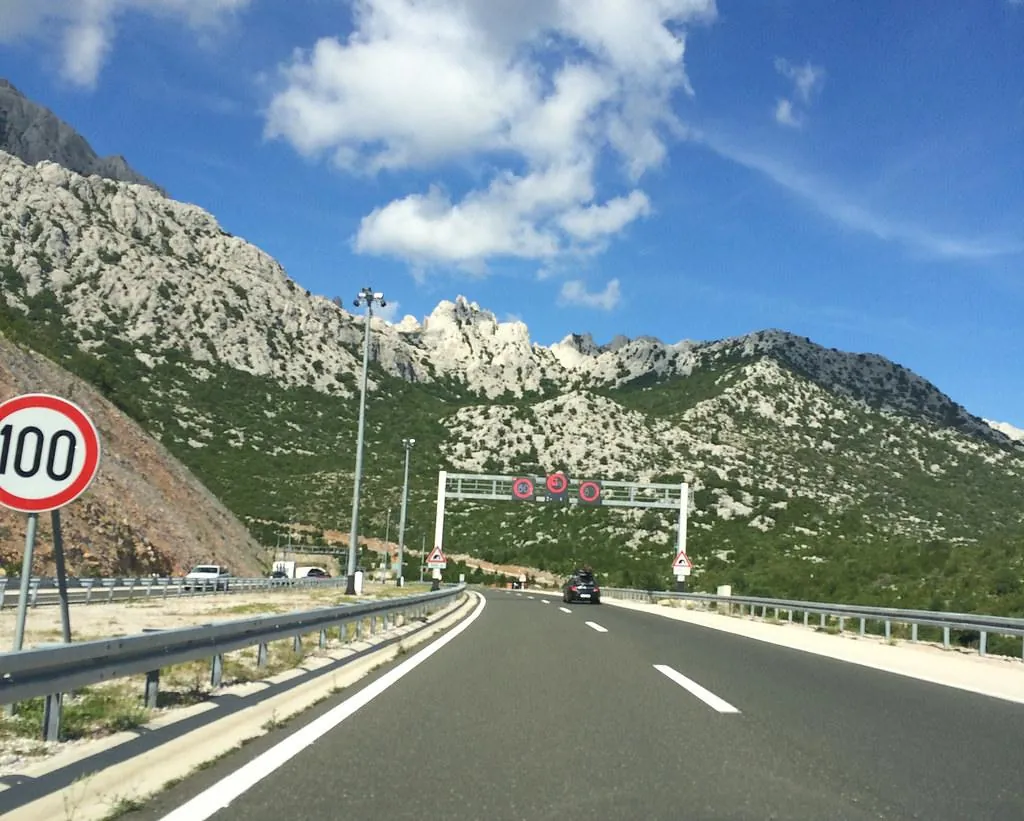
On the other hand, a car also comes with downsides: seasonal traffic congestion, parking issues in historic centres and additional fuel and ferry costs. In larger cities and smaller tourist towns alike, a car often sits unused while you move around on foot or by public transport.
The bottom line: car or no car in Croatia
Travelling without a car in Croatia can be very enjoyable if you understand the system’s limitations and adjust your plans to reality. Most problems do not arise from poor transport, but from the assumption that everything is flexible and spontaneous.
Croatian public transport is reliable, but rigid. It works well when planned in advance and when you adapt to it. When you expect it to adapt to you, stress is almost inevitable.
If you understand this early on, it becomes much easier to decide when public transport is an excellent option and when a car genuinely saves your trip.
If this is your first trip to Croatia, our guide Practical Local Travel Tips for Croatia covers everyday basics like water, money and mobile internet. For itinerary planning pitfalls, see Common Mistakes Tourists Make in Croatia (and How to Avoid Them) where we explain where travel plans most often fall apart in practice.