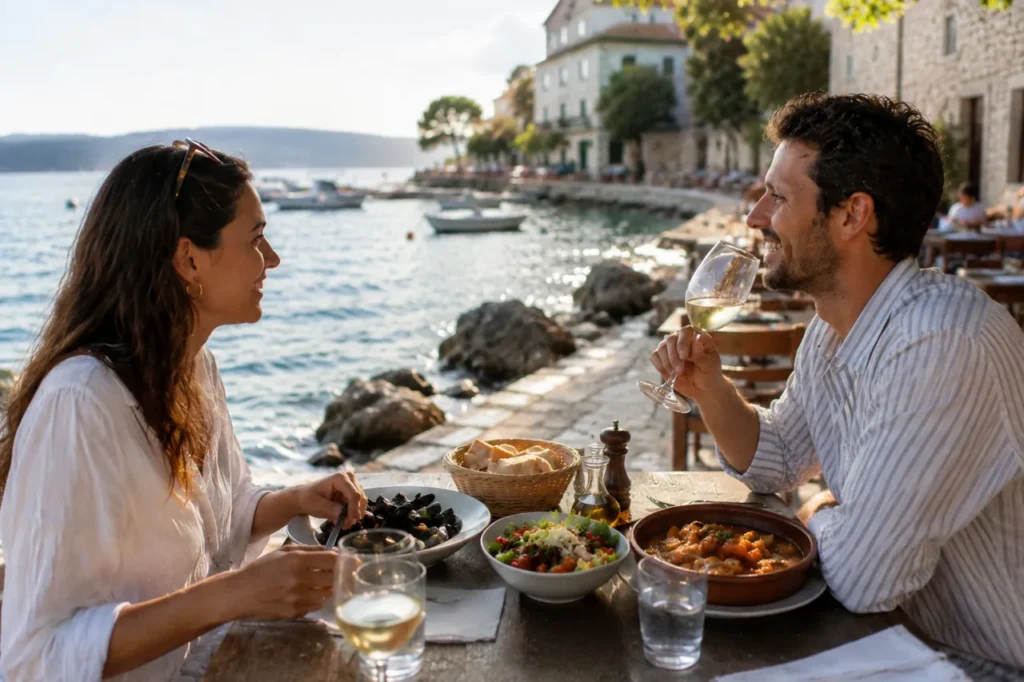
There are plenty of guides telling you what to eat in Croatia. The same names appear again and again: peka, pašticada, buzara, grilled fish, seafood. But very few explain what those dishes actually are or where you’re likely to come across them.
Some are rarely on standard menus, and not all are worth ordering everywhere.
This guide breaks down what is actually worth trying and how to choose what to order on the Dalmatian coast.
Jump to section
If you’re planning a trip and still figuring out where to stay, how to get around or what to expect in general, see our guide Planning a Trip to Croatia? The Basics You Need to Know First.
Cold plates and starters
Before getting into main dishes, it’s worth paying attention to the starters. On the Dalmatian coast, these are usually simple cold plates rather than elaborate appetisers.
The Dalmatian hinterland is known for its cured meats, some of the best in this part of Europe, so in most restaurants you’ll find cold platters with a variety of cheeses, dried sausages and prosciutto.
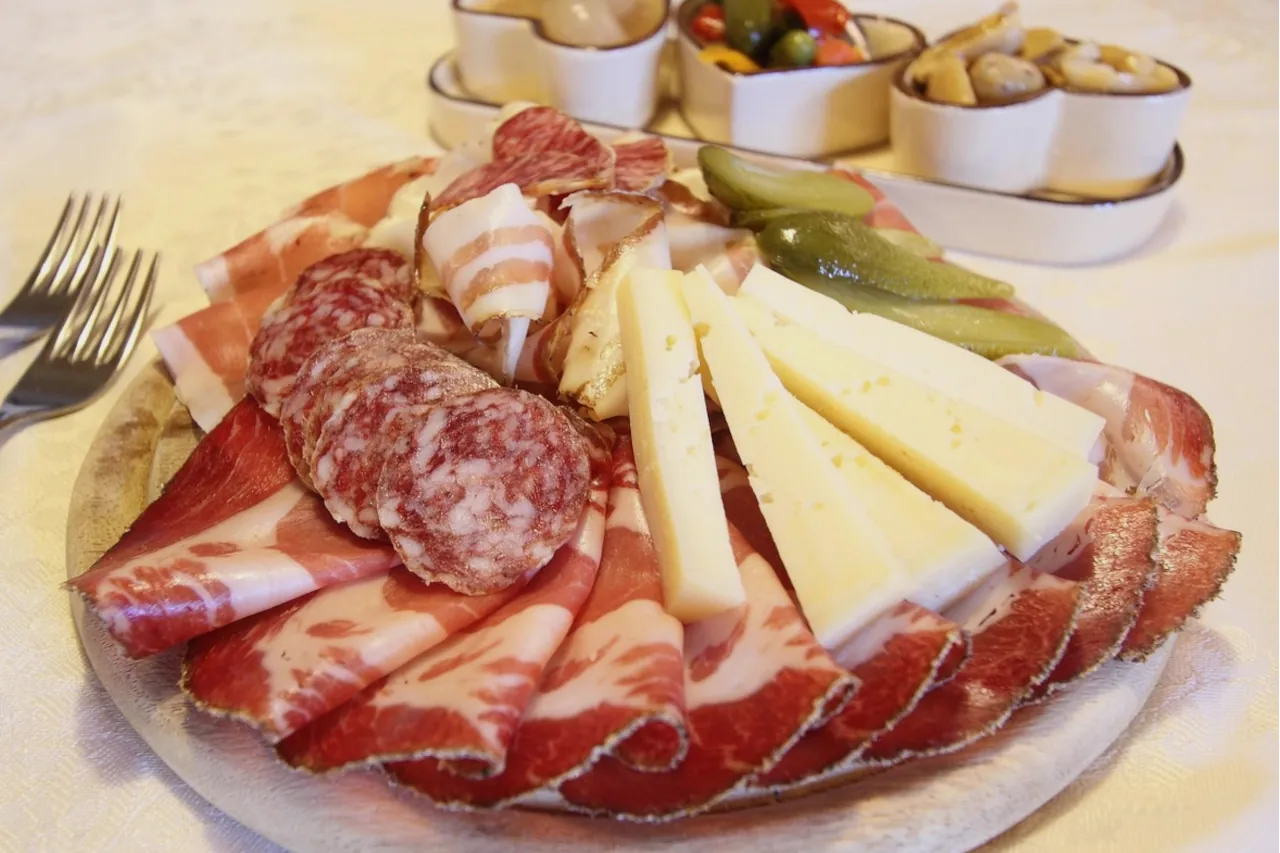
You’ll also often see things like octopus salad, salted anchovies, marinated fish, various types of fish and meat pâtés.
Whatever you choose, you can’t really go wrong. It mostly comes down to whether you prefer meat or fish.
If you are struggling with Croatian pronunciation or menu words, our guide Basic Croatian Words for Travellers explains simple phrases and expressions that can actually help when ordering food in Croatia.
Octopus salad
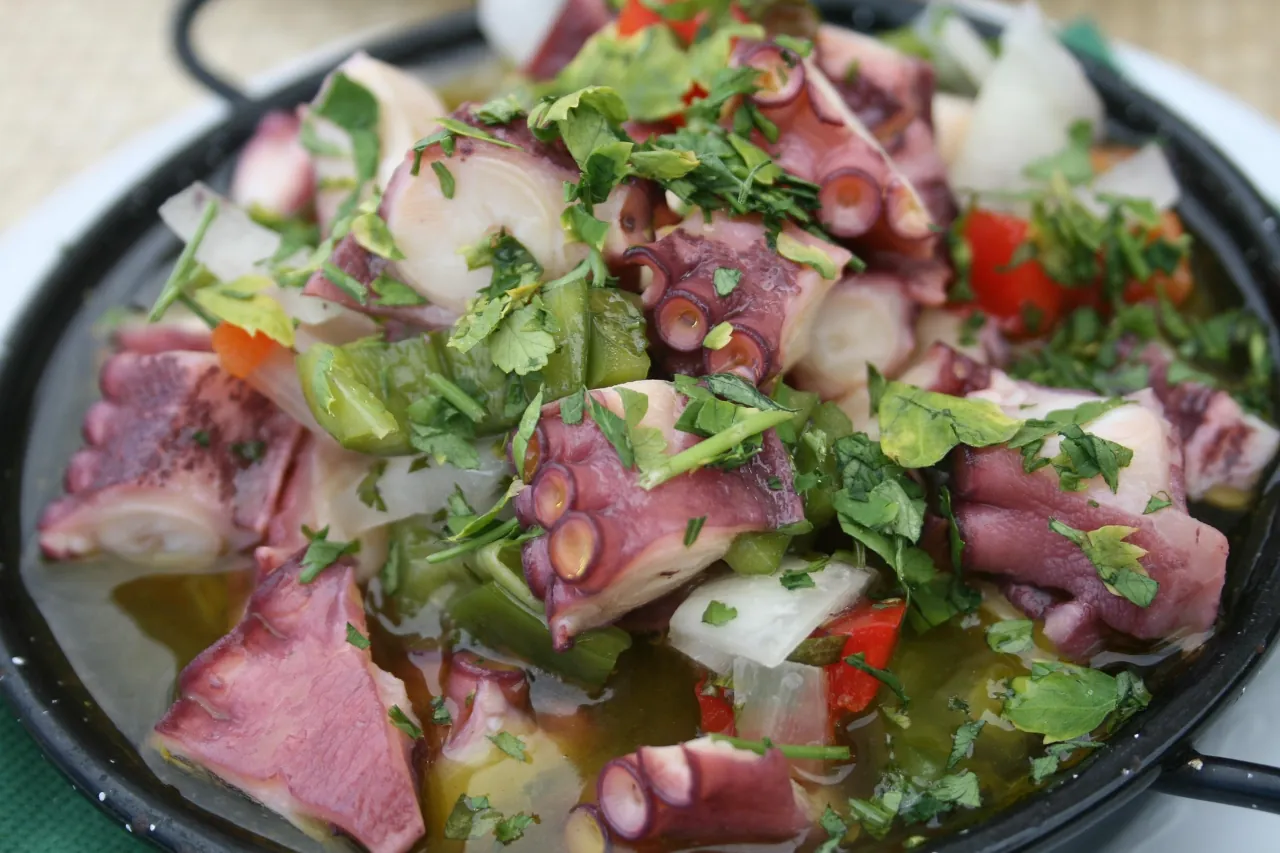
Octopus salad is worth highlighting, as it’s often eaten as a quick main dish.
It’s made with tender pieces of octopus, usually mixed with olive oil, parsley, garlic and sometimes potatoes, tomatoes or a bit of onion. Served cold, it’s light, fresh and easy to eat, especially on a hot day. It’s also a good choice if you want something local without committing to a heavier meal.
Slow-cooked dishes worth waiting for
Some dishes will appear on the menu with a note that they need to be ordered in advance, while others may not be listed at all and have to be asked for.
These are slow-cooked or roasted dishes that are traditionally associated with special occasions and gatherings in Dalmatia, but are increasingly becoming part of daily menus.
Pašticada
Pašticada is probably the most recognisable dish of Dalmatian cuisine. It’s beef slow-cooked in a rich, dark sauce and served with homemade gnocchi. Heavy and filling, and one of the clearest expressions of traditional home-style food in the region.
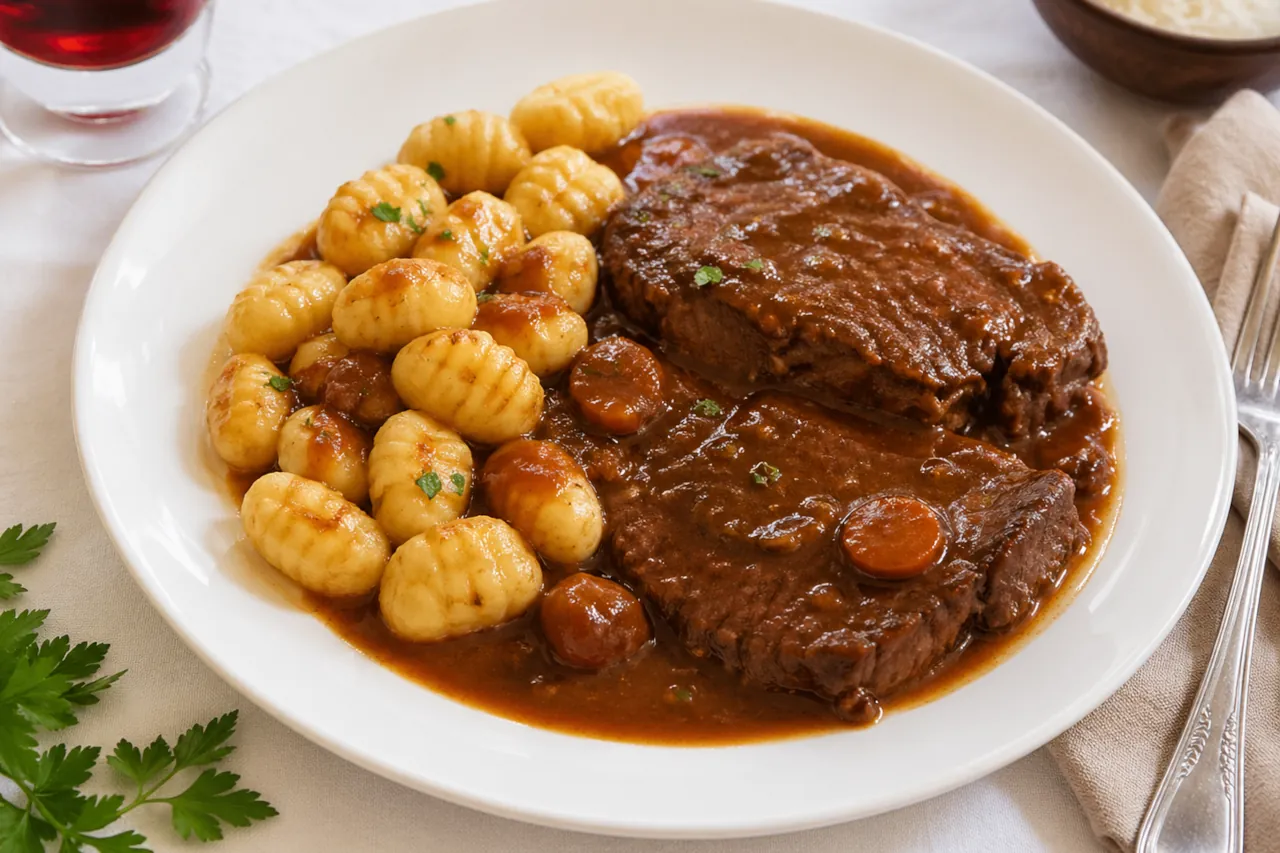
What you’ll find in most restaurants is usually a quicker version of pašticada. But how can you tell if it’s homemade?
A proper pašticada is slow-cooked with wine, vegetables and prunes, so the darker and thicker the sauce, the closer it is to a traditional recipe. It should always be made with beef that is so tender you can pull it apart with a fork, without needing a knife.
If you want to try a good pašticada with homemade gnocchi or polenta, go to a konoba, where it’s usually part of the daily menu.
Peka
Peka takes time so it often needs to be ordered ahead. You’ll get meat or octopus with potatoes and vegetables, slow-cooked under a bell (peka), covered with embers. It’s not something that arrives quickly, but that’s exactly the point. The depth of flavour you get here is hard to replicate any other way.
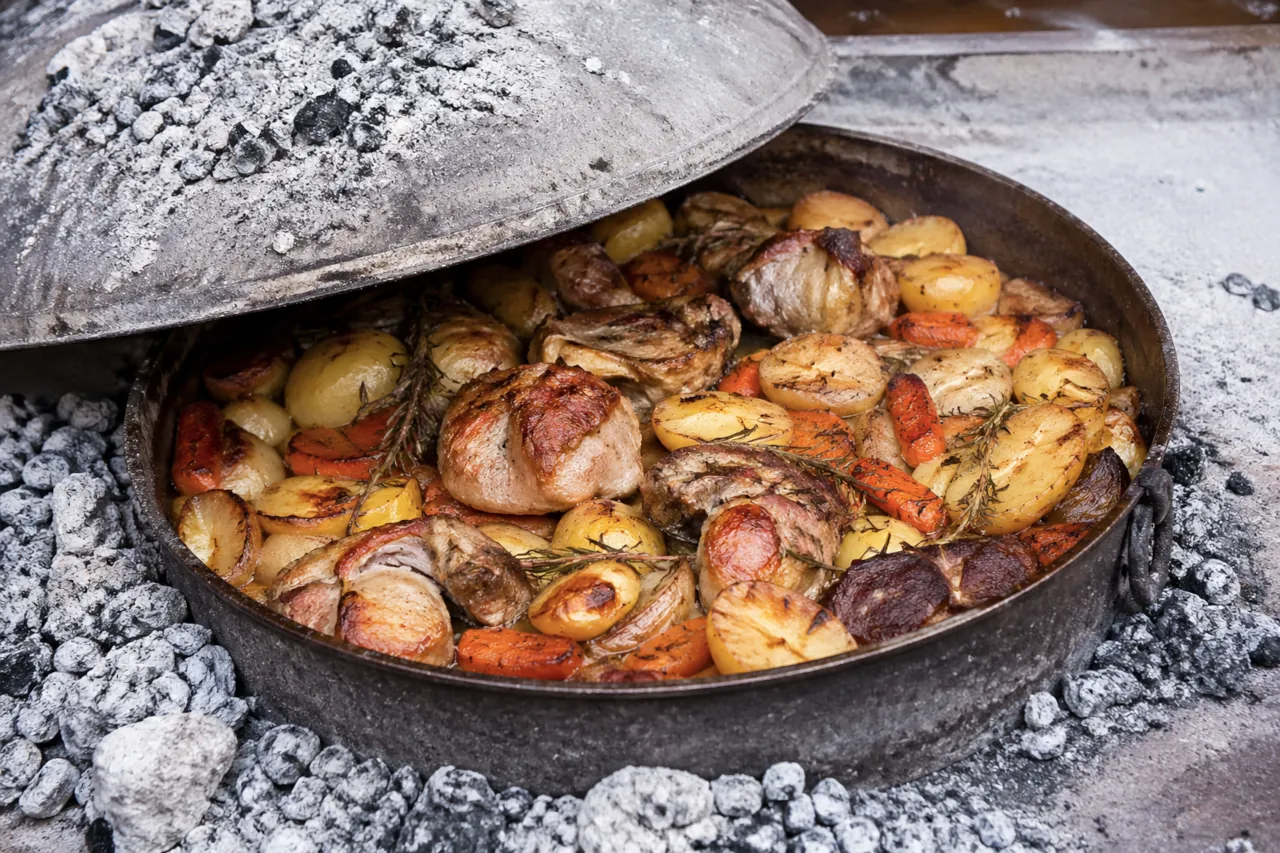
In the past, when most homes had open hearths, dishes like peka, whether meat or fish, along with bread baked under the bell, were part of everyday life.
Most restaurants in towns offer peka, although it’s often prepared in ovens rather than under a traditional bell. It’s not bad food, but if you want the real experience, choose konobas in the hinterland or restaurants that cook on an open hearth.
For octopus under the bell, choose konobas on the islands or along the coast.
Roast lamb
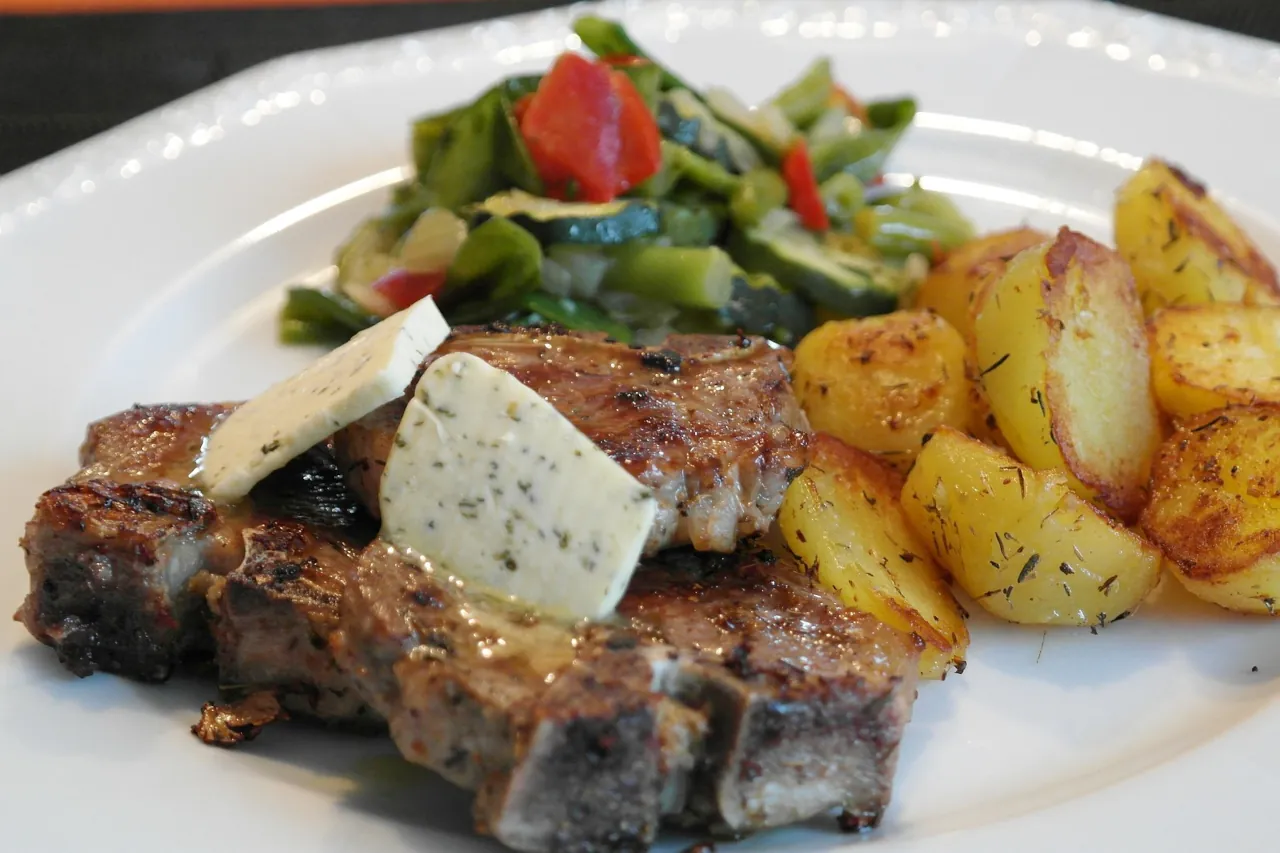
Roast lamb is another dish that’s easy to overlook, but shouldn’t be. It’s cooked slowly on a spit over an open fire, turning for hours until the outside becomes crisp and golden while the meat inside stays soft and juicy.
It’s simple, but that’s exactly what makes it special. You’ll find some of the best lamb in the Dalmatian hinterland, especially in places like the areas around Šibenik, where it’s known for its distinct flavour.
It’s usually served without much decoration, just meat, bread and maybe a side, but when it’s done well, it doesn’t need anything else.
Fish and seafood, without complications
Along the coast, you’ll see fish prepared in different ways on almost every menu, but it helps to know what that actually means in practice.
Grilled fish
If you order grilled fish, you will usually get a whole fish, such as sea bass or sea bream, not a fillet. It’s served very simply, with Swiss chard and potatoes, without heavy sauces or seasoning. That simplicity is the point. It’s also the kind of meal you eat slowly, often with your hands, working your way through the fish rather than cutting it into neat pieces.
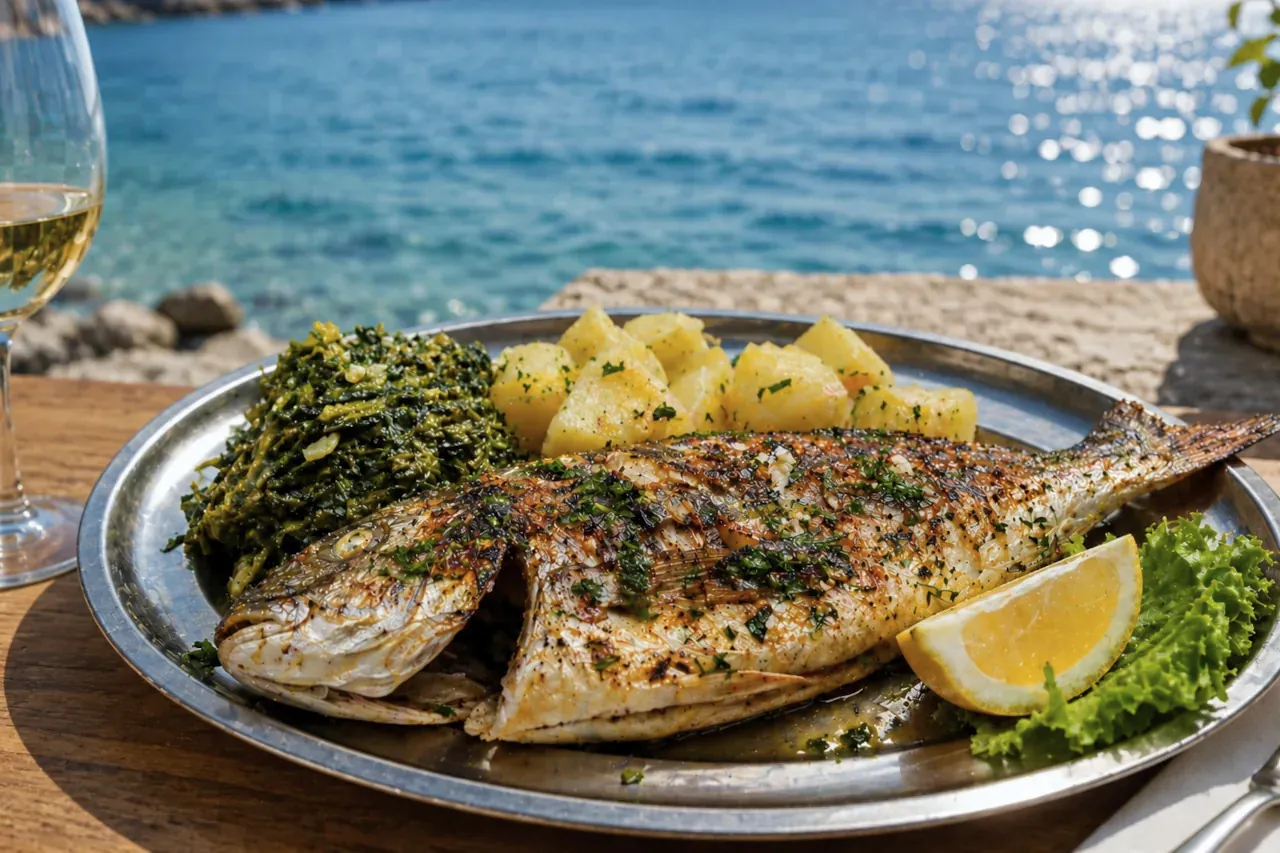
But how do you choose which fish to order?
On the Dalmatian coast, some of the most appreciated fish are sea bass, tuna, monkfish, dentex and scorpionfish. These are the ones people usually recommend, and they’re worth trying. But not just anywhere. A good rule is to rely on local recommendations or check reviews. If you don’t have either, go for restaurants near small harbours, as they’re more likely to be supplied directly by fishermen.
At the same time, some of the most common fish you’ll see on the grill are sardines, mackerel, picarel and other small oily fish. They might not look impressive and don’t have much meat, but they’re full of flavour and are one of those real, everyday tastes of Dalmatian food.
You’ll rarely find them on restaurant menus, as they’re more typical of home cooking or local gatherings, but if you do, they’re worth trying.
Gregada, brudet and popara
These are traditional fish stews most commonly associated with the islands and the coast. Gregada and popara are made with fish, potatoes, olive oil, garlic and a bit of wine, all cooked together slowly so the flavours blend into a light, fragrant broth.
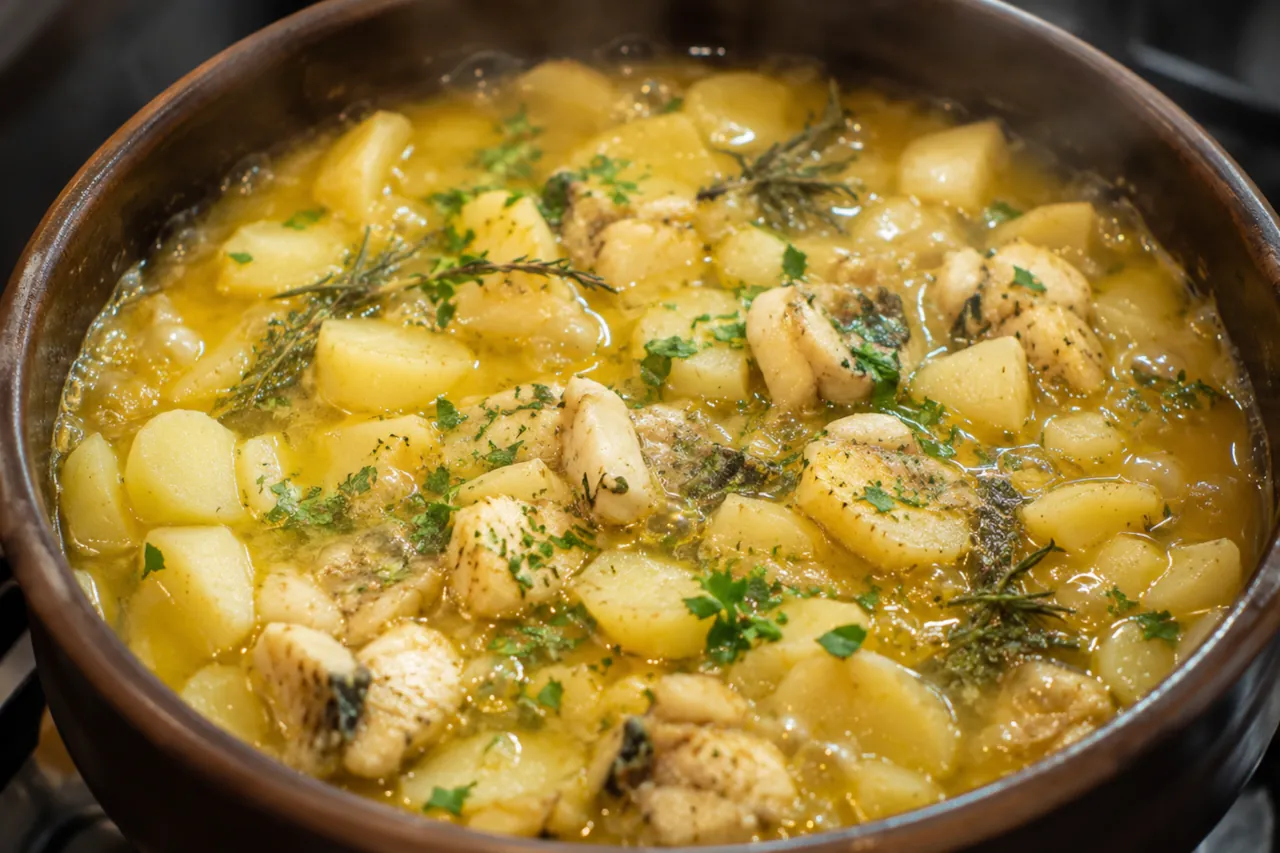
Brudet, on the other hand, usually doesn’t include potatoes and is typically prepared in a red sauce.
In practice, almost every coastal place has its own version of what goes into these dishes.
They were originally made with cheaper fish that was easier to come by, while today you’ll also find versions made with more expensive fish or even scampi.
The key is simplicity and good ingredients, so it’s best to try them in places that focus on local cooking rather than large, tourist-heavy restaurants.
Buzara
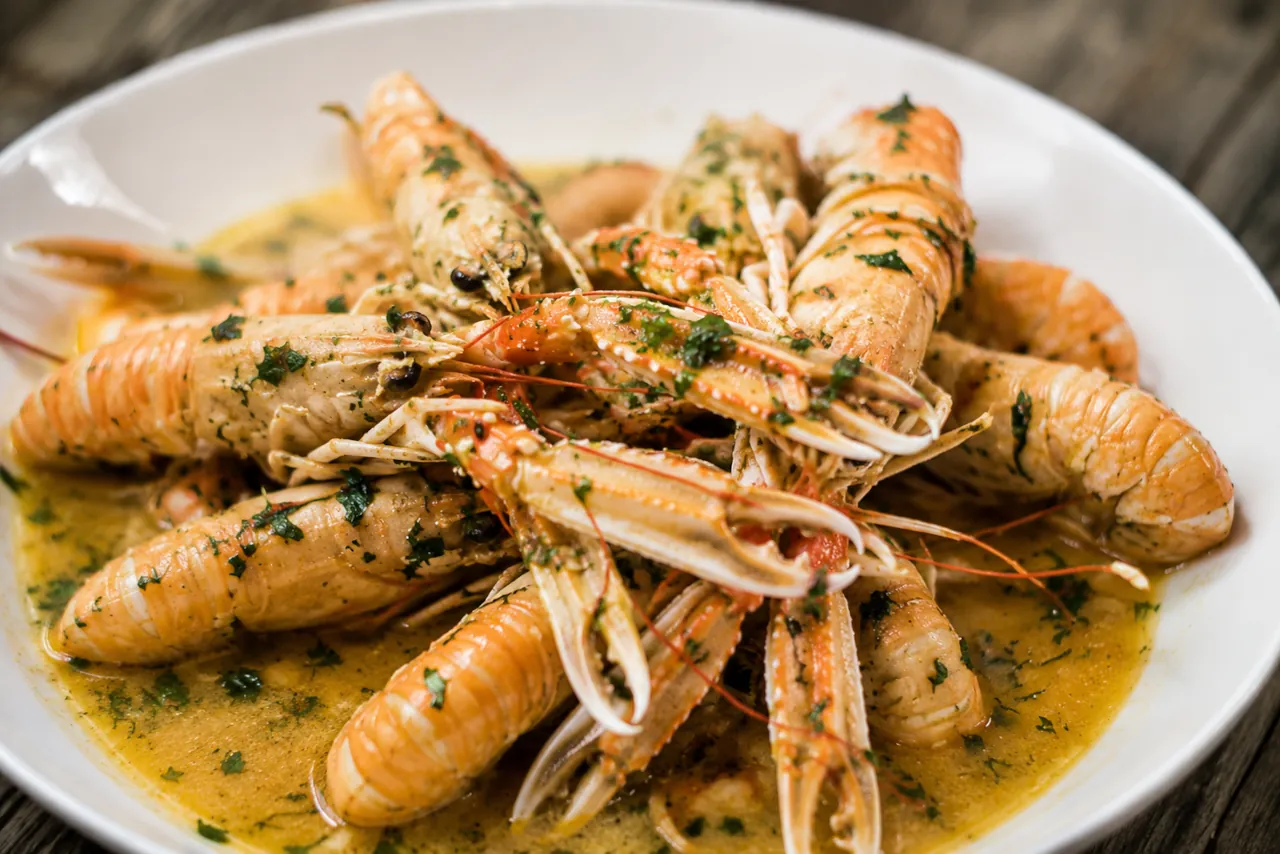
If you order buzara, you’re not ordering a specific dish, but a way of cooking. It’s most often mussels or scampi in a light sauce of wine, garlic and parsley, served with bread that ends up being just as important as the seafood itself.
This isn’t fine dining. Expect to get a little messy, sauce on your fingers, maybe even on your chin. That’s part of the experience.
You could try everything, but that’s rarely realistic. If you have to choose, go for scampi buzara. It may look simple, but it’s the kind of dish you don’t forget easily.
Calamari
Calamari rings appear on almost every menu, but in Croatia they’re more of a fast food option, usually served fried with chips.
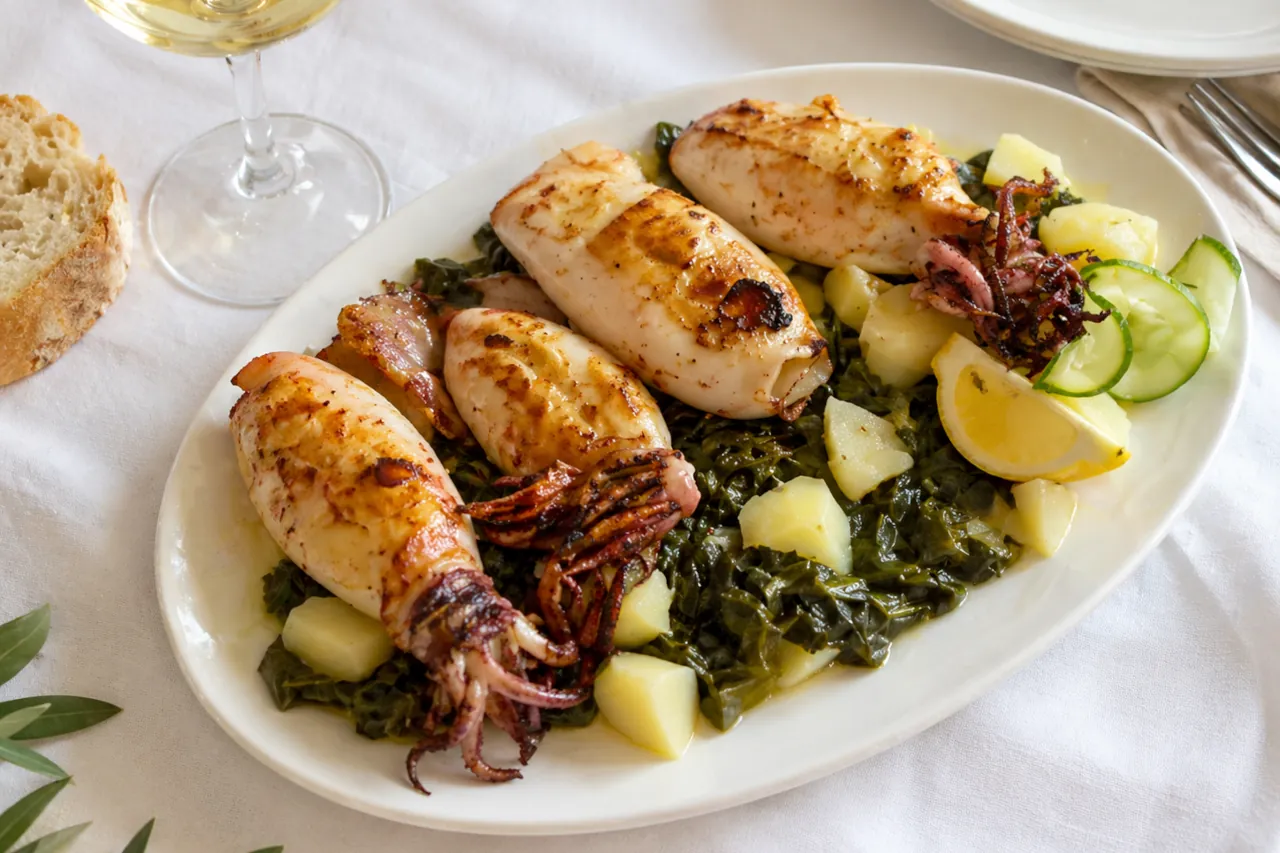
If you want to try squid the local way, look for it grilled or stuffed. Grilled squid is simply finished with olive oil, a bit of garlic and parsley, while stuffed squid is slowly cooked and much richer in flavour.
It’s usually served with sautéed potatoes or Swiss chard. If you’re not in a hurry, it’s worth choosing this version.
Black risotto
Black risotto is one of the most recognisable dishes on the Dalmatian coast, but also one of the easiest to get wrong. It’s usually made with cuttlefish, and its deep black colour comes from the ink, which gives the dish its slightly briny, sea-like flavour. When it’s done properly, the texture should be creamy and rich, not dry or clumpy, and the cuttlefish should be tender rather than chewy.
You’ll find it on many restaurant menus, especially along the coast, but the quality can vary. A good sign is a balanced flavour that isn’t overly salty, with rice that’s cooked through but still holds its shape. It’s usually finished with a bit of olive oil and sometimes a touch of garlic or parsley, but nothing that overwhelms the main ingredient.
Shellfish
If you’re in Dalmatia, shellfish is something you should try. It’s hard to go wrong with the choice itself. What matters much more is where you order it.
Not all seafood is equal here, and the difference usually comes down to freshness and sourcing.
Avoid shellfish in places that mostly serve fast food or quick grilled dishes, and generally anywhere inland. Instead, follow local recommendations and look for restaurants with a clearly seafood-focused menu, ideally close to the coast.
A typical Dalmatian dish is mixed shellfish buzara, served with bread that you’ll end up using to soak up every bit of the sauce.
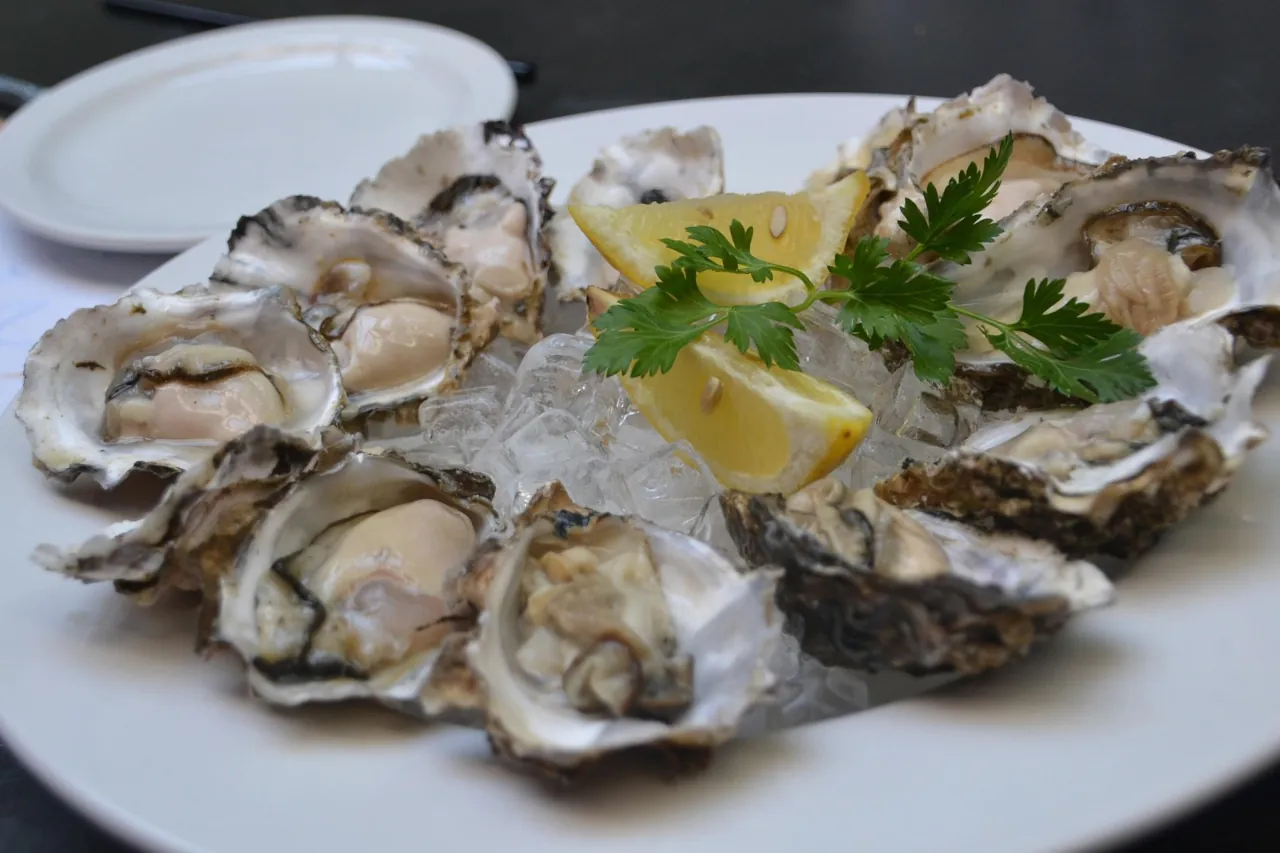
If you find yourself near Ston, try fresh oysters. They’re known locally as a kind of sea aphrodisiac, light, fresh and slightly briny. You’ll often see them served raw, but also fried, which is worth trying for a completely different experience.
Quick, everyday food you’ll see everywhere
Ćevapi, pljeskavica, skewers and other grilled meat dishes appear on almost every menu in Croatia, especially in smaller restaurants and fast food places.
While these are not strictly Croatian national dishes (ćevapi, for example, come from Bosnia and Herzegovina), grilled food is a big part of everyday eating. Most locals will tell you to try ćevapi at least once.
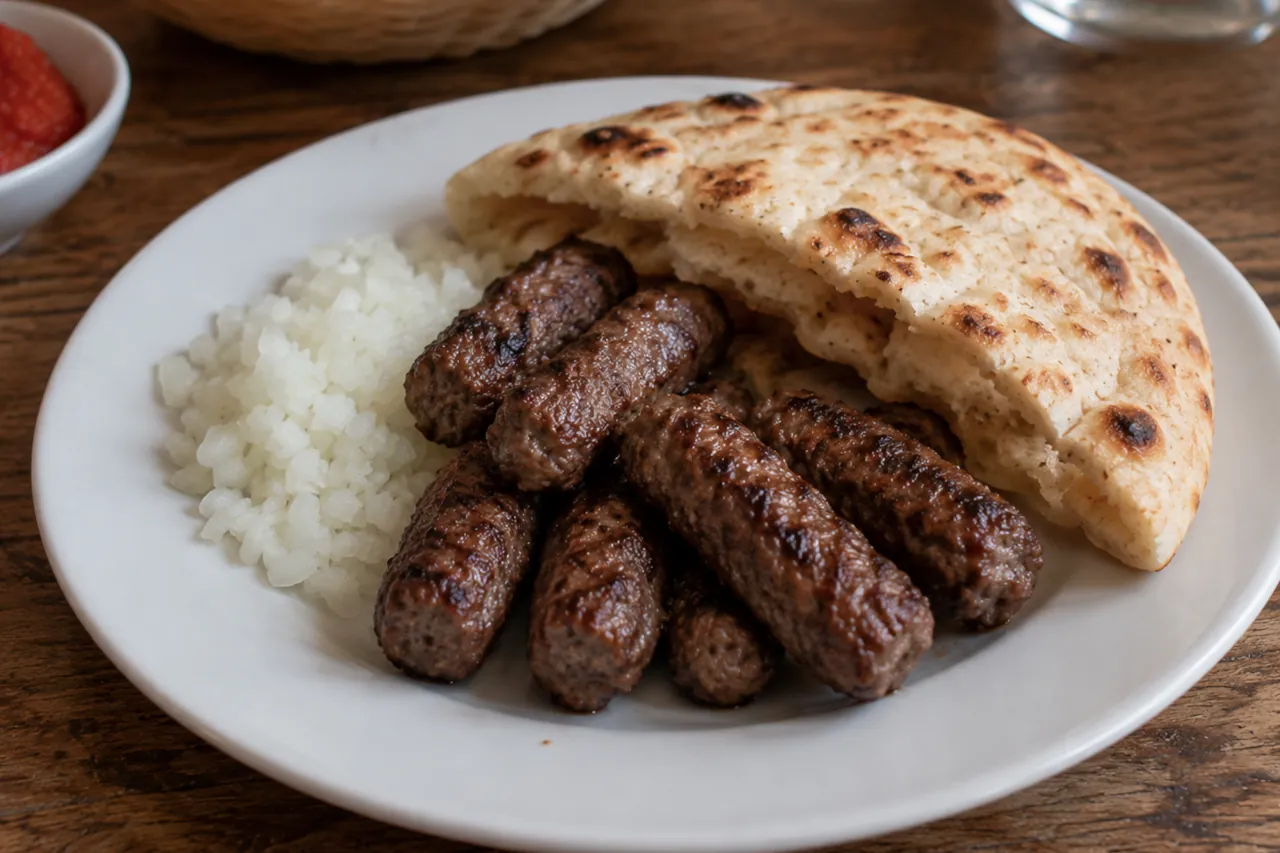
Ćevapi are small pieces of seasoned minced meat, grilled and traditionally served in flatbread with chopped onions, often with ajvar or kajmak on the side. They are a good choice when you want something quick and filling, or simply to try a typical Balkan dish without overthinking the menu.
What to eat in Croatia if you’re not sure
If you’re not sure what to order, don’t leave Dalmatia without trying at least one fish dish. It would be a missed opportunity. The easiest option is a fish platter, which you’ll find in many good restaurants. It usually comes with a mix of small and larger fish, some shellfish and often scampi. It’s one of the simplest ways to try a bit of everything without overthinking the menu.
For a more substantial dinner after a long day of exploring, go for pašticada, roast lamb or peka. Keep in mind that peka usually needs to be ordered in advance. And if you’re staying on an island, try something like octopus salad, buzara or gregada for a more complete sense of local, coastal food.
And if you still have room after all that, Croatian desserts are worth exploring too. You can find a full guide here: The Sweet Side of Croatia: Traditional Desserts and the Stories Behind Them.